‘Moving pile of hair’ crawls along in Florida video. See the monkey slug caterpillar
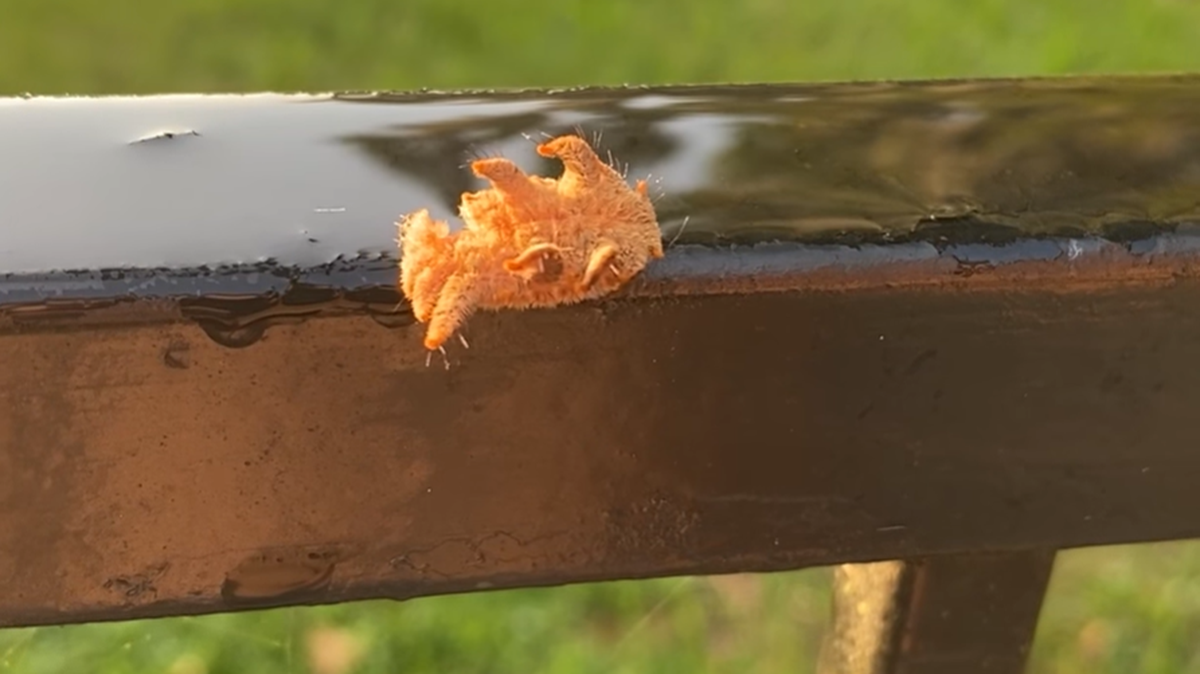
No, that clump of hair isn’t walking on its own. It’s actually a strange-looking caterpillar, Florida wildlife officials say.
Captured in a video and shared by the Florida Fish and Wildlife Conservation Commission on Facebook, a monkey slug caterpillar was seen crawling along a rail in Lake City. In the Oct. 5 video, it zooms in on the misshapen, prickly-looking “moving pile of hair” — an appearance wildlife officials say is meant to ward off threats.
“Free Hugs, Anyone?” wildlife officials joked in the post.
Monkey slug caterpillars “mimic the appearance of a tarantula’s discarded skin,” officials say, which offers protection from hungry predators. Tarantulas aren’t native to Florida, the post says, but the peculiar insect still can convince migrating songbirds not to mess with it.
Not only does the monkey slug caterpillar aim to look like a pile of old tarantula skin, but it also tricks other animals into thinking its hairs can hurt. Both slug caterpillars and tarantulas typically have hairs on them that sting, but the monkey slug caterpillar’s hair doesn’t, serving as a “visual deterrent to potential predators,” officials say.
“This clever adaptation allows the caterpillar to avoid spending energy on building protective shelters or restricting its feeding to nighttime,” the post says.
Despite the monkey slug caterpillar being most harmless, Florida wildlife officials warn that people who are sensitive could have an allergic reaction to touching the bug. Monkey slug caterpillars’ ability to sting is still somewhat disputed, according to the University of Florida Institute of Food and Agricultural Sciences.
The caterpillar got its nickname “monkey slug” from its brown spines resembling messy hair, an FWC spokesperson told McClatchy News in an email.
It feeds on “woody host plants,” such as oak, dogwood and apple, according to the university.
The species prefers “shrubby fields, woodlands and forests,” the FWC spokesperson said. They are native to Florida, along with many other states in the eastern parts of the U.S.
“Mature caterpillars are seen from June to November. However, some references indicate adults may be spotted in Florida’s northern areas beginning in March,” the spokesperson said.
They are not considered an endangered species, according to the FWC.
The monkey slug caterpillar transforms into a hag moth, which is a furry brown insect. It is likely preyed on by birds, lizards and frogs, the FWC spokesperson said.
Lake City is about 60 miles west of Jacksonville.
This story was originally published October 5, 2023 at 2:26 PM.