A Florida homeowner had an unexpected visitor at the door — and the creature was hungry
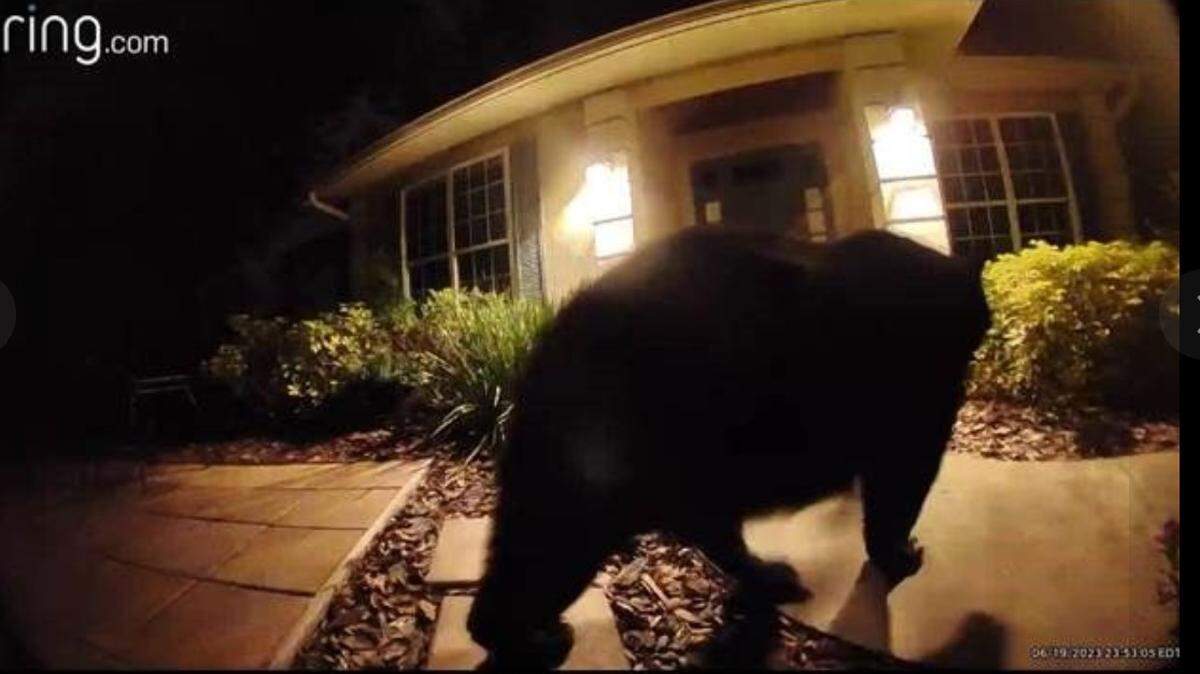
A Central Florida homeowner recently got a startling reminder that black bears live among us in the Sunshine State— and they’re often famished.
The Winter Springs Police Department shared a screen grab of Ring doorcam footage of an unwanted visit from such a creature.
The agency says a black bear approached the front porch of a house in the Glen Eagle subdivision in Winter Springs, just north of Orlando. The stamp on the video says the animal stopped by June 19, 2023, a few minutes before midnight.
“This a reminder that bears are found throughout Florida and sometimes visit neighborhoods often looking for food,” said the department’s Facebook post, which included advice on keeping them away.
Tops among the tips: Don’t feed them: “Not only is it dangerous, but it’s also illegal.”
So what do these omnivores consume? According to the Florida Fish and Wildlife Conservation Commission, bears forage about 18 hours a day and their diet varies, usually consisting of 80 percent plants, 15 percent insects, and 5 percent “animal matter,” aka meat.
“A bear is always looking for food, and is not very particular as to what foods they will eat,” says the wildlife agency in describing these animals. “In addition, the bear can smell food up to a mile away. A bear’s search for food is the primary cause of conflicts with people.”
So best to secure your garbage in a shed, garage or wildlife-resistant container.
“If bears can’t find food, they’ll move on.”
Garbage is a major draw because bears are attracted to all the smells. They are also reportedly tempted by such things as pet food, barbecue grills and wildlife feeders — all stuff that is close to humans and their furry friends.
“While seeing a black bear can be a thrilling experience, and often they are not a threat, it is essential to remember that bears are wild animals and deserve respect,” says the police department’s post.
You are asked to contact the FWC if you see anyone interacting with bears inappropriately or supplying them with food at 888-404-3922.
This story was originally published July 7, 2023 at 2:49 PM.