
Trucking away contaminated water makes Piney Point overflow less likely, state says
Efforts to empty the Piney Point ponds, once in danger of filling up and spilling over, may have averted another crisis at the Manatee County industrial site, according to the Florida Department of Environmental Protection.
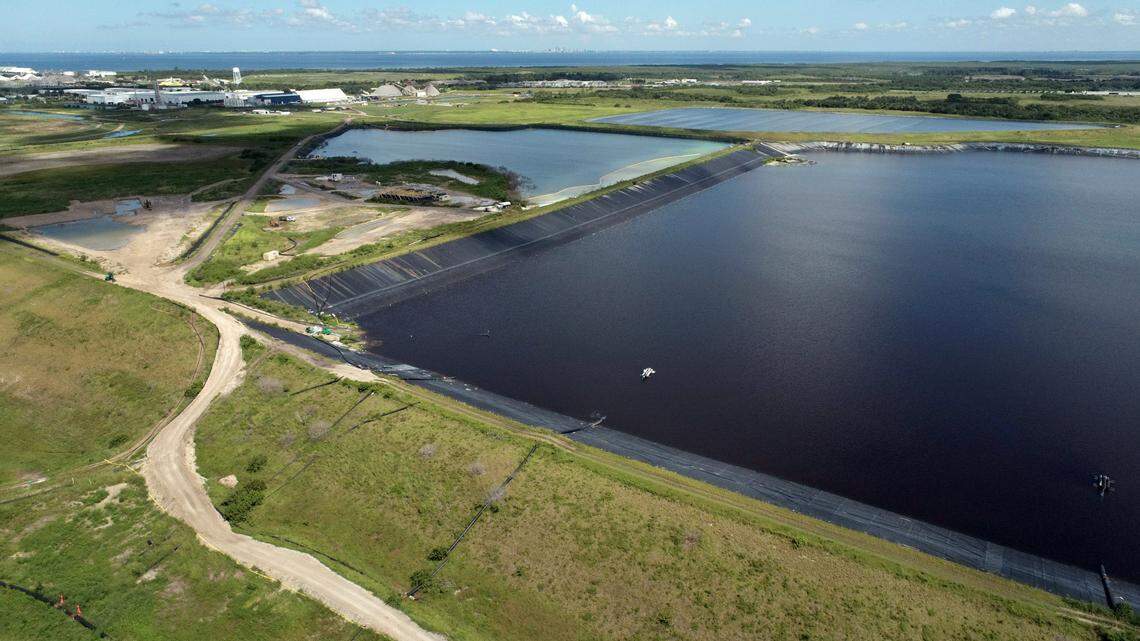
Darting back and forth to a local wastewater facility every day since mid-August, drivers have trucked more than a million gallons of contaminated water from the site. Those 30-mile round trips are part of the plan to deplete the ponds to prevent them from overflowing or collapsing.
Earlier this year, state leaders released 215 million gallons of that contaminated water into Tampa Bay after one of the ponds began leaking. Recent rainfall is putting focus back on the ponds as they approach maximum capacity.
In August, engineers predicted that the ponds could overflow by the end of September. In an interview with the Bradenton Herald, FDEP Secretary Shawn Hamilton said he felt more comfortable about the state’s race against the clock.
“The site conditions are stable and the patch is holding,” said Hamilton, who toured the Piney Point facility on Wednesday. “Generally speaking, we’re in a better spot than we were a few weeks ago, but we’re still keeping an eye on the water levels.”
Site operators are also trying other techniques such as using a pipeline connection to send 100,000 gallons a day to the county’s North Regional Water Reclamation Facility, which collects and treats regular wastewater from county residents. Spray evaporation, a system that sprays the water into the air so that it evaporates quickly, is also being used to empty the pond.
“At the end of the day, I’d love to see more water leaving the site for the simple fact that we’re in the rainy season, but every gallon gone is one less gallon we have to worry about in terms of any discharge,” he added.
As of Friday night, 211 truckloads of water had removed 1.3 million gallons of water from Piney Point, which sits on U.S. 41, just south of Manatee County’s northern border with Hillsborough. According to Manatee County Administrator Scott Hopes, that water is being trucked to the county’s Southeast Wastewater Facility, and could eventually wind up on your front lawn.
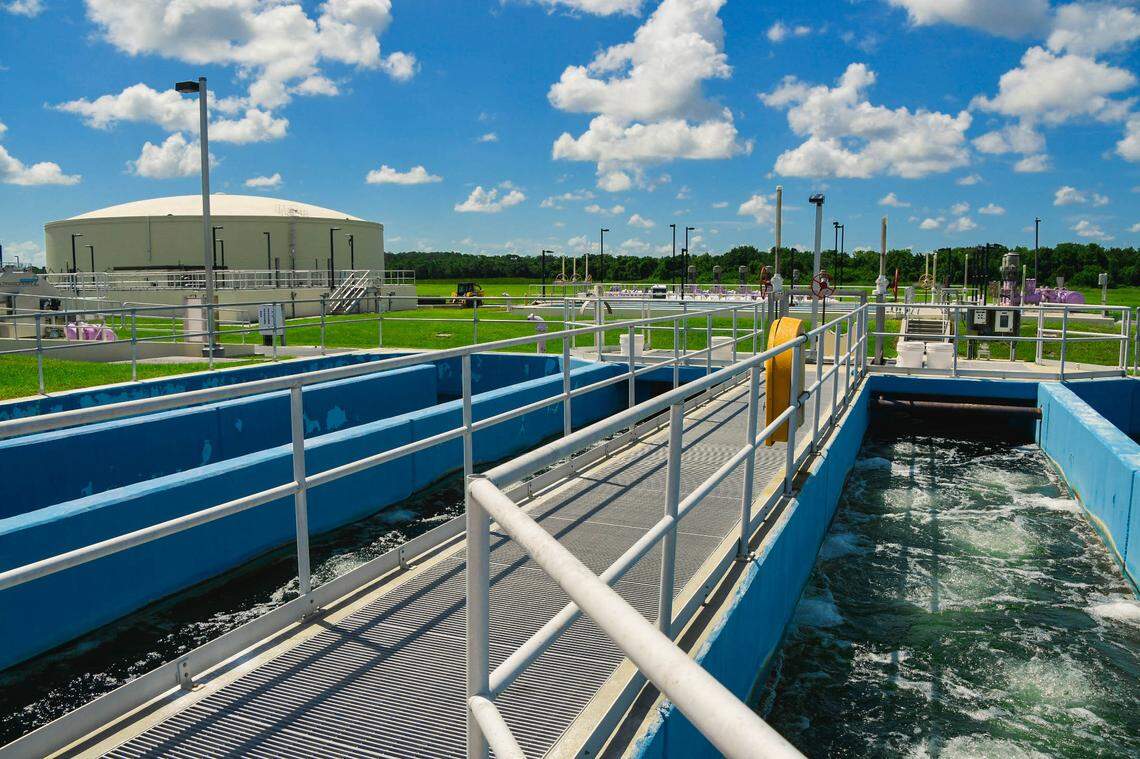
“We’re processing it with the wastewater. We’re slowly diluting it with the wastewater and going through the full process of filters and treatments before it comes out as the same reclaimed water that sprinklers use,” Hopes said.
Piney Point operated as a phosphate processing plant for 35 years. When it was abandoned in 2001, the owners left behind all of the equipment and hazardous materials on the site. The state started overseeing the site, which has become the target of recent lawsuits.
Frustrated by the state’s refusal to fund the site’s shutdown over the past 20 years, a group of conservation organizations filed a federal lawsuit against the state and Piney Point’s property owner, HRK Holdings, LLC. Florida launched its own lawsuit against HRK in August, which led a judge to appoint a neutral third party to lead the site closure process.
During its operating days, the plant took in phosphate rock and used heavy machinery to extract phosphorus, a key ingredient in fertilizer. Huge ponds of water helped operate the machinery. As it washed over the phosphate rock, that water absorbed contaminants and became known as process water, which is rich in nitrogen and phosphorus — two nutrients that are known to contribute to harmful algae blooms.
One of the byproducts of processing phosphate rock is gypsum, which is slightly radioactive. Because gypsum cannot be used for other purposes, the material was piled up in massive mounds called gypsum stacks. Those stacks are covered in a heavy-duty plastic liner to prevent the gypsum from contaminating surrounding areas.
The contaminated process water at Piney Point sits above the liner on top of the gypsum stacks. Earlier this year, the largest pond on the site started leaking from a tear in the liner. The leak caused instability and threatened to collapse the gypsum stack, sending contaminated water rushing into the surrounding areas.
To prevent that scenario, state leaders authorized the emergency release of 215 million gallons of process water directly into Tampa Bay. Some scientists have said that the contaminated water contributed to an extended bout of red tide in the bay.
FDEP officials recently announced that innovative water treatment technologies have been successful in removing up to 99 percent of the harmful nutrients in the contaminated water. Hopes, the Manatee administrator, explained that putting that treated water through the county’s wastewater system is only a temporary fix.
“Trucking that water is very expensive, but we’re getting the rainwater out of there. It’s by no means a long-term solution,” Hopes said. “The goal is still to build the well.”
Manatee County leaders have already signed off on a contract to build a $10 million underground injection well, which will shoot the treated wastewater about 3,000 feet below ground. In a presentation earlier this year, an expert geologist said the treated wastewater will undergo a natural treatment process before it emerges as clean water in the Gulf of Mexico 100,000 years from now.
State officials issued a draft permit for the county-owned well on Wednesday. Residents will have a chance to learn more about the well during a public hearing in October.
Installing a well to dispose of Piney Point’s wastewater isn’t a new suggestion. Officials with the Florida Department of Environmental Protection supported that solution in 2013, but commissioners shied away from that plan after backlash from residents concerned about what would happen if the well malfunctioned.
“If you look at the total picture of getting this site closed safely and the proven record, it does prove itself as a viable option,” said Hamilton, FDEP’s leader.
“The science is sound. The county will have control of the well. Those assurances weren’t there before. We have a system with checks and balances, and the risks are minimal,” Hopes added. “This is not new technology.”
Once the permit is clear, Hopes said he expected to have the well up and running by the end of 2022.
Piney Point Permit Hearing
When: Wednesday, Oct. 6, from 4 p.m. to 7 p.m.
Where: Central Library, 1301 Barcarrota Blvd., Bradenton
What: Staff members from the Florida Department of Environmental Protection and Manatee County will attend the meeting to give a presentation on the purpose of the underground injection control well. Staff will also accept public comments and answer questions submitted by anyone who chooses to attend.
This story was originally published September 4, 2021 at 6:00 AM with the headline "Trucking away contaminated water makes Piney Point overflow less likely, state says."
