As COVID-related food assistance expands, Floridians experience delays, frustration
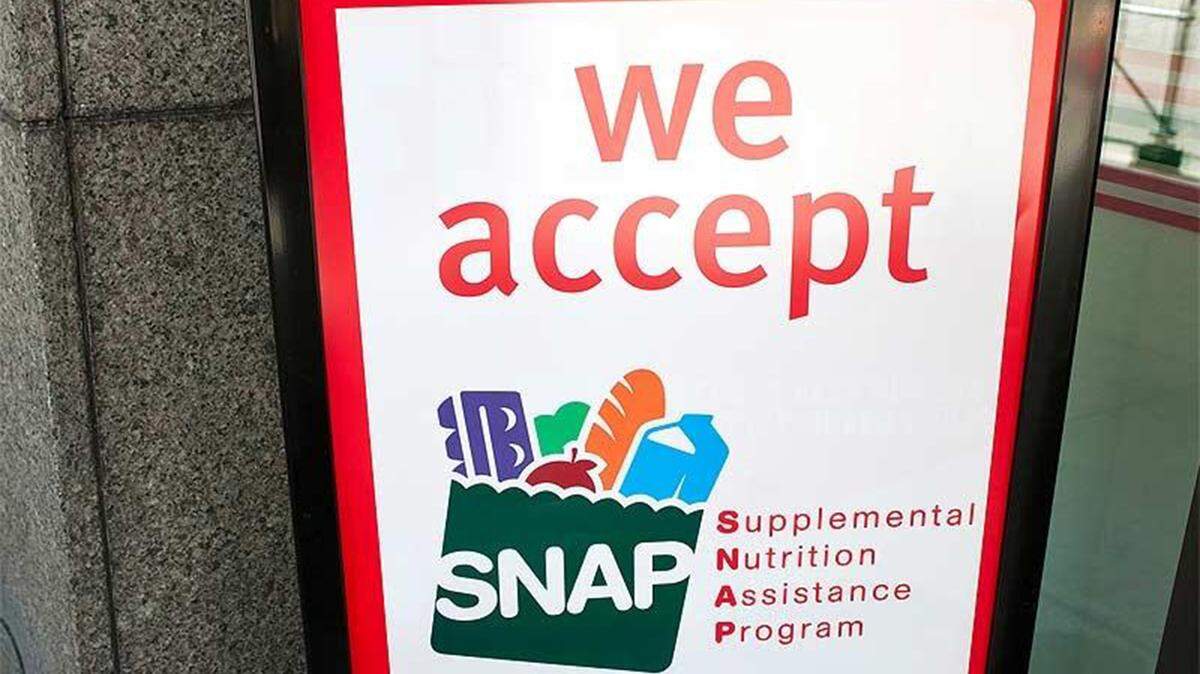
Harmon Brody has received food assistance under the U.S. Department of Agriculture’s Supplemental Nutrition Assistance Program (SNAP) since 2012, the year his heart stopped while he was driving. He survived but spent three days in an induced coma.
When his organ failure reversed, his doctor considered him a “walking miracle,” the now 70-year-old Blountstown resident and University of Miami alumnus said. But the experience left him disabled, with worsened epilepsy, severe depression and limited work capabilities.
Brody’s a part-time accountant and tax preparer, but he hasn’t found much employment in the Panhandle, especially with the added challenge of the coronavirus pandemic. The deposit from SNAP at the beginning of each month helps him and his wife (also a SNAP benefits recipient because the two share a household) afford groceries — that is, when it arrives on time.
This month, the bulk of the deposit arrived nine days late, forcing them to dip into what little savings they had set aside for emergencies and medical expenses, he said. In the days he spent waiting, Brody didn’t find an explanation from the Florida Department of Children & Families, which administers food assistance, in his email or on the phone app for SNAP benefits recipients. When he called DCF, a representative simply told him the funds for the rest of the deposit hadn’t been released, he said.
And it wasn’t just the Brodys. Across the state, low-income households that depend on SNAP, a rebranding of what was once known as the food stamp program, experienced similar delays and didn’t know why. Confused, recipients took to social media to find out if they were the only ones unsure of whether they’d be able to buy food.
Will the delays happen again next month? Asked by the Miami Herald, DCF wouldn’t say. DCF did, however, provide a reason for this month’s delays: a federal policy change.
Redefining food assistance
As of January 2021, nearly two million Florida households were receiving SNAP benefits, a 34% increase from the same time last year, according to the latest available USDA data. That’s the second-highest increase among states for that time period.
To qualify for SNAP in Florida, households must have a monthly gross income at or below 200% of the federal poverty line for a household their size. For a family of two, that’s $2,874. The family would also have to show that its net monthly income — income after subtracting costs like medical and some utilities — was at or below the poverty line.
The amount of food assistance a household receives runs on a sliding scale: The lower the income, the higher the benefits.
But that was before the pandemic. Recognizing a rise in food insecurity due to the economic constraints brought on by COVID-19, Congress passed the Families First Coronavirus Response Act in March 2020, which did away with the sliding-scale concept and made it so that any SNAP-qualified household could receive the maximum amount of benefits available for its size. (DCF and the USDA often refer to it as “maximum allotment,” or “emergency allotment.”) A household of two, for example, could get the maximum of $374 in food assistance each month, no matter its gross or net income, provided it met the SNAP threshold.
Additional adjustments to the program have been made. On March 22, the Department of Agriculture announced a 15% increase in benefits, which works out to about $28 per person per month. Since March 2020, DCF has suspended its requirement that all physically and mentally able recipients age 18-49 work for at least 80 hours a month or take part in a training program. That suspension is set to end at the end of this month.
Last year, DCF also briefly waived a requirement that SNAP recipients renew their access after a certain period of time, typically six months. That requirement is now back in force.
Despite those federal and state adjustments, SNAP benefits recipients who have the lowest incomes were left out of the March expansion of SNAP because households with the lowest incomes were already receiving the maximum amount of benefits for their household size before the pandemic. Congress’ lifting of the sliding scale had no impact on their monthly allocation.
Using data from fiscal year 2018, the Center for American Progress estimated that 12 million people nationwide were left out of the latest expansion, including 846,443 in Florida, with nearly 40% of them children. The estimate did not account for the pandemic-related surge in SNAP benefits recipients.
To address the exclusion, President Joe Biden issued an executive order in January allowing a further expansion of SNAP. When that order and the American Rescue Plan Act of 2021 came into effect this month, the USDA allowed for any household that had not been receiving an extra allotment of at least $95 per month after the passage of the Families First Act to now get it, so long as their state is under an emergency due to COVID-19. The allowance lasts through September.
(Florida Gov. Ron DeSantis first declared a state of emergency in March 2020 and has routinely extended it without fanfare every 60 days. He did so again Tuesday.)
“States may need a few weeks to update their systems and get the additional benefits to participants,” the USDA said in a press release April 1.
That’s the root of DCF’s April delays in the delivery of benefits. Households received their pre-pandemic amount of SNAP benefits on time, but their emergency allotments came at a later date.
Transparency a problem
When Brody initially logged into the Fresh EBT app to check if his benefits had arrived, he saw two dollars left over from a prior deposit — not the maximum allotment that was supposed to be there, given the Families First Coronavirus Response Act. Looking for an explanation, he spotted the words “change in poverty standards.” Nothing about a recent expansion to SNAP causing deposit delays.
“What does that mean?” he thought. His and his wife’s finances had not improved. “DCF didn’t even bother to contact us,” he said.
The DCF web page of COVID-19-related updates does provide some information on the delays, but the explanation wasn’t added to the site until April 15. “Maximum benefits for April will be issued on April 17, 2021, as a supplement to ongoing households who normally receive their benefits between April 1-16,” it reads. “Households who receive their benefits after April 16 will receive their supplement on their regularly staggered issuance schedule.”
Cindy Huddleston, a senior analyst with Florida Policy Institute whose focus is on safety-net programs, said DCF did not adequately communicate the coming of the delays or the reason. As a result, “a lot of people didn’t understand that actually, although the delay was unfortunate, the reason for the delay was because USDA was figuring out how to expand access to everyone,” she said.
“Transparency has been a problem with all the state agencies throughout the pandemic,” she added. “It would go a long way if they let people know what was happening . . . that way people would be able to plan a budget.”
In addition to updating its web page, Huddleston said it would be great if DCF sent emails and text messages and made social media posts. From April 1–13, the department did not post information about the delays on its YouTube, Instagram, Twitter, or Facebook account. In response to tweets asking when the food assistance would be released, the department said “DCF is working quickly with our federal partners to implement newly required policy changes for the April distribution of maximum benefits,” and directed the users to the Florida agency web page.
On April 13, the department published a Facebook post: “Are you waiting on your SNAP benefits? Check the status of your application online to ensure you have completed all necessary steps.” The post also attached information on DCF’s social media policy, apparently in response to comments that had been made on its page.
SNAP benefits recipients grew frustrated with the lack of information. “They can take the time out to put that but can’t tell us what the hell is going on with the food stamps,” one person commented below the April 13 post. “GIVE US SOME KIND OF DATE! Come on it’s now the 3rd week in April,” wrote another.
The next day, DCF posted that the USDA had approved its request to distribute maximum SNAP benefits for April.
Kim Johnson, president and chief executive officer of the nonprofit Florida Impact to End Hunger, said that while she recognizes DCF is working hard to get families their SNAP benefits, “the delays need to be minimal or non-existent.”
“Due to COVID, Floridians are facing unemployment, food and housing insecurity, and are just trying to survive, which makes SNAP benefits that much more important,” Johnson said.
What about May?
The way the SNAP expansion is designed, each state has to request the USDA’s approval to issue maximum benefits. States can do so for the next month as early as the 15th of the month prior. If the request meets all of the USDA’s requirements, it’s approved within 72 hours of receipt.
States are also asked to provide information like the number of households eligible for maximum benefits and a distribution schedule for the benefits. Such information is not available to DCF until after the 22nd of each month, said DaMonica Smith, DCF’s communications director.
For April, Florida was approved for an estimated $200 million to fund maximum benefits for one million households.
DCF is currently drafting its request for May and will submit it to the USDA as soon as it’s finalized, Smith said.
This article has been updated to clarify that it was the emergency allotments that arrived late.
This story was originally published April 27, 2021 at 10:18 AM.