Do the holidays have you down? COVID making it worse? Here are resources that can help
The holidays can be joyous, filled with family, gifts and memories.
But for some, the holidays can be lonely and depressing.
Now factor in the COVID-19 pandemic, and the 2020 holiday season promises to be one of the most challenging in generations.
“The holidays bring about many different feelings for people,” said Peter Routsis-Arroyo, the CEO of Catholic Charities, which offers counseling to those in need. “Some think of the good times, but for many they reflect on having lost a loved one or someone close to them or being isolated and not being able to be with family members. It’s very normal to fall in to some sort of depression or anxiety during this time of year.”
The pandemic, Routsis-Arroyo said, “has hit the hardest for seniors and those who are most vulnerable.”
“It’s a catch-22 because they are more vulnerable because of the virus, but they are also more vulnerable because many of them are isolated and alone,” he said.
Catholic Charities is one of many agencies in South Florida offering emotional support for those in need.
“People should know that there is help out there,” Routsis-Arroyo said.
Both Miami-Dade and Broward have a general help line, 211, that can connect people with services including employment, crisis intervention and food assistance.
Miami-Dade’s help line, which is run by Jewish Community Services, was formerly known as Switchboard Miami. This is a 24-hour-a-day “source for information and resources for health and human services in Miami-Dade and Monroe counties.”
Deborah Hurwitz, division director for the Jewish Community Service’s Access and Outreach and a licensed clinical social worker, said 211 is a resource for the community at large.
“People are suffering a lot on all levels,” Hurwitz said. “General loss of a person or loved one in and of itself is hard to deal with, but there’s a heightened feeling of isolation. “It’s the lack of financial resources, the lack of connection, the lack of being able to celebrate with loved ones. It’s important for people to know they are not alone.”
Here’s a look at local and state agencies that can provide support for those in need:
Help for seniors and their caregivers
Across Florida, local Area Agencies on Aging are working together to promote resources and programs for older adults through the Together Apart: Holidays at Heart campaign that takes on added gravity given the pandemic.
According to Alliance for Aging, a not-for-profit network of 11 elder-care agencies through the state, many seniors — a group most vulnerable from COVID-19 — are sticking closer to home to isolate themselves to prevent exposure. Alliance has partnered with the Florida Department of Elder Affairs to help them feel less alone during the holiday season.
“Although the Alliance and our service provider network provide a broad array of home- and community-based services year round, it feels especially important to connect with seniors during the holidays,” Alliance for Aging president and CEO Max Rothman said in a statement. “We must do our part as a community to minimize the isolation and loneliness of our most vulnerable population by spreading holiday joy and cheer in the safest ways possible.”
How to get help for seniors
Seniors in need of assistance can contact the local helpline at 305-670-4357.
Anyone 60 or older is eligible for services from the Alliance, a spokesman said. Select services have additional requirements for eligibility such as income, dementia or frailty. Caregivers of any age who are caring for an older person may also be eligible for services. The helpline also provides information about local programs available to adults with disabilities who are 18 or older.
The helpline provides information and referral services for the resources provided by Alliance for Aging. There are programs specifically designed to help with loneliness and isolation, according to a spokesman for the Alliance.
Many of the resources offered locally are free for seniors, and their caretakers. These include:
▪ Individual and group counseling.
▪ UNIPER, a new technological approach to communicating with elders at home to prevent isolation and loneliness.
▪ PEARLS, a telephone-based counseling service providing help for seniors who are “feeling down.”
▪ Living Healthy group sessions.
▪ Pet Food project, a temporary distribution of pet food for home=bound elders.
▪ Savvy Caregiver, a coaching program for caregivers.
▪ Live, Learn, Grow, a weekly telephone group session exploring different emotional and social issues.
▪ Traditional in-home services including homemaking, personal care and respite care for caregivers.
“This year has presented numerous challenges for everyone, but we know Florida’s older population has been disproportionately affected,” said Richard Prudom, the Department of Elder Affairs’ secretary. The department’s goal, he said, is to help them stay connected despite the social distance.
Jewish Community Services offers help to Holocaust Survivors at 305-576-6550.
Alzheimer’s Association and other aid for dementia
According to Julie Shatzer, vice president of programs for the Florida region of the Alzheimer’s Association, there are more than 580,000 Floridians living with Alzheimer’s and 1.2 million caregivers providing unpaid support to them.
“Social isolation and boredom are particular challenges for those living with Alzheimer’s and other dementias, as well as their caregivers,” she said in a statement.
The Alzheimer’s Disease Initiative program provides case management, respite and support for persons with Alzheimer’s or related memory disorders and their caregivers.
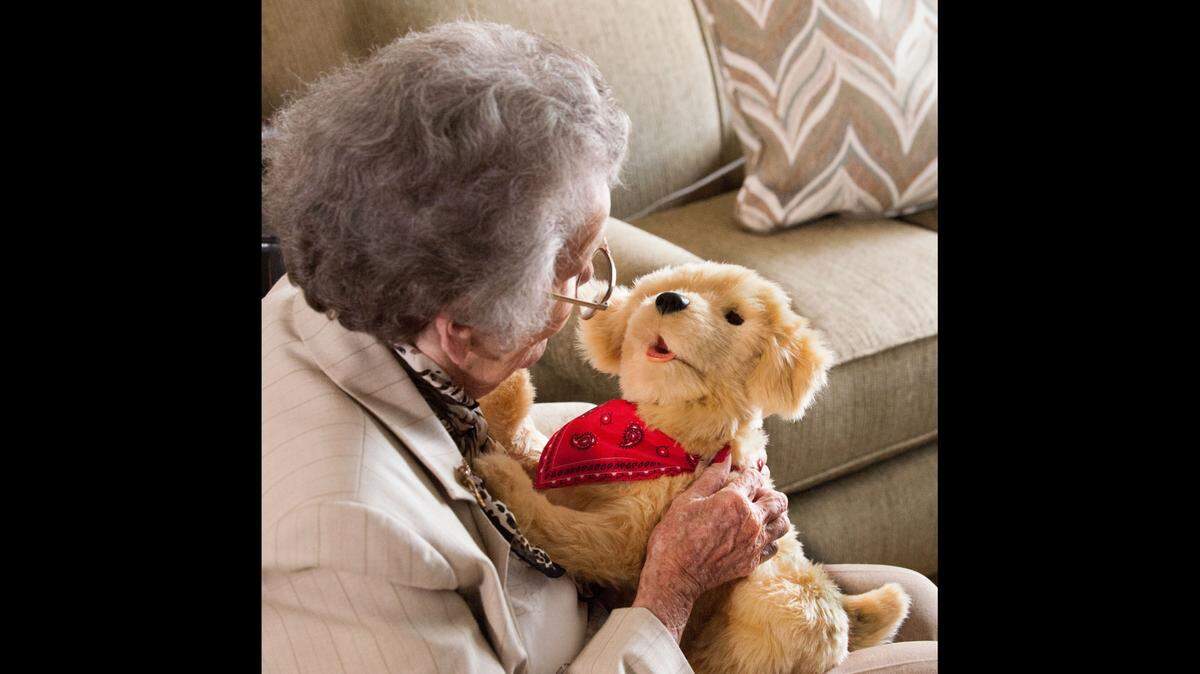
In May, Florida’s Department of Elder Affairs delivered more than 375 free robotic pets to socially isolated senior citizens and adults living with Alzheimer’s disease and related dementia. The idea? The department hoped the therapeutic alternative to pet therapy could help seniors “improve their daily mood and give them a greater sense of well-being” during Florida’s social-distancing requirements in the first wave of the COVID-19 crisis.
This season, the Alzheimer’s Association, along with the Florida Department of Elder Affairs and senior engagement technology provider iN2L, started “Project VITAL at Home,” a program that makes available a tablet at no cost and designed for those living with Alzheimer’s, or another dementia, and their caregivers.
To be prescreened to receive a tablet use the Project Vital online form and reach the Alzheimer’s Association 24/7 helpline at 800-272-3900.
Crisis support information
GENERAL SUPPORT
▪ Planned Parenthood of South, East and North Florida offers behavioral health counseling services via telehealth. Therapists can help with matters including anxiety, depression, gender identity and sexuality. Visit go.ppsenfl.org/mentalhealth or call 561-472-9991.
▪ 211 can be reached in Miami-Dade, Broward and Monroe to be connected to services including counseling and employment assistance.
▪ Catholic Charities of the Archdiocese of Miami: For help, call 954-332-7070.
SUICIDE
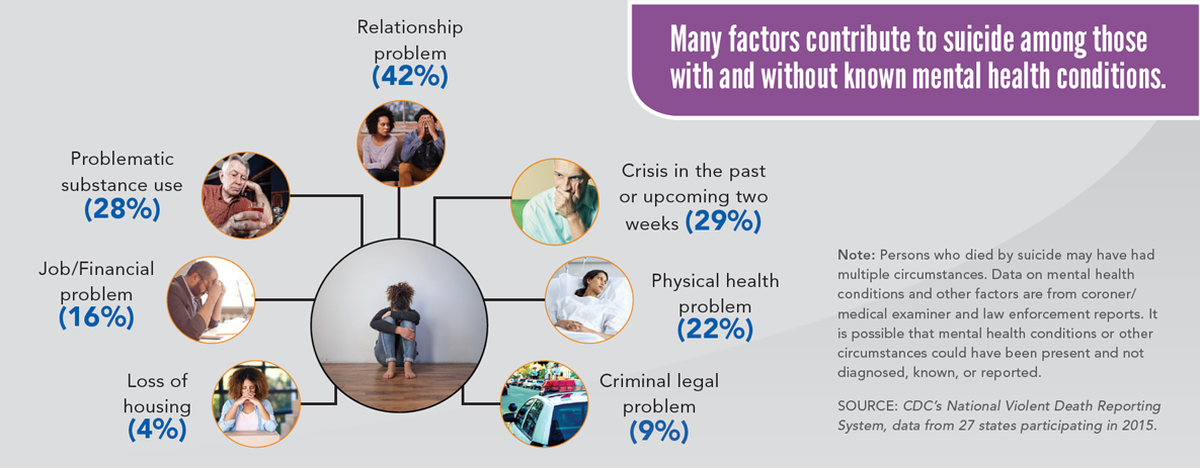
According to the Florida Department of Health, suicide is among the top 10 leading causes of death in the United States, resulting in about one death every 11 minutes.
“Additionally, suicide attempts result in an even larger number of non-fatal, intentional self-harm injuries” and it is a problem at all ages.
According to the department’s 2019 records, the age-adjusted suicide rate per 100,000 residents was highest in the state in Central Florida’s Glades County, where the rate was 34.44. Lafayette County, in the Panhandle region, reported zero.
In South Florida, Miami-Dade’s rate was 8.58; Broward’s 11.52; Palm Beach County’s, 13.81.
There are numerous hotlines to call for help for those in a crisis, but if you feel you are at an emergency stage, call 911.
▪ Broward Suicide Intervention can also be reached by dialing 211.
▪ The Suicide Prevention Hotline number in Florida and nationwide is 800-273-8255.
▪ Guidance Care Center in the Florida Keys has locations in Key West, Marathon and Key Largo and can help with behavioral health services, education and support for many in need, including parents, teens and children. It can help those cope who are battling substance abuse, too, or other crisis situations and mental health concerns. Call 305-434-7660 or visit www.gcmk.org.
▪ Military personnel and veterans can call that 800-273-8255 number and press 1 or text 838255 to get help.
▪ The deaf and hard of hearing who use the TTY service can dial 800-799-4889 or dial 711 then 800-273-8255 or visit http://www.suicidepreventionlifeline.org/GetHelp/Accessibility for an online chat. This applies to veterans, too.
▪ For Spanish call 888-628-9454 or 800-622-4357 or in the city of Miami call 305-358-4357.
▪ For Creole call 305-358-4357.
▪ LGBTQ Youth. Call 866-488-7386 24 hours a day, daily. On Fridays you can text 202-304-1200. There is also the The Trevor Project chat option available from 3 p.m. to 9 p.m. daily.
▪ GLBTQ HELPLINE and Suicide Awareness in Miami is available at 305-646-3600 in English, Spanish and Creole.
▪ Lifeline Crisis Chat is available at https://suicidepreventionlifeline.org/chat/.
▪ To locate a Crisis Center visit http://www.suicidepreventionlifeline.org/getinvolved/locator.aspx.
▪ Florida Suicide Prevention Coalition, visit http://floridasuicideprevention.org/resources/.
SUBSTANCE ABUSE
The pandemic has made it even harder for those battling alcohol and substance abuse. But there are organizations out there that are turning to virtual platforms to offer meetings and other support.
▪ Thriving Mind South Florida: Formerly known as the South Florida Behavioral Health Network, the organization manages state funding and connects people with the services they need. The Thriving Mind Consumer Hotline can be reached from 8 a.m. to 4:30 p.m. Monday through Friday at 888-248-3111.
▪ University of Miami Health System: The system offers multidisciplinary treatments for all types of addiction. To make an appointment call 305-243-0214. UMH also is a Marchman Act — which is a judicial process for involuntary treatment — facility. For more information, call 305-689-4444.
▪ Miami-Dade County Substance Abuse Rehabilitative Services Division: The county provides residential and outpatient help to those in the county. For more information call 786-469-4600.
▪ House of Hope in Broward County has been providing help for those suffering from substance abuse and mental illness since 1969. The non-profit offers treatment in residential and outpatient settings. Visit houseofhope.org or call 954-524-8989.
▪ In the Rooms: Is an online recovery community that offers meetings and other online resources. For help, call 888-401-1241 or visit www.intherooms.com.
▪ The Broward Addiction Recovery Center: To schedule an appointment to be evaluated for detoxification, medication assisted treatment, residential treatment or outpatient services, call the admissions department at 954-357-4851.
▪ The Substance Abuse and Mental Health Services Administration: This national hotline can help people find appropriate treatment across the United States. The number is 800-662-HELP (4357).
▪ Alcoholics Anonymous: The international fellowship offers help for those struggling with addiction. To find a local group visit www.aa.org/pages/en_US/find-aa-resources.
DOMESTIC VIOLENCE
The Broward State Attorney’s Office describes domestic violence as “a pattern of behavior used to establish power and control by one family or household member over another family or household member through fear and intimidation, often including the threat or use of violence.”
The are several organizations that offer people help with an escape plan or a safety plan. But if there is an emergency, law enforcement agencies always encourage people to dial 911.
▪ Florida Domestic Violence 24-Hour Crisis Hotline: Call 800-500-1119 for help in finding a domestic violence center.
▪ Miami-Dade County Coordinated Victims Assistance Center: Victims of domestic violence, sexual violence and human trafficking call or text 305-285-5900 24 hours a day.
▪ Advocates for Victims/Safespace Hotline - Central: Call 305-693-0232.
▪ Advocates for Victims/Safespace Hotline - North: Call 305-758-2546.
▪ Advocates for Victims/Safespace Hotline - South: Call 305-245-5011.
▪ Women in Distress of Broward County: There is a 24-hour-a-day crisis hotline at 954-761-1133.
▪ JCS Shalom Bayit Hotline: The domestic violence confidential hotline can be reached at 305-576-1818.
St. Jude’s tips on coping in a pandemic holiday season
St. Jude Children’s Research Hospital, including St. Jude Psychology Clinical Director Niki Jurbergs and colleague Megan Wilkins have some tips for how we can stay healthy, both mentally and emotionally, as well as physically during this challenging holiday season.
▪ Perform a mental health check. “It is critically important, especially given mounting ‘pandemic fatigue,’ that we attend to our own mental health,” St. Jude psychologists said. Parents, and caregivers, need to take time for care of themselves, including spending time outside, seeking social support and engaging in relaxing activities. “Give yourself grace to feel disappointment and upset about this highly anxious and uncertain time.”
▪ Feel empowered to do what feels comfortable. Adjust your expectations and prepare for things to be different this year, and in many cases, difficult. “It can help to talk about these losses, sharing what we are missing most this holiday season.”
▪ Take time to consider what is meaningful to you around the holidays. “Rather than looking forward to our typical parties and family meals, we might choose to focus on the gift of health we give when we make the sacrifice of honoring our families’ and loved ones’ health and safety by staying home.”
▪ Make the holidays special from afar. Plan surprises like cards or gifts delivered in the mail to loved ones. This could let them know you’re with them in spirit even if you can’t be there in person as in the past, St. Jude psychologists suggest. Consider singing favorite holiday songs virtually, for instance. Think up new traditions you could develop and incorporate next year, like dreaming up new recipes or family games or supporting charities you feel strongly about.
▪ Protect your elderly loved ones from loneliness and isolation. Reaching out — even simply by phone or video chats or drive-bys — is more important than ever to make them feel seen and heard.
“For the 250,000 Americans grieving the loss of a loved one from COVID-19, make the decision about the holidays that feels right for you,” St. Jude’s Jurbergs and Wilkins said. “Celebrating holidays for the first time without a loved one is unspeakably difficult. For these families, not only has this pandemic taken the life of a loved one, the threat remains. That is, not only are they grieving, they are continuing to face the virus and its ongoing impact on a daily basis.
“These families should not feel obligated to engage in holiday traditions as they have in the past,” St. Jude’s psychologists say. For some, it might feel better to forego celebrations this year. For others, finding special ways to honor and include the memory of lost loved ones can be helpful. “As with all family decisions, this one is highly personal.”
This story was originally published December 10, 2020 at 12:10 PM.