
Want to ‘defund’ a Florida sheriff? Except in Miami-Dade, there are roadblocks
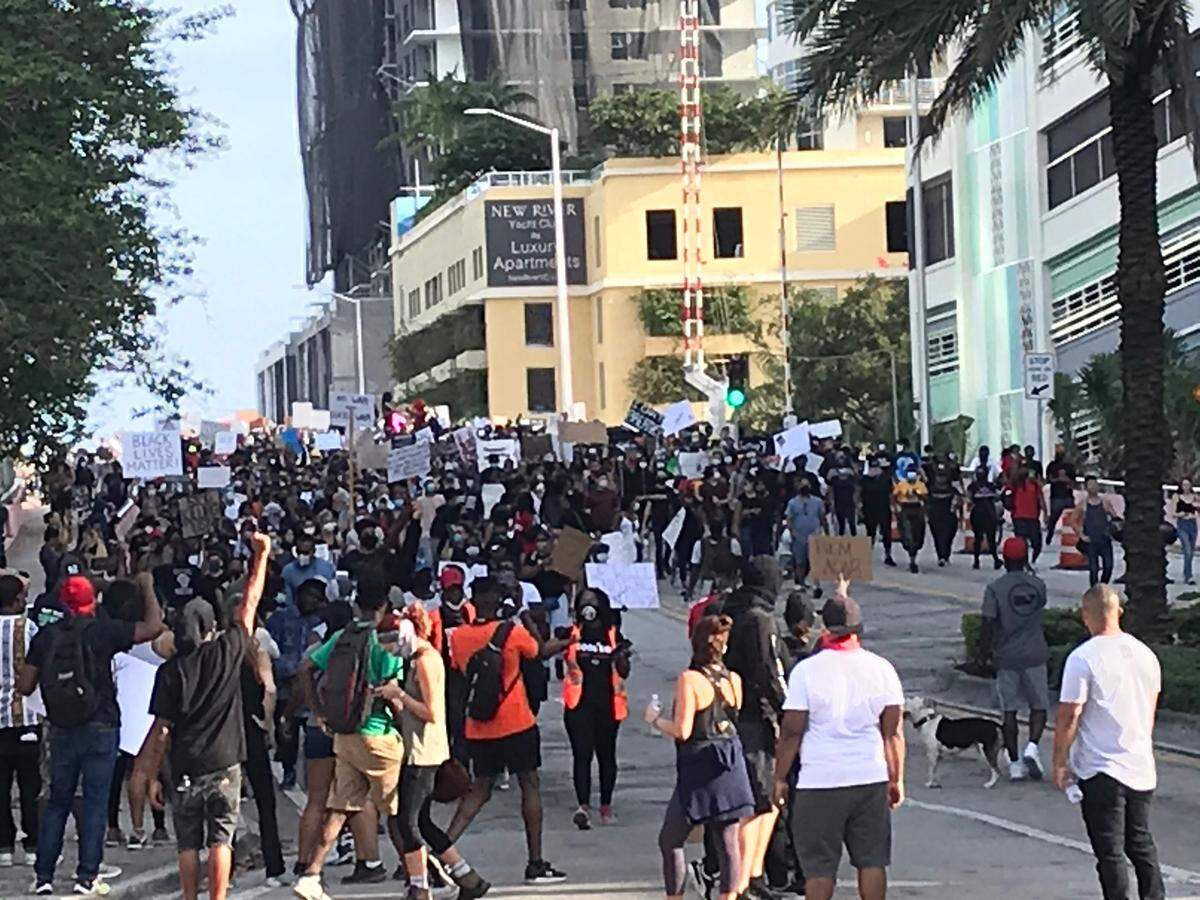
It has become a familiar rallying cry at protests over police abuses across the country: “Defund the police.”
In Florida, it won’t be so easy.
Altering the budgets of Florida’s 66 elected sheriffs is difficult — if not impossible. County commissioners set sheriffs’ budgets across the state, but they have little say over how sheriffs spend the money.
And if sheriffs don’t like the budget commissioners give them, they can appeal their budget to the governor and Cabinet, which have favored sheriffs over the last few decades.
Miami-Dade is the only county without an elected sheriff. Mayor Carlos Gimenez, who acts as the administrator for the county police department, can make changes to the budget and also has veto power. He also appoints the police director. That will change in 2024, when Miami-Dade will join the rest of Florida’s counties in electing a sheriff.
But the 63-year-old state law, which applies in the rest of the state including Broward and Palm Beach counties, could be a serious impediment to reforming, or defunding, sheriff’s departments, run by some of the most powerful elected officials in the state.
“Good luck if you’re going to try to defund a sheriff’s office,” said Robert Sullivan, a retired Pasco County Sheriff’s Office captain and professor at St. Leo University. “It is a powerful, powerful entity, the Florida sheriff.”
The idea to “defund” police has various meanings, from abolishing the departments to reducing their budgets and roles in society. Few Florida lawmakers or county commissioners have embraced the idea.
And while sheriffs seldom appeal to the governor over their budgets, reform efforts and shrinking budgets from a coronavirus-impacted recession could force Gov. Ron DeSantis to be an arbiter in the intra-county disputes.
DeSantis has not said how he feels about the “defund the police” movement, and his spokeswoman did not provide an answer to the question this week.
Unlike cities, which typically appoint their police chiefs and have stronger oversight of their budgets, sheriffs are elected and have stronger say over how they spend their money.
County commissioners set the budgets for themselves and other elected officials, such as state attorneys, public defenders and tax collectors. Only sheriffs have the ability to appeal to the governor and Cabinet, which includes the state attorney general, chief financial officer and agriculture commissioner. Tax collectors and property appraisers can appeal their budgets to the state Department of Revenue, according to the Florida Association of Counties.
The process creates “an automatic tension between the county commission and the sheriffs,” said Alachua County spokesman Mark Sexton.
“The county is charged with funding a lot of different entities other than themselves,” Sexton said. “There’s not enough money to give everyone everything.”
That tension has caused clashes in Alachua County, where commissioners and Sheriff Sadie Darnell have sparred multiple times in the past decade. In 2011 and 2016, she asked Gov. Rick Scott and the Cabinet to weigh in after not receiving the money she asked for. Both times, a deal was reached before the state’s top officials weighed in.
Alachua County sued her in 2017 after she diverted $500,000 the county assigned to vehicles toward raises for deputies. Judges have sided with Darnell twice, and the case now rests with the Florida Supreme Court.
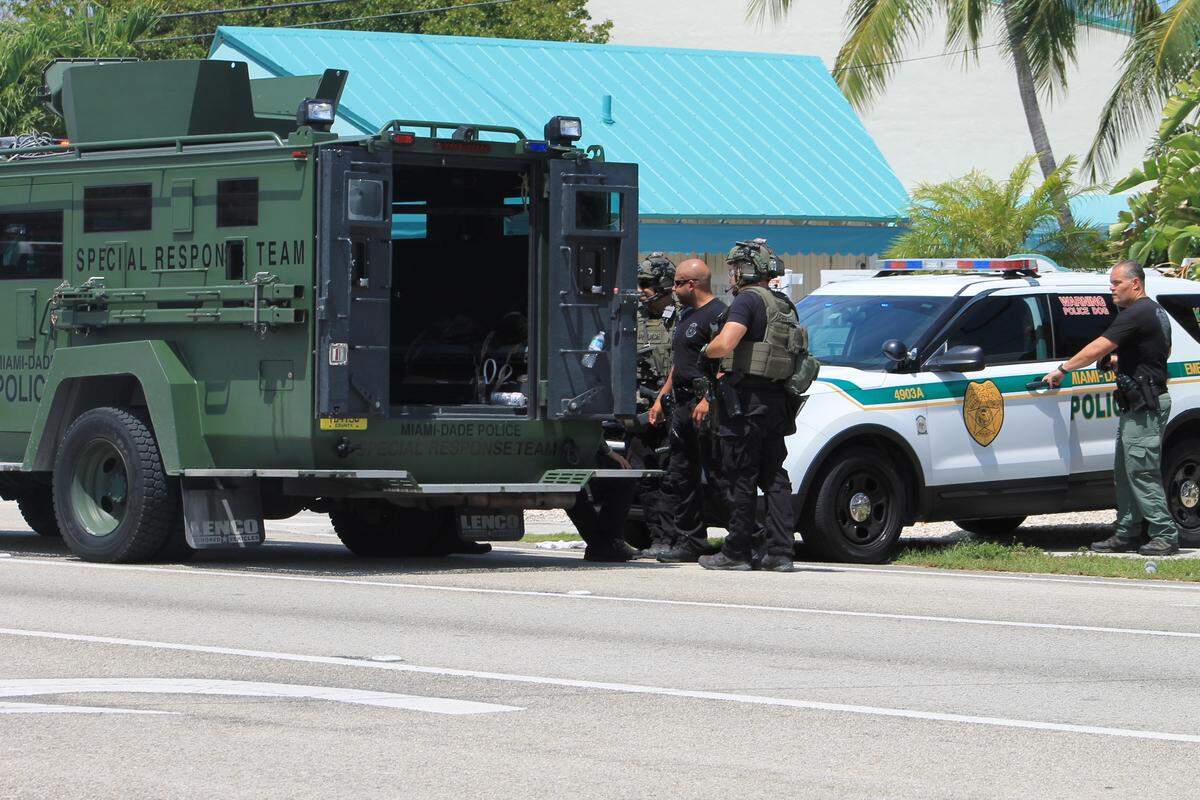
The only exception to the sheriff’s appeal process is in the only county that doesn’t have an elected sheriff: Miami-Dade, where the County Commission is responsible for setting the budget for each department and the county mayor acts as the administrator for the county police department.
Miami-Dade hasn’t had an elected sheriff since the 1960s, when a pair of corruption scandals led voters to pass a referendum to abolish it. But in 2018, Florida voters passed Amendment 10 requiring Miami-Dade to return to electing a sheriff by 2024.
Since 2000, sheriffs have asked the governor for help with their budgets at least a dozen times. Most of the appeals have come from sheriffs from smaller counties, where resources are scarcer, and most of the time, the sheriffs and counties reach agreements before the governor has to weigh in.
Governors have nearly always sided with sheriffs — at least in part.
One of the last times was in 2016, when then-Liberty County Sheriff Nick Finch wanted $282,000 more than what county officials gave him.
Finch went before Gov. Scott and his three Republican colleagues on the Cabinet and pointed to the badge on his chest, which had a black band across it, a sign of mourning for officers who died in the line of duty.
“Law enforcement is under attack. I don’t have to tell you guys that,” Finch said. “I can’t send my guys out under-equipped or not equipped at all to fight crime.”
He told Scott and the Cabinet that the budget dispute was personal. He said county commissioners didn’t like him.
“They’re trying extremely hard to make it as difficult for me to be a successful sheriff as they can,” he said.
Liberty County Attorney Robin Myers explained that the county, most of which is federal forest land, is the poorest in the state. Finch and his 15 deputies were already consuming 76 percent of all tax dollars the county was collecting, Myers said.
“This is not personal. Business is not personal,” he said. “We do have other bills that we have to pay.”
Myers noted that Finch had purchased 27 assault rifles and five new vehicles the year before, when Finch had again gone before the Cabinet for a budget increase.
“He spent his money that ya’ll allocated him, $52,000, on a GMC Z71 pickup truck that he drives,” Myers said.
Miami Herald staff writer Samantha Gross contributed to this report.
This story was originally published June 17, 2020 at 2:22 PM.