Self-styled muckraker and antagonist of mobsters sues for access to Jeffrey Epstein records
A self-professed muckraker who has shown that the FBI paid mob informants who were committing murders filed a lawsuit against the agency Wednesday seeking release of documents about its ties to disgraced financier Jeffrey Epstein.
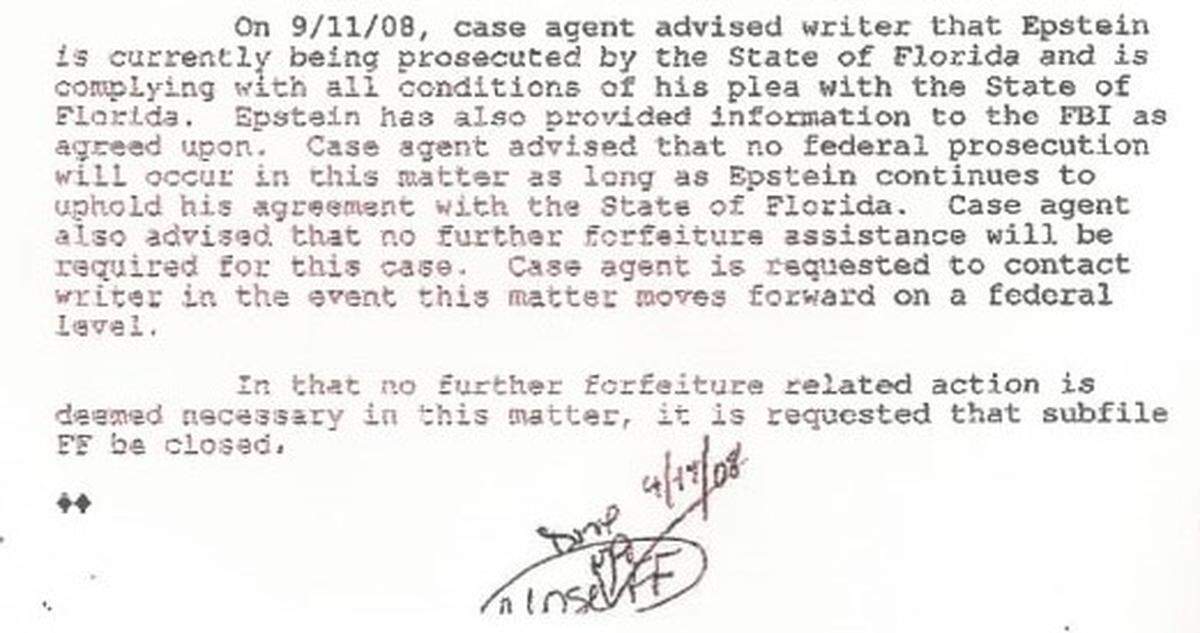
In a lawsuit that subpoenaed records from the Justice Department and the FBI, Angela Clemente asked for the public release of documents involving the late Epstein as an informant to the FBI. She pointed to a 2008 FBI document, now declassified, that mentioned Epstein had entered some sort of agreement to be an informant.
That arrangement may have come as part of a deal that allowed him to escape tougher federal punishment for sex trafficking and instead plead guilty under state law to a less severe charge of soliciting prostitution from a minor. The deal was part of the focus of the Herald’s Perversion of Justice series in November 2018. Since its publication, additional women have come forward to allege that Epstein, who died in a New York jail cell last Aug. 10 of a reported suicide, sexually abused them, in some cases when they were minors.
“I suspect the Epstein documents will reveal important officials were involved at the highest levels of government and society in a pervasive corruption which unjustifiably victimized an extraordinary number of people of all ages,” Clemente told the Herald.
A former model-turned-paralegal who calls herself a forensic intelligence analyst and congressional consultant, Clemente sought FBI records in January, and on Wednesday filed a lawsuit trying to force the FBI and Justice Department to spell out the relationship with Epstein and what cases he might have informed in beginning 12 years ago.
“These records are of interest because Mr. Epstein was identified as cooperating with the FBI in an FBI document dated 9/18/08 on a child prostitution and forfeiture case against him,” Clemente wrote. “In this document the case agent advised that no federal prosecution would occur as long as Epstein continued to uphold his agreement.”
Epstein came on Clemente’s radar as part of her decade-long investigation into the deaths of young women in Ohio and a purported sex trafficking ring that brought underage girls to and from Palm Beach, which is where Epstein kept one of his many homes. Ohio is where Leslie Wexner, the founder of the L Brands empire, lives and where one chapter of Epstein’s mysterious rise to fortune occurred.
There have been no public documents tying either Wexner or Epstein to the missing girls, but Clemente alleges that state and federal officials in Ohio have failed to properly investigate the murders.
At least one of Epstein’s accusers has told authorities she was abused in Ohio, and it is why Clemente sought records on Epstein, including any that would describe him as a Top Echelon (TE) informant.
“In conducting the search, please use all nicknames, aliases, pseudonyms, code names or code numbers used by, or applied to, Mr. Epstein,” Clemente wrote. “In addition, when searching under Mr. Epstein’s name, please employ all logical buildups, breakdowns, and variations of his name.”
Clemente also asked for all FBI photographs pertaining to Epstein, as well as video and audio surveillance tapes and/or transcripts.
Nine days after Clemente filed a records request in January, the FBI shot it down, saying some of what she sought was already released and other documents would remain private and in the hands of the agency.
Reporting by the Herald in 2018 indicated that Epstein helped inform the prosecution in New York of two executives who ran a Bear Stearns hedge fund that had collapsed at the start of the 2008 financial crisis. Epstein got his start in finance at Bear Stearns, a Wall Street firm that eventually crumbled from excessive risk taking and triggered what would become known as the Great Recession.
Clemente believes the relationship with the FBI went further.
There “is a pending or prospective law enforcement precoding relevant to these responsive records, and release of the information could reasonably be expected to interfere with enforcement proceedings,” David M. Hardy, the FBI’s section chief for records, said in a Jan. 31 letter of response to Clemente.
The letter did not say who was under investigation. Epstein’s one-time muse and long-term business associate Ghislaine Maxwell is widely believed to be one of those in Epstein’s inner circle who knew the most, and would be a person of interest if the Justice Department pursues his abettors.
Clemente filed an administrative appeal on April 30 to the FBI’s Office of Information Policy, calling the FBI’s initial response in January “woefully insufficient.” Her appeal was taken up on May 12.
Multiple news reports in late February said that a top Justice Department official was surprised during a closed-door briefing with lawmakers when asked by Rep. Jackie Speier, D-Calif., if the FBI maintained a relationship with Epstein.
There was an expectation that Attorney General William Barr, whose father once employed a young Epstein as a private school math teacher, would be asked the same question in public testimony scheduled for March 31. But that hearing was postponed on March 23 because of the widening COVID-19 pandemic.
There’s reason to take seriously requests from Clemente. She was a consultant to and featured in the 2017 documentary “Gone: The Forgotten Women of Ohio.” By that time she’d already achieved a measure of fame for her dogged pursuit of FBI records regarding mobsters who were on the FBI payroll, even as they murdered rivals.
Clemente’s digging, featured in a New York Times long profile of her in June 2013, led to the indictment of an FBI agent alleged to have protected mob bosses.
One of her mobster sources informed Clemente that Terry Nichols, the co-conspirator in the homegrown terror bombing in Oklahoma City in 1995, had confided that the FBI had missed a cache of explosives hidden in his home in Herington, Kansas, and that the two bombers had accomplices.
Fearing the weapons might be used for an attack on the approaching 10th anniversary of the bombing, Clemente reached out to members of Congress, who led investigators to the hidden explosives.
The pursuit of justice came with a price. Clemente was badly beaten in 2006 when she met in Brooklyn with someone who claimed to have mob information.
This story was originally published May 20, 2020 at 7:01 PM.