
Don’t touch the wild monkeys. Here’s what we know about disease-carrying primates
Florida sees its share of invasive species. They can be head-turning like the python. Graceful like the lionfish. Terrifying like a frozen iguana.
Then there are monkeys. Sure, they’re cute. They also can be deadly.
Many varieties of wild monkeys in Florida can carry disease, including herpes.
If you have lived in South Florida long enough, you may have seen a monkey or two wandering sidewalks and streets. More than likely, the animal you came across was a Vervet monkey. Vervets have black faces and gray or white fur covering their bodies.
On Wednesday, Only in Dade County, a local Instagram humor account, posted a video of a pack of Vervet monkeys in a Miami-Dade neighborhood.
Luckily, this species of monkey is not known to be carrying the quickly spreading herpes virus. But that doesn’t mean you should touch them.
The Florida Fish and Wildlife Conservation Commission says feeding wild monkeys is illegal, and the animals can carry other diseases. Feeding a monkey is a second-degree misdemeanor punishable by a fine of up to $500 and 60 days in jail.
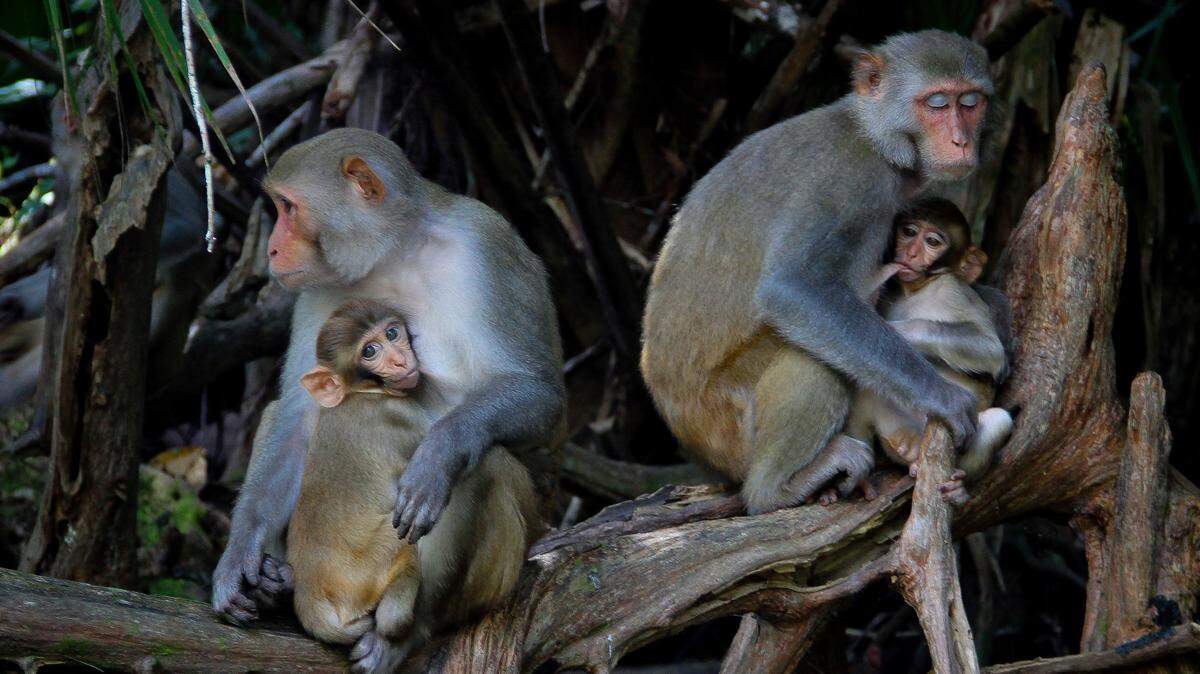
The FWC is warning residents to stay away from Rhesus Macaques because they carry herpes B, which can be spread through bites and scratches or through contact with bodily fluids. Macaques have pink faces and have light-colored fur.
The CDC says the virus is extremely rare, but it can lead to severe brain damage or death if you do not get treatment immediately.
“These kinds of monkeys are commonly infected with B virus, but they usually do not have symptoms, or have just mild disease,” the CDC said.
First symptoms of the virus are flu-like: headaches, fever, sore muscles and fatigue.
There have been at least 148 sightings of the monkeys through Central and North Florida, according to an FWC map.
So, if you see a wild monkey, stay away. And iIf you get scratched or bitten, seek immediate medical attention and then call the Centers for Disease Control at 404-413-6550.
This story was originally published February 6, 2020 at 10:50 AM.
%20Cropped%20(2).jpg)