
U.S. Supreme Court opens the door to sports betting in Florida and other states
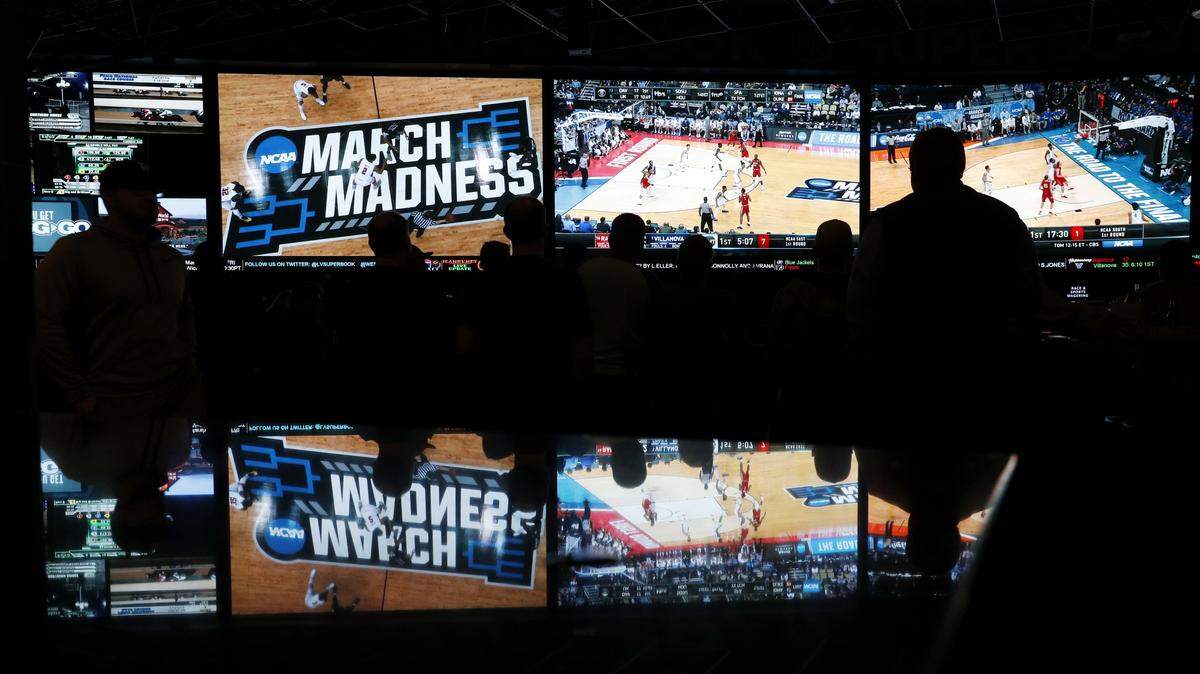
In a ruling that could have sweeping consequences for sports operations across the country, the U.S. Supreme Court struck down a federal law that banned sports betting, opening the door to another form of gaming in Florida if the Legislature authorizes it.
The 7-2 ruling, in a case brought by the state of New Jersey, found that a 1992 law known as the Professional and Amateur Sports Protection Act (PASPA), which prohibits states from authorizing and licensing sports gambling, violates the anti-commandeering rule of the U.S. Constitution.
“Congress can regulate sports gambling directly, but if it elects not to do so, each State is free to act on its own,'' wrote Justice Samuel Alito in the opinion for the court. The federal law " 'regulates state governments’ regulation' of their citizens. The Constitution gives Congress no such power.”
Florida law currently does not authorize any form of sports betting and the ruling will now increase pressure on the state Legislature to update gaming laws, which lawmakers have tried and failed to revise for more than a decade.
New Jersey and at least three other states — Pennsylvania, West Virginia and Mississippi — are poised to authorize and regulate sports betting at existing casinos, said Geoff Freeman, president of the American Gaming Association. But for sports betting to become legal in Florida, the Legislature, or voters by referendum, would have to authorize it.
The ruling "paves the way to an entirely different landscape — one in which we have not previously operated,'' the National Hockey League said in a statement. The statement said the NHL will "review our current practices and policies and decide whether adjustments are needed," but expected "no immediate impact on existing League rules relating to sports wagering."
For the gaming industry, which has been at war with the illegal sports betting industry for more than a decade, "it is a monumental day,'' Freeman said on a conference call with reporters.
It is unclear whether the ruling will automatically open the door to sports betting at tribal casinos, such as the Seminole Tribe's Hard Rock Casinos near Hollywood and Tampa but, Freeman said, the state could authorize it in its gaming compact.
Since the emergence of the Internet, the gaming industry has been at war with the illegal sports betting industry, which has capitalized on the public's desire to bet on everything from football, hockey and soccer to the NCAA's March Madness. As the industry operated underground, its annual revenues exploded to $150 billion, surpassing the $5 million gambling industry in Las Vegas, Freeman said.
The court ruling will allow legal operators to urge states to work with the gaming industry and sports leagues to regulate the games "to protect consumers, preserve the integrity of the games we love ... and generate new revenue for states,'' he said. "We took a great step toward accomplishing that goal."
In Florida, however, the clock is ticking. A proposal before voters on the November ballot, the Voter Control of Gambling amendment, would require a voter referendum before any additional gambling in Florida is allowed.
If voters approve the proposed Amendment 3, sports betting would be off the table until a statewide referendum is passed, said Marc Dunbar, an attorney at Jones Walker in Tallahassee, which represents several gaming interests.
"Florida is uniquely positioned to take advantage of sports betting,'' he said. "This ruling specifically benefits destination states like Florida and could result in a significant boon for the state’s tourism economy."
Because the margins from sports betting wagers are more narrow than other forms of gaming, it is the ancillary spending from gamblers who flock to hotels and gaming venues where the money is made, he said.
Sports betting allows gamblers to bet on everything from which team is going to win a ball game to which player is going to fumble. Congress passed the law in 1992 to preserve what legislators said was the integrity of the games, allowing only Nevada to continue sports betting.
But because "sophisticated odds makers, who do a ridiculous amount of algorithms, place risk in a way to balance the odds on each side,'' the margins are smaller for the house in a sports betting book than a traditional parimutuel book, explained Dunbar, whose law firm also represents offshore sports betting operators.
As a result, sports betting operations make profits of about 4 to 5 percent of the total wager, compared to 20 percent for a horse track, he said. In Las Vegas, the hotel industry profits off big sporting events.
"If you are in the hotel industry and you realize what is happening with March Madness in Vegas today, you would be a fool to vote for Amendment 3,'' he said.
But John Sowinski, director of No Casinos, said the ruling provides another reason to support the amendment on Florida's ballot.
"The more the landscape changes, the more it makes sense for voters to have a say on the issue,'' he said. "The question is, if we have it in the state, should it be authorized by legislators who are influenced by gambling interests or by the voters?"
No Casinos organized the campaign for Amendment 3 with $16 million in funding, primarily from Disney and the Seminole Tribe.
Dunbar said the ruling provides another opportunity for the Florida Legislature to update its gaming laws before the November election. Florida legislators considered convening a special session this month to update the laws and the gaming compact with the Seminole Tribe, but they could not reach agreement on the terms of the session and rejected it.
"I know I represent the industry but this is a compelling reason why they may want to reconsider a special session,'' Dunbar said. "If anything, it's an exclamation point on why people should vote no on Amendment 3."
Justice Ruth Bader Ginsburg dissented in the opinion, and Justice Sonia Sotomayor joined, arguing that there is no reason for the court to take a “wrecking ball” to the federal law in its entirety. Justice Stephen Breyer concurred with overturning the law but also agreed with the reasoning of the dissent.
“When a statute reveals a constitutional flaw, the court ordinarily engages in a salvage rather than demolition operation,” she wrote. “It limits the solution to severing any problematic portions while leaving the remainder intact.”
The court ruling Monday marks a major victory for former New Jersey Gov. Chris Christie, who challenged the law, and a defeat for the NCAA, NBA, NHL and NFL, which had urged the court to uphold the law.
They argued that while Congress recognized the potential source of revenue sports betting would create, "the risk to the reputation of one of our nation’s most popular pastimes — professional and amateur sporting events — is not worth it."
READ MORE: Questions and answers about the ruling
Christie, who left office in January, signed the New Jersey law legalizing sports betting in 2012, after voters in 2011 overwhelmingly approved an amendment to the state Constitution to allow it.
Lawmakers in Mississippi proactively authorized sports betting when they passed a fantasy sports law, said Dunbar, whose firm Jones Walker represents clients in Biloxi. The industry hopes to draw sports fans to its gambling venues on the Gulf Coast with the hope of reviving the declining casino industry.
"They believe it will bring back Biloxi because it will be the only Gulf Coast market able to take advantage of sports gambling tourism,'' he said. "It will be implemented before football season."
The ruling could breathe new life into legislation pending before Congress that would regulate sports betting at the federal level, which the sports leagues prefer, rather than let each state adopt its own rules, which the gaming industry wants.
Freeman, of the American Gaming Association, said he was confident that if the league worked together with the gaming industry and state regulators, "we can put the illegal market out of business."
He also predicted that change will happen swiftly.
"Some states will move faster than others but I do think you will see a critical mass get on board with sports betting faster than you've seen any gaming expansion in recent years,'' he said.
Les Bernal, national director of Stop Predatory Gambling, warned that the ruling could exacerbate what his association contends is a dangerous vice that harms people who become addicted to it and will lead to "normalizing" gambling for kids.
"The American people lost $117 billion on state-sanctioned gambling in 2016, causing life-changing financial losses for millions of citizens,'' he said in a statement. "It directly contributes to the lack of mobility out of poverty that traps so many. This serious national problem will be made far worse if the government is allowed to operate and advertise sports betting."
This story was originally published May 14, 2018 at 12:04 PM with the headline "U.S. Supreme Court opens the door to sports betting in Florida and other states."