
Rare whooping cranes hatch at Florida wildlife refuge
Matchmaking efforts by a North Florida wildlife refuge that paired up two endangered whooping cranes two years ago have finally paid off.
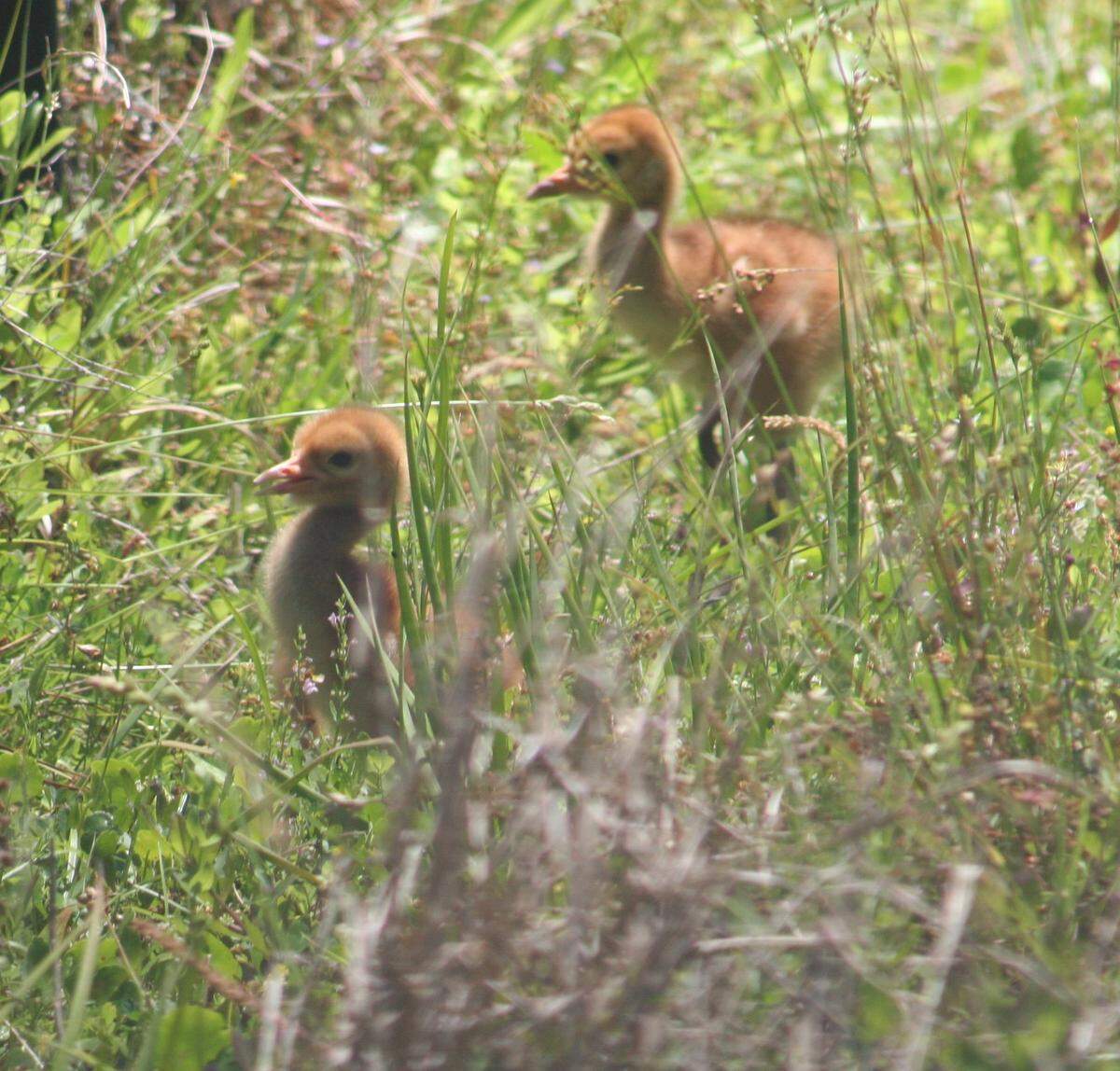
On Tuesday, biologists at White Oak announced that the cranes, Grasshopper and Hemlock, had hatched a pair of fuzzy brown chicks, a rare captive-bred love story for the state. The birds, brought to the Yulee refuge in 2016, were being groomed to be a future couple, but surprised wildlife managers with the hatchlings this spring.
"Our task was to pair them up so they could go back into the wild," said refuge manager Steve Shurter. "Lo and behold they also bred for us."
The wobbly-legged chicks are now learning to eat tadpoles, grasshoppers and dragonflies, and growing at a brisk pace of 10 to 15 percent each day.
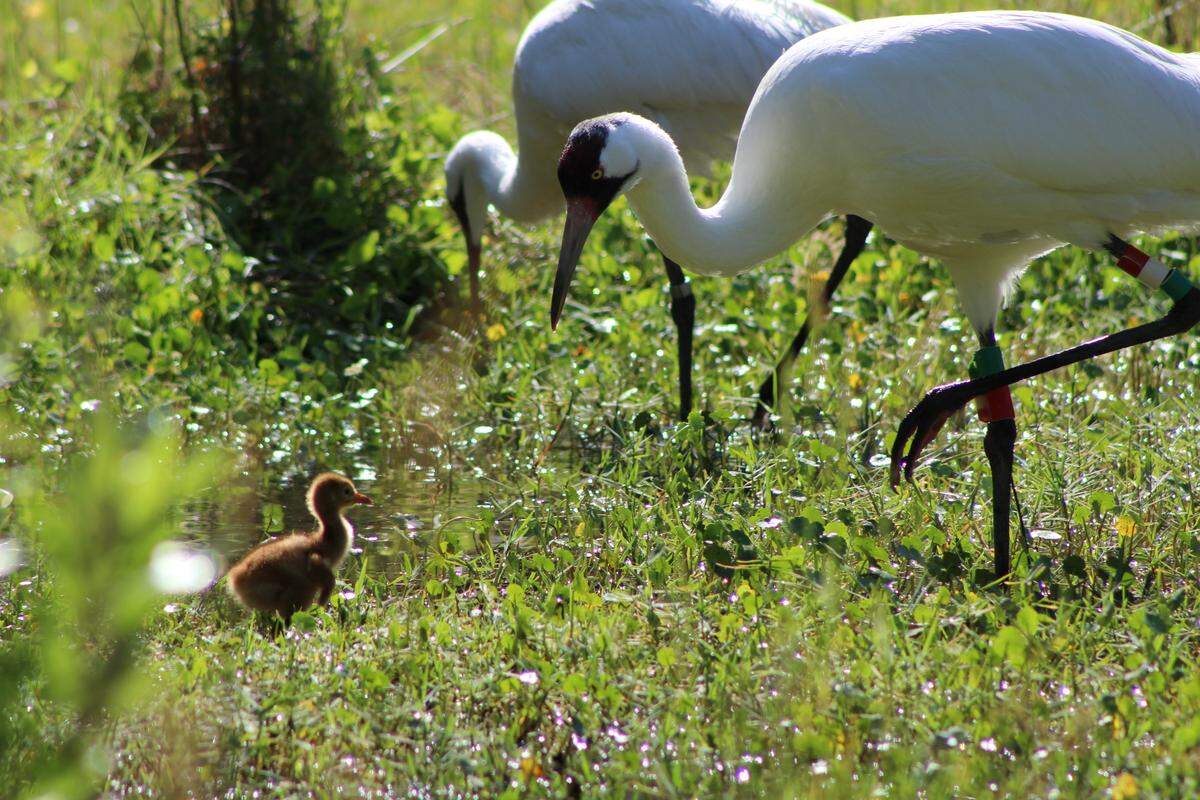
Whooping cranes, named for their booming calls, once traveled in great flocks between Florida and Canada, wintering along the Gulf Coast's marshy prairies. But by 1950 the population had dwindled to a single flock of just over a dozen. Conservation efforts, including bird-suited biologists disguised so as not to confuse babies, have helped revive the birds. There are now about 700 captive and wild birds in North America, according to the U.S. Fish and Wildlife Service.
But with their habitat shrinking and reproduction rate slow, restoring wild flocks of the long-lived birds has been challenging.
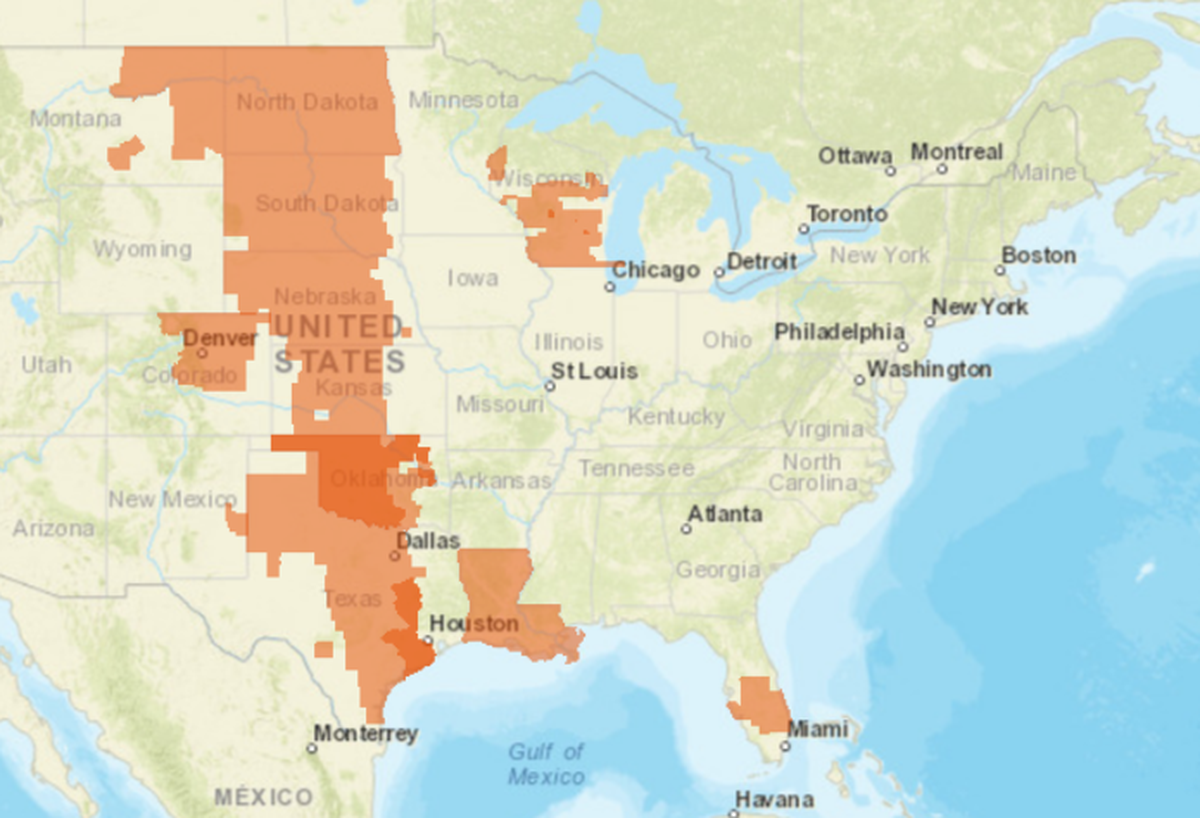
Only a single wild self-sustaining flock remains, according to the U.S. Fish and Wildlife Service, which counted just 329 wild birds in its most recent survey. An effort to reintroduce a flock in Central Florida in the early 1990s mostly failed. In March, the Service announced plans to move the remaining 14 birds in the Kissimmee Prairie to Louisiana, where another flock of 100 was reintroduced in 2011 and has done somewhat better. Fifty-three birds survived.
The Service is still trying to determine the best way to move the cranes, spokesman Phil Kloer said Wednesday, and has been in touch with state agencies, White Oak and the International Crane Foundation. No timetable has yet been set, he said.
White Oak has previously bred sandhill cranes but never whooping cranes, Shurter said. But when the 10,000-acre refuge founded by philanthropist Howard Gilman — and now owned by L.A. Dodgers owner Mark Walter and his wife, Kimbra — heard that two birds raised by the foundation needed a home in an attempt to pair them, the remote plantation jumped.
"We like to think the environment here at White Oak is conducive to crane pairing. They have very little human contact and we monitor them remotely," he said. "So yes, we do feel like we did something special."
Once the chicks develop feathers large enough for flight, the family will likely be returned to Grasshopper's home turf at a national wildlife refuge in eastern Wisconsin, Shurter said. Biologists hope the family will eventually begin to migrate with the flock in the refuge.
"We want them to be wild cranes," Shurter said.
This story was originally published May 9, 2018 at 3:12 PM with the headline "Rare whooping cranes hatch at Florida wildlife refuge."