
Surfside collapse victims sue Eighty Seven Park condo association and construction firms
The victims of the Champlain Towers South collapse are suing the condo association of Eighty Seven Park, a neighboring luxury tower they partly blame for the disaster, as well as three firms involved in Eighty Seven Park’s construction.
In a new filing that’s part of a complex class-action lawsuit, the plaintiffs allege that architects Stantec, engineers Florida Civil and a drilling vibration monitoring firm called Geosonics acted negligently during construction of the 18-story tower built just feet away from Champlain South, an aging building suffering from poor design and construction flaws. The lawsuit also says that the 8701 Collins Condominium Association should be held accountable because it assumed the liabilities and responsibilities of the developers who built the tower.
“Our investigation has uncovered additional entities, who along with the original defendants, we believe share responsibility for the Surfside collapse,” Harley Tropin and Rachel Furst, two of the plaintiffs’ attorneys, said in a statement.
The plaintiffs have already sued the developers, among them the prominent Miami firm Terra Group, and several other engineering, construction and law firms affiliated with either Eighty Seven Park or Champlain South. The previous complaint alleged that the Eighty Seven Park developers ignored clear warning signs that their work posed a danger to Champlain South and failed to follow industry standards. The defendants deny the claims.
Engineering experts previously told the Herald that work at Eighty Seven Park could have weakened the tower’s already failing structure — but even given that possibility would have been far from the sole cause of the June 24 tragedy that killed 98 people.
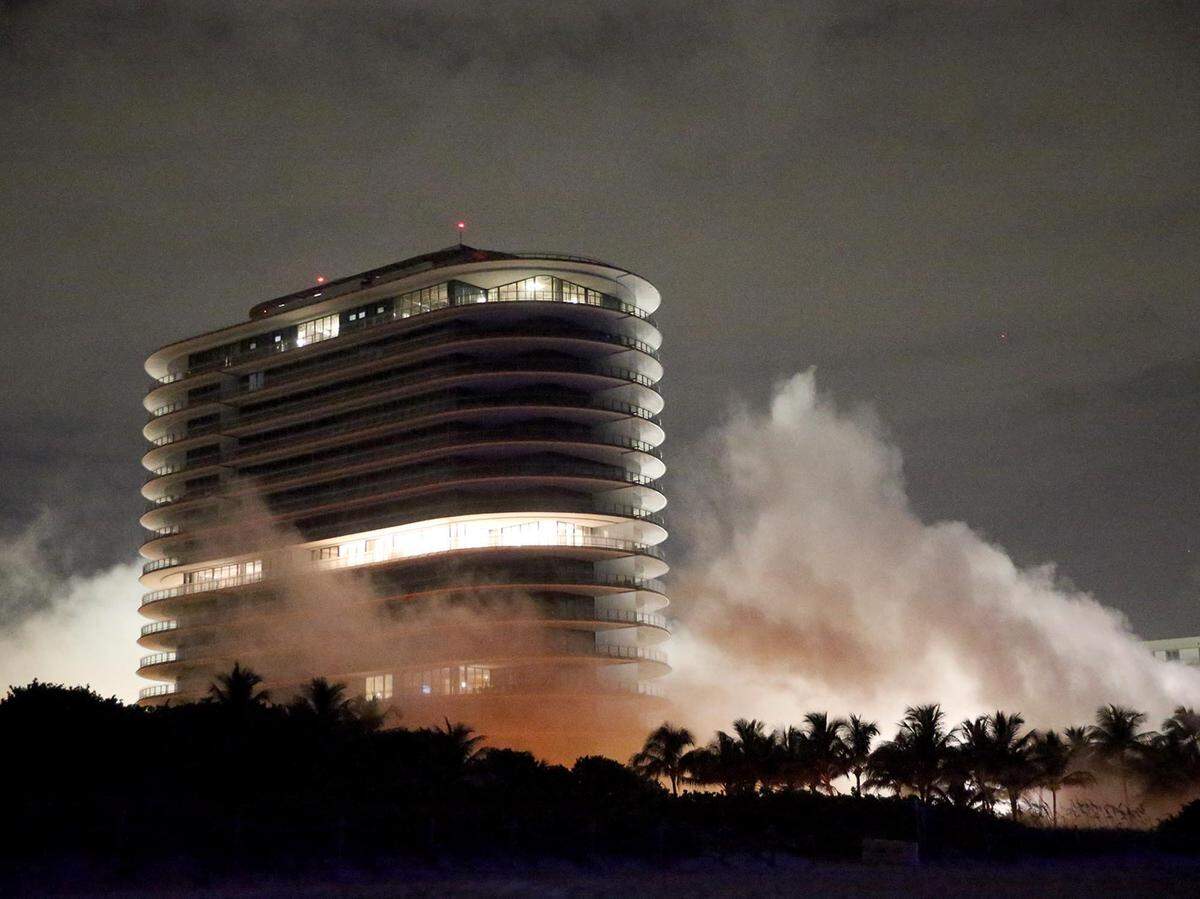
The amended complaint focuses on the construction work at Eighty Seven Park, including heavy drilling needed to lay piles for the tower, claiming the work weakened the ailing structure at Champlain South starting in 2016.
Stantec, based in Canada, served as the architect of record and managed construction for Eighty Seven Park, which was designed by world-famous architect Renzo Piano.
“Stantec failed to appropriately monitor and control the risks associated with dewatering, site compaction, pile driving, and excavation procedures and failed to undertake appropriate and necessary measures to analyze and ensure that the Eighty-Seven Park construction activities were not negatively impacting CTS,” the lawsuit says.
The suit also blames the firm for allowing construction of a pedestrian walkway that it alleges was designed in such a way as to funnel water into the basement of Champlain South and “corroded its structural supports.”
In a statement, Stantec said: “We designed 87 Park as part of a diverse project team of architects, engineers, and contractors, and we stand by the caliber of our work. Beyond that, we will not comment on active litigation.”
Florida Civil was retained to manage a separate construction process at Eighty Seven Park known as “dewatering.”
During dewatering, Eighty Seven Park sucked the moisture out of its site so construction crews could work in dry, stable soil rather than muck. The lawsuit alleges that the dewatering caused the sediment under part of Champlain South to shift in a way that torqued the structure’s joints and cracked concrete, a process known as “differential settlement” — something the plaintiffs say Florida Civil should have prevented.
The lawsuit alleges that Florida Civil’s dewatering plan “did not include any means of monitoring dewatering drawdown or its potentially catastrophic impact on the neighboring CTS building.”
The Herald reviewed photos showing cracks in the privacy wall along the perimeter of Champlain South that suggest differential settlement took place. But the photos — from the developers’ pre-construction survey in early 2016 — show the problem began before any construction or dewatering next door. It’s unclear from photos reviewed by the Herald whether the damage worsened during dewatering or subsequent construction.
Finally, Geosonics was responsible for monitoring the vibrations caused by sheet-pile driving at Eighty Seven Park. The suit alleges that Geosonics performed vibration monitoring for only seven days and that the vibrations “exceeded the allowable safe threshold ... every single day.” Those vibrations caused “structural damage” to Champlain South, the plaintiffs said.
The Herald previously reported that vibration levels recorded at Champlain’s southern perimeter were above limits used by the Federal Transit Administration to prevent damage to reinforced concrete.
The lawsuit also ties Eighty Seven Park’s condo association directly to the developers, noting that the association’s former president, Michael Piazza, “was employed as Senior Vice President Design and Construction for the Terra Group and continued to be involved with the management of construction activities for Eighty Seven Park” while serving on the board up through 2021.
Geosonics, Florida Civil and the Eighty Seven Park condo association did not immediately return requests for comment Monday night. Piazza could not be reached.
David Weinstein, an attorney for the Eighty Seven Park development team, said his clients continue to “categorically” deny any role in the collapse.
“Champlain Towers South was improperly designed, poorly constructed, significantly underfunded, and inadequately maintained and repaired,” Weinstein said in a statement. “We expect that a full review of the facts —and the ongoing [federal] investigation ... will affirm our position.”
Eighty Seven Park sits in Miami Beach just across the border from Surfside. The Herald previously reported on how the city of Miami Beach helped Eighty Seven Park build far closer to Champlain South than it otherwise would have been able — potentially exacerbating the effects of differential settlement, vibrations and water intrusion.
The suit is being heard in Miami-Dade Circuit Court.
Several defendants have already settled. The case has been complicated by the need to compensate so many different classes of plaintiffs, including unit owners, renters and the families of the deceased, all with different interests and priorities. A trial has been set for March 2023.
Miami Herald staff writer Sarah Blaskey contributed to this report.
This story was originally published March 8, 2022 at 7:30 AM.