
Florida prisons, among nation’s deadliest, didn’t like ‘demanding’ watchdog. He’s gone.
The inspector general for Florida’s Department of Corrections, the official in charge of rooting out brutality and corruption in one of the nation’s deadliest prison systems, has been replaced.
Inspector General Lester Fernandez, on the job since June 6, 2016, had rubbed people in high-ranking positions the wrong way. They called him incompetent, said he wrongfully believed the department had a “culture of corruption,” complained he had a foul temperament and charged he was out to “get” some in top management, including the former head of the department, the state’s largest with approximately 24,000 employees.
One accused him, a sworn law officer by virtue of his job, of playing “cops and robbers.” His exit, though voluntary, came under pressure from the top.
There’s nothing unusual or disqualifying about an inspector general not being popular. Like a police internal affairs officer, a prison IG’s job is to investigate the work of colleagues, conceivably resulting in punishment up to and including dismissal or even arrest.
Fernandez had followed a go-along inspector general with a track record of ignoring reports of deadly abuse, including from his own subordinates, as well as from a Miami-Dade inmate who saw a prisoner locked in a shower for nearly two hours and subjected to a punitive hot water treatment ritual, controlled from an adjoining closet, until the prisoner, begging for help, collapsed and died.
.jpg "unnamed (7).jpg")
But Fernandez, brought in after the previous IG drew harsh criticism from lawmakers, found himself under attack after the head of the department, Mark Inch, complained to Gov. Ron DeSantis’ chief inspector general, Melinda Miguel, that he did not trust Fernandez, who he inherited when he took the job in January 2019.
In a statement from the Department of Corrections, spokeswoman Michelle Glady wrote that Inch expressed concerns to Miguel regarding “management shortfalls” and concerns regarding “certain investigative practices” under Fernandez’s leadership
On Tuesday, Miguel appointed Deputy Inspector General Ken Sumpter as Fernandez’s replacement.
The investigation of Fernandez, covering 148 pages, did not find cause for firing him but it did identify considerable organizational dysfunction, distrust and backstabbing within the corrections department, which is currently coping with an extraordinary number of deaths from COVID-19, 132 at last count.
It noted that Secretary Inch had a practice of refusing to meet with Fernandez unless there was a witness in the room.
The final report described in detail an abortive investigation of contraband smuggling at a Panhandle prison — an investigation that hinted at involvement of higher-ups. Targets included an officer who allegedly intercepted important evidence by masquerading as a representative of the Florida Department of Law Enforcement.
The report also listed claims that the IG openly talked of wanting to have the previous department secretary arrested. Fernandez denied that.
In addition to current secretary Inch and former secretary Julie Jones, the governor’s inspector general interviewed various members of the department’s top management. Many of them spoke of their disdain for Fernandez.
Despite no finding of a fireable offense, Fernandez’s employment ended on June 30 — nearly a month before the final report was issued.
While he denied targeting Inch’s predecessor, Jones, Fernandez did in his interview with investigators accuse her of starving his office of resources and asserted that management had interfered with legitimate investigations.
Fernandez, who had racked up over 30 years in federal inspector general’s offices, told the Miami Herald he left because he was “ready to go” but that there was a lot of pressure to leave.
“Were they trying to get me to leave? Sure,” he said, “But this report does say that there was no cause to fire me. That should speak for itself.”
The investigation began in July 2019 when Inch met with Miguel to report concerns he had with Fernandez. He said he lost trust and confidence in Fernandez, that Fernandez was not a competent manager and that he was “emotional.”
The report identified an ongoing turf battle over which FDC officials should oversee the department’s contraband-sniffing K-9 dogs. Contraband smuggling is a constant problem in the prisons, involving everything from cell phones to tobacco to hard drugs to even weapons. Much of it is believed to be facilitated by staff.
The role of IG
Inspectors general in state government are tasked with probes of departmental mismanagement. The IG of the department of corrections is unusual in being a sworn law officer, as are his or her subordinates. There are inspectors general employees assigned to individual prisons. When wrongdoing is alleged at those prisons, they can investigate and recommend discipline or refer matters to management. Other IG employees are not prison-based but are deployed as needed.
The Herald has reported on myriad issues with Department of Corrections inspectors, including ones at Lowell Correctional, the state’s largest women’s prison, where allegations of sexual abuse by male officers were glossed over for years. The Justice Department had representatives at the prison last fall looking into that. In another episode dug up by Herald reporting, three IG staffers were allegedly threatened with retaliation by their boss, the previous inspector general, after seeking to reopen the inquiry into the death of an inmate at Franklin Correctional Institution, claiming it was a clear case of abuse by staff.
%20(1)_fitted.jpeg "download (3) (1)_fitted.jpeg")
The inmate, 27-year-old Randall Jordan-Aparo, was sprayed with noxious chemicals and left to die on the concrete floor of his cell. The man had a documented medical condition that should have barred staff from spraying him with chemicals.
Those controversies occurred under Jeffery Beasley, who preceded Fernandez.
The Herald also published a series of investigative articles in 2014 revealing the death two years earlier of Darren Rainey, a 50-year-old inmate at Dade Correctional Institution who collapsed while locked in a specially rigged shower for nearly two hours.
Rainey, who suffered from mental illness, screamed for mercy as he was pelted with hot water in the enclosed space, the temperature controlled from an adjoining room. When the inmate was found, the skin had been stripped away from his body by the hot water.
The inmate who witnessed the event, Harold Hempstead, submitted repeated grievances but was ignored. (State Attorney Katherine Fernández Rundle, whose office ignored letters from Hempstead and only opened an investigation in the wake of news reports, later declined to file charges after the death was ruled “accidental.”)
In the wake of that, the Herald reported that the Justice Department had begun a “patterns-and-practices” investigation into whether abusive practices in the FDC were pervasive.
The status of that investigation is not known.
Mishandled arrests
In his interview with the governor’s inspector general staff, Inch also complained of relatively small, personal issues like Fernandez sending letters on department letterhead without permission and making negative comments about department managers, but a good part of the investigative report described some garden-variety prison corruption: staff members smuggling in cellphones at Madison Correctional Institution. That investigation snowballed into something bigger.
On New Year’s Day 2019, K-9 Unit officer Tyler Brown, a captain, was patrolling outside Madison Correctional when his K-9 dog “Pako” sniffed out possible contraband inside a vehicle. The license plate matched up to a prison staffer, Sgt. Joseph Eldridge. Eldridge, who is no longer with the the FDC, was escorted outside where a search turned up illegal drugs, cellphones and tobacco, all contraband. The inspector general’s office began an investigation the following day.
According to subsequent charges by the IG, Brown and Maj. Brett Handley conspired with unnamed members of the intelligence unit command staff to conceal the phones from the inspector general, diverting them to the intelligence unit’s cellular phone forensic lab.
The inspector general investigation alleged that Brown was able to acquire the phones by pretending to be a representative of the Florida Department of Law Enforcement.
Brown, who is not a law enforcement officer, was charged with false impersonation, misconduct, tampering with evidence, removal of contraband from a state correctional facility and conspiracy to tamper with evidence. Handley, Brown’s supervisor, was charged with official misconduct and conspiracy to tamper with evidence. They were arrested with a $30,000 and $15,000 bond, respectively.
.jpeg "download (6).jpeg")
Fernandez ordered an audit of the K-9 unit, and it was reported to Miguel that Fernandez had a vested interest in the case because he wanted the K-9 Unit to be transferred under his office. The employee who reported this said it was a case of Fernandez trying to show wrongdoing in the unit to “shame the agency” or “show they are corrupt.”
Fernandez told investigators that was not the case, and simply “someone’s opinion.”
The arrests on the part of the IG’s office made other department leaders and staff “afraid” to do their jobs, Inch told investigators.
In Handley’s case, the chief of investigations himself and five others showed up in the middle of the night to arrest him. Handley reported that he was humiliated to tell his mother and daughters about the arrest, and bonded out of jail the next morning. The assistant state attorney who reviewed his probable cause affidavit told Handley the case was “ridiculous.”
“It was a crap case” that could have been better addressed “administratively,” he said.
Former department Chief of Staff Dan O’Donnell said he perceived the arrest as a way to “embarrass and harass Major Handley.” The case against Handley has since been dropped by the state attorney’s office. Brown’s case is pending.
In Brown’s case, his wife and children were present at the time of the arrest.
After the arrests, Deputy Secretary Ricky Dixon called an attorney in case he was arrested too. He told investigators that he was frustrated by Fernandez’s office for “playing cops and robbers.”
According to interviews with Miguel, top department officials described Fernandez as vengeful and intimidating.
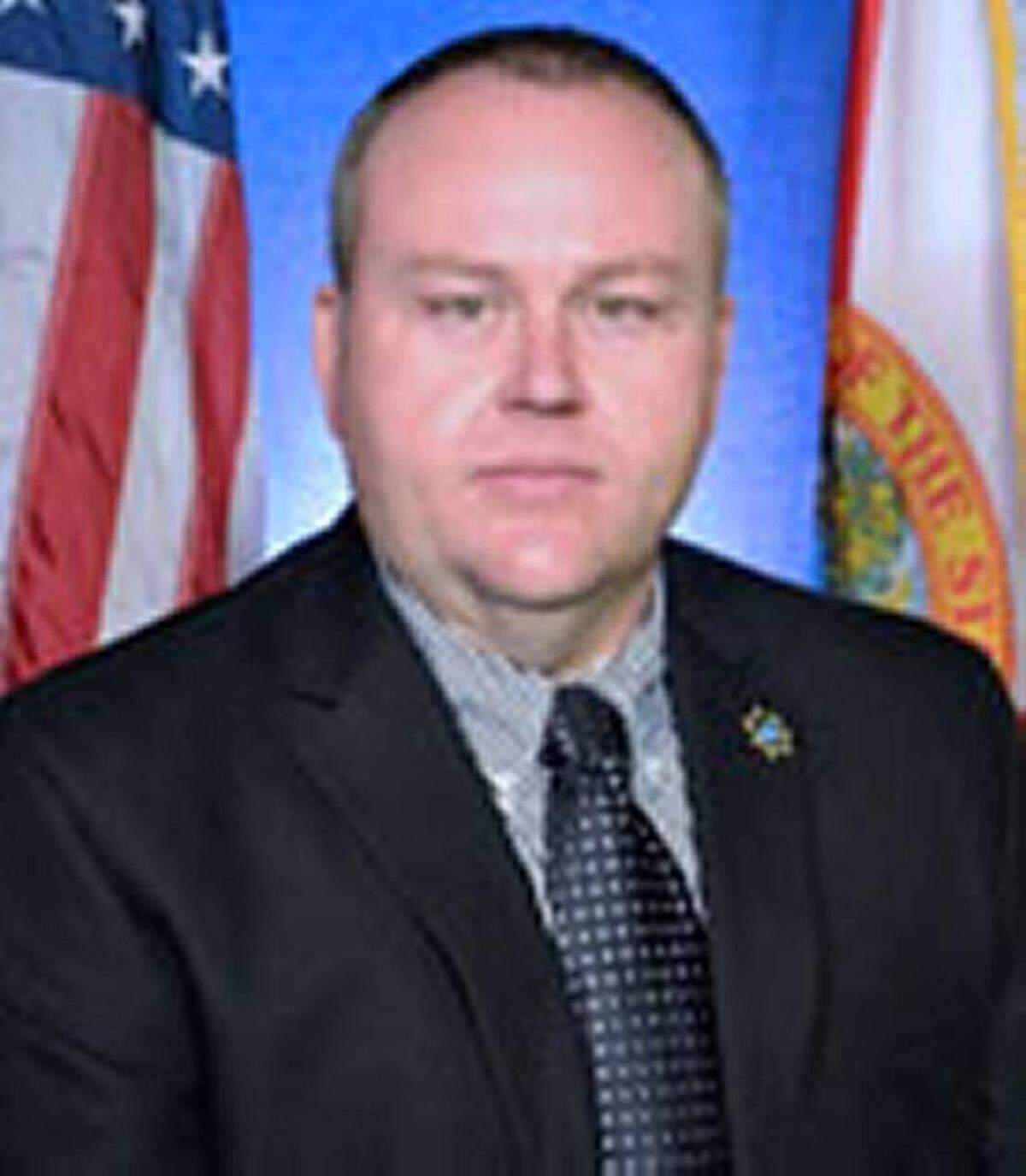
“I did not have the trust and confidence in the ability to do his job,” Jones, the former secretary, told investigators, who noted that she was shut down by Fernandez — told to “stay in my lane” — after questioning details of criminal investigations she didn’t agree with.
In his interview with investigators, Fernandez said while his relationship with department leadership was strained, it was not his doing. He described Inch as “kind of snippy” and that the secretary was trying to get him fired. He spoke of rifts in relationships with department higher-ups, and often felt that his role was being undermined.
Fernandez told the Miami Herald that he felt Inch had expected Fernandez to work for him, though that was not the case under state law, which keeps the IG’s office legally separate.
Next steps
Since Fernandez left in June, Sumpter, described by Fernandez in the course of the investigation as a “yes man” in sync with top management, was serving in his place as the interim IG until he was named to the position Tuesday.
Ron McAndrew, a retired warden who spoke out on behalf of whistleblowers during the Jordan-Aparo case, said he hoped the department would move forward and hire someone to take the role from the outside, so that they can come to the department with a fair and unbiased eye.
He added that a proper IG should be someone who “weeds out the bad apples” when they first take office.
“Fernandez was bound to fail because he didn’t take the action he needed to when he first came in,” he said. “They just threw integrity out the window.”
But Fernandez disagrees. He said he came in to a department that desperately needed independent oversight. He said he did not try to be liked. He added that the best person to replace him would be someone like him who “doesn’t need the job.” He was retired when he took it. He added being an outsider is a benefit.
“It’s lonely at the top. When you’re doing a good job, oftentimes you’re providing bad news,” Fernandez said. “Corrections is a unique animal.”
This story was originally published September 30, 2020 at 11:11 AM.