
Florida inmate paralyzed by guards denied COVID-19 test after possible exposure, lawyers say
A Florida woman whose neck and spinal cord were broken in a brutal beating by officers at Lowell Correctional Institution in August 2019 has been denied a test for COVID-19 after she was possibly exposed to infected inmates last week, her lawyers said.
In a Monday motion filed in Cheryl Weimar’s case against the Florida Department of Corrections, her lawyer said she was exposed to COVID-19 at the nearby Florida Women’s Reception Center in Ocala late July 13, but was refused a test for the disease even after offering to pay for the test herself.
The motion requests that the department transfer Weimar to an outside medical facility to test her for COVID-19 and protect her from the virus.
Weimar, 51, was left a quadriplegic in the beating and suffers from other health problems as well as trauma from the the attack, which remains under investigation by the Florida Department of Law Enforcement. After initially being treated at a hospital and having surgery, she was sent back to prison, where she has been incarcerated since.
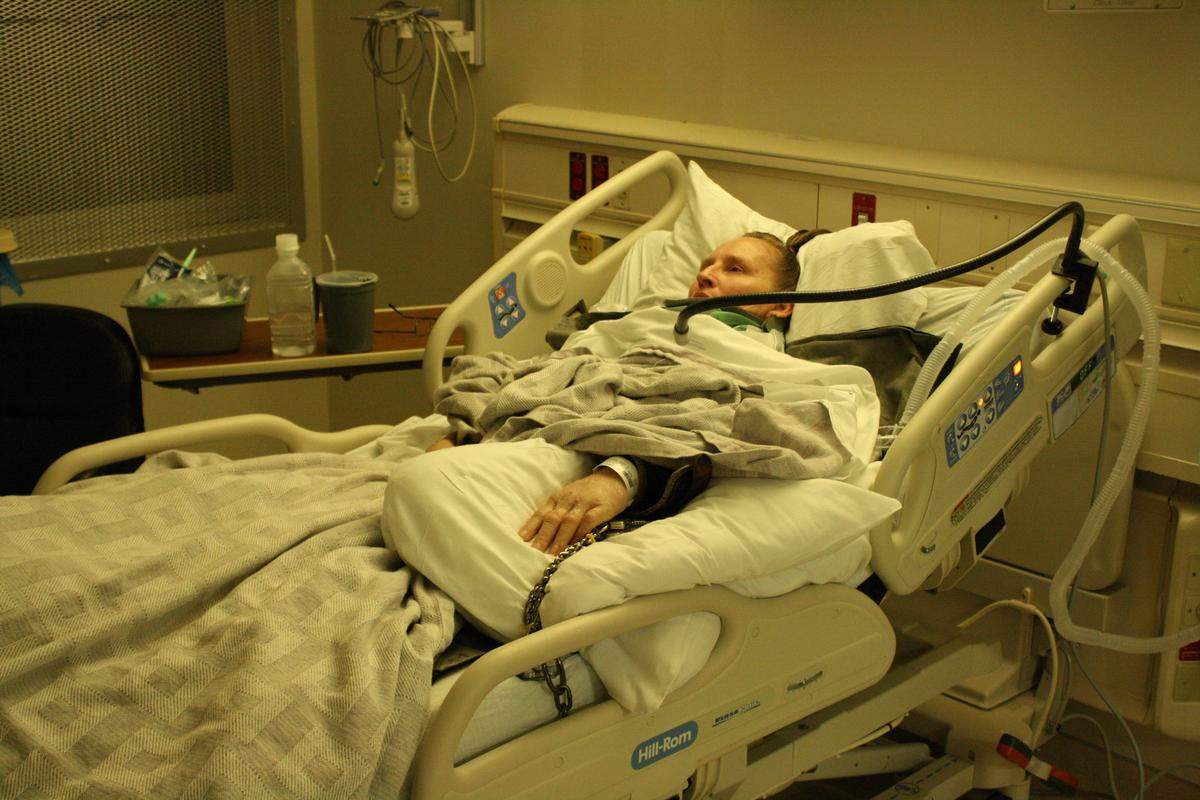
Weimar is serving time on a domestic violence-related charge and has a history of mental and physical disabilities. She has been incarcerated since January 2016.
In the motion, filed in the U.S. District Court in Ocala, her lawyers say security staff “knowingly and deliberately” allowed the doors to negative pressure entryways connecting cells of COVID-positive inmates to be opened for at least 45 minutes, exposing employees and inmates to the disease.
Weimar’s hospital bed is less than 50 feet from the door.
The revelation comes from a sworn affidavit by Weimar’s assigned night nurse. She testified that after the incident, several nurses and staff quit, including the director of nursing, leaving the prison severely short-staffed with medical providers.
As of Wednesday, the prison had 11 inmates test positive. Just 210 of approximately 1,456 inmates have been tested.
Weimar is medically fragile and susceptible to catching COVID-19, her lawyers wrote. Her injuries rendered Weimar dependent on catheters, mechanical breathing assistance, tracheostomy and feeding tubes and a specialty hospital bed. She oftentimes struggles to catch her breath, which her attorneys point out is a significant comorbidity as it relates to COVID-19.
In her affidavit, the nurse who cared for Weimar said she fears “[the Florida Department of Corrections] and the medical staff will let her die and not give her the testing and care that she will need and which should be provided in a hospital.”
The Department of Corrections cannot comment on individual inmates, but said it is instituting broader COVID-19 testing at the Florida Women’s Reception Center.
Centurion, the contracted managed care provider, did not respond to a request for comment.
Weimar’s trial in her case against the department is scheduled for December.
This story has been updated with a comment from the Department of Corrections.
This story was originally published July 22, 2020 at 5:08 PM.