
As COVID-19 cases and deaths rise, FL prisons boss says ‘major facilities’ dodged spread
As cases of COVID-19, the highly contagious disease caused by the novel coronavirus, started to spread in Florida the first week of March, the state’s Department of Corrections announced its commitment to handling any potential cases in keeping with federal guidelines.
The Department of Corrections has said in statements that it has ramped up health services, reviews of medical equipment, routine temperature checks and medical isolation measures for inmates with symptoms.
Visitation remains suspended through June to prevent carriers from bringing the disease in.
On the outside, social distancing measures enforced by state and local governments were intended to flatten the curve. A statewide “stay at home order” was intended to suppress the virus to allow time to ramp up testing and treatment methods.
But prisons, like homeless shelters and long-term care facilities, cannot simply stock up and have everyone isolate. Social distancing, as it is known in society at large, is not really possible for the incarcerated and those who work among them. And while Florida prison officials have laid out examples of what they are doing to mitigate the spread of the disease, did Secretary Mark Inch have a goal in mind and a strategy to reach it?
More importantly, is it working?
State says yes
In a statement to the Miami Herald, Inch calls the response to disease spread in prison a win.
Inch, who has visited many of the facilities in the last month, said he is proud of the coordinated response to prevent the spread of COVID-19, which has involved efforts to protect inmates through medical isolation, medical quarantine, reducing transfers and intake and practicing social distancing, he said.
Academic, career and technical programs have been halted, as have substance-abuse treatment programs, and mealtimes have been adjusted to stagger seating and maximize social distancing, he said.
The department has also expanded testing at institutions where inmates are sick, and has offered volunteer testing for staff at several of the facilities. Negative and pending employee test results are not reported on the department website, but Inch said most employee tests come back negative.
“We have successfully prevented community spread of COVID-19 at the majority of our major facilities,” he said in a statement.
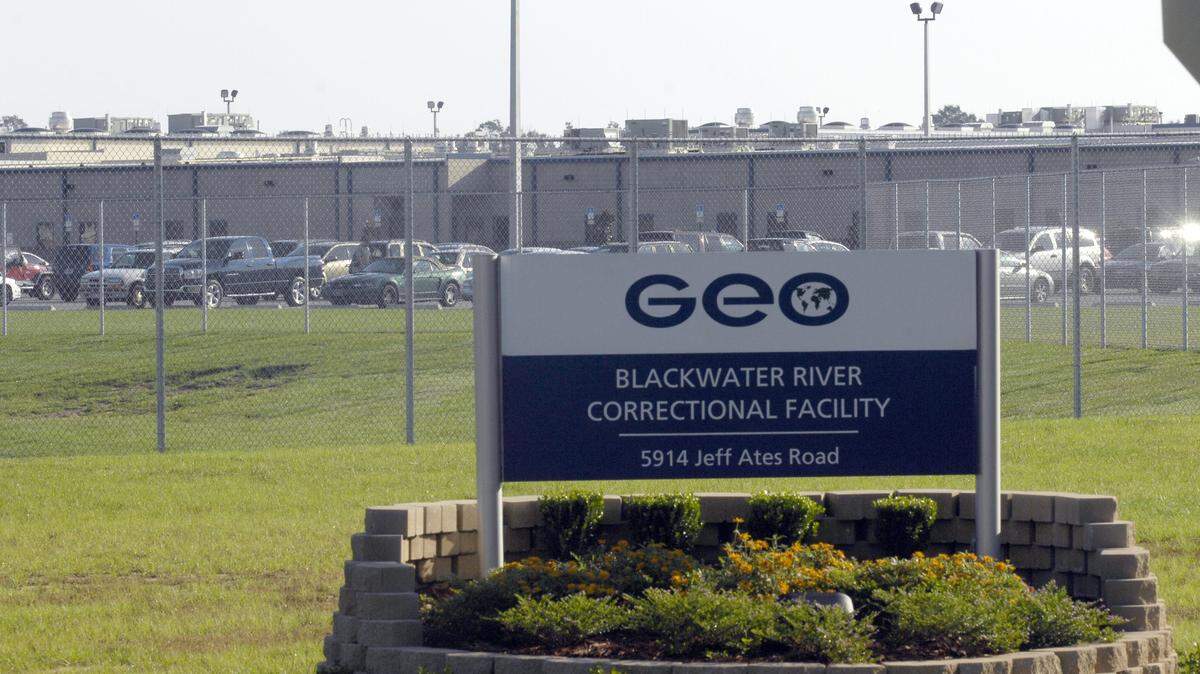
As of Tuesday evening, 1,119 inmates and 239 staff members had tested positive. Twenty-eight were in medical isolation with COVID-19 symptoms, and 7,029 were in medical quarantine after coming in contact with someone who has tested positive. Ten inmates had died, seven of them at Blackwater Correctional Facility, a Panhandle prison run by a private contractor for the state.
Experts say proximity doesn’t help
Regardless of what a prison does to stave off disease, the facilities make for “a perfect storm for developing potential transmission and symptoms,” according to Sandra Springer, an internal medicine and infectious disease doctor and professor at the Yale School of Medicine.
Prisons are full of surfaces that must be sanitized often to get rid of droplets, through which the novel coronavirus can be transmitted, she said.
Florida prisons have stopped “non-essential transfers,” but corrections officers and inmates who have spoken with the Miami Herald have documented instances where groups of inmates are still brought in and out of facilities. Prisons are also still taking in inmates from county jails, although they now go through an additional screening and 14-day quarantine before placement.
“When we think about public health and improving the care of all individuals, you have to remember we are only as healthy as the sickest person,” Springer said.
In his statement, Inch noted that the inmate population does not mirror the general population of Florida, and that the presence of COVID-19 within a correctional institution is not necessarily indicative of community spread outside of the facility.
Enclosed spaces spread disease
Earlier this month, Muge Cevik, a physician at University of St. Andrews School of Medicine, published a Twitter thread explaining a series of contact-tracing studies she has researched where she found increased rates of infection in enclosed and connected environments, including households, long-term care facilities and homeless shelters.
“Casual, short interactions are not the main driver of the epidemic,” she wrote. “We need to redesign our living and working spaces and rethink how to provide better, ventilated living and working environments for those who live in deprived and cramped areas.”
Isaac Bogoch, an infectious disease physician and professor at the University of Toronto’s Department of Medicine, echoed the sentiment.
He pointed out early outbreaks of COVID-19 in China, where people in prison settings and other enclosed places caught the disease quickly.
Bogoch said places like long-term care facilities, homeless shelters and prisons need infectious disease experts to work alongside governments to take a close look at the setting and layout, and look for basic areas that may be construed as vulnerabilities. In Canada, where Bogoch practices, there has been a push for reducing crowding in facilities by releasing incarcerated people who are at the end of their sentences or do not post a risk to their communities.
“It’s easy to say, but hard to do,” he said. “These are perfect setups for transmission.”
Rep. Dianne Hart, Tampa Democrat and prison reform advocate who visits dozens of facilities each year, said she has seen dorm beds that are just two feet or so apart, and bunk beds put inmates even closer together. She often thinks about common areas like nurses stations and even doorknobs that would be impossible to clean in between every use.
Many Florida prisons don’t have air conditioning, and the lack of fresh air makes Hart worry about the spread of disease.
“Some vents run from where we have our most sick people to other parts,” she noted.
She added that lots of issues have to do with outdated infrastructure and lack of prison funding in each year’s budget.
Alysse Wurcel, a professor at the Tufts School of Medicine and an infectious disease doctor who does work consulting with the Massachusetts Sheriff’s Office, said balancing resources is a tricky task for any government agency to juggle during a pandemic.
A facility could, for instance move recreation time to an outdoor setting, stop transfers or stagger meal times. However, the actual layout of a prison is not easily changeable, nor is the number of beds.
“They are forced to work with whatever they have,” she said.
Prison health and hygiene
When it comes to baseline health, incarcerated people have far more comorbidities, or the simultaneous presence of two chronic diseases, than people on the outside, which can play into the larger issue of disease spread in prison.
Dr. Springer said inmates have higher rates of other diseases like diabetes and COPD, a lung disease that impedes breathing, that are associated with developing more severe COVID-19 symptoms.
For example, 64-year-old Gloria Taylor, an inmate serving a life sentence at Homestead Correctional Institution for trafficking 56 grams of cocaine, has been hospitalized for COVID-19.
Her attorney, MiAngel Cody, said Taylor has a host of other health issues.
“I understand that prisons are not designed to respond to pandemics,” Cody said. “Especially something like this.”
When it comes to keeping the disease at bay, the department says inmates have access to soap and cleaning supplies to keep up with personal hygiene, but in some instances inmates say it may not be enough.
After hearing from many inmates, some of whom she did time with herself, inmate advocate Debra Bennett has coordinated the donation of truckloads of soap, bleach, toilet paper and face shields to Homestead, a facility with one of the smallest inmate populations but the largest number of COVID-19 cases in the state.
She said she knows the prisons well, and that “there’s no real sterilization process” that would keep inmates safe otherwise. Bennett hopes other facilities will accept donations as the Homestead warden has.
“There’s no way to build a jail or a prison that would safely be able to combat another pandemic like this,” she said. “The only people safe are in Death Row.”
What Florida has done
The first major action taken by the Department of Corrections was on March 11, when visitation was suspended. The next day, the department announced it would be screening people coming and going for symptoms or recent travel to China, Iran, Italy or South Korea. Later that week, the department expanded the travel restrictions and suspended non-critical inmate transfers, volunteer activities and restricted new intakes.
The first dozen staff cases were announced March 30. The first inmate tested positive April 3.
On April 11, inmates began making cloth masks for guards out of uniform material. The inmates received masks after the guards were outfitted. At that juncture, the state had recorded 31 cases among inmates and 40 among staff.
The state began separating symptomatic inmates in some instances. Staff at facilities with “outbreaks” were able to get tested. As cases climb toward 1,200, test numbers are also on the rise, showing more widespread testing at many — but not all — facilities.
How to stop the spread?
Greg Newburn, the Florida director of Families Against Mandatory Minimums, has made reducing prison population a key focus during the pandemic, sending letters to the state suggesting temporary furloughs and holding forums to discuss state policy like conditional medical release.
He said while the department is doing everything it can in terms of deploying resources, perhaps it should rethink the strategy.
“Release is the glaring omission,” he said.
Florida lacks many of the release options other states use, such as parole, he notes. Florida has no release mechanism for elderly or ill prisoners, and the FDC doesn’t have the authority to release anyone permanently. Florida’s “conditional medical release” statute requires that a person be either “permanently incapacitated” or facing death before he or she can be considered for release.
“The prison facility is arguably the ideal place to be if you’re a virus and your entire purpose is to spread yourself around and infect people,” Newburn said. “You almost couldn’t design a place more conducive to the spread of a virus than a prison or a jail.”
This story was originally published May 20, 2020 at 11:42 AM.