Amid rebukes over secrecy, Florida prison system begins to reveal ravages of coronavirus
For weeks the Florida Department of Corrections refused to address rumors that inmates with coronavirus-like symptoms — or those who had come into contact with symptomatic inmates or staff — were being segregated by the hundreds from the general population.
That changed on Friday, when the agency acknowledged that more than 4,500 inmates are being isolated in one way or another as COVID-19, the highly infectious disease caused by the novel coronavirus, has spread throughout the third-largest prison system in the country.
As of Friday evening, 45 inmates and 71 staff members had tested positive for COVID-19, according to the FDC. Four inmates had died, all of whom had been incarcerated at Blackwater River Correctional Facility, a compound near Pensacola run under contract by the Geo Group. The medical examiner in Santa Rosa County revealed the deaths.
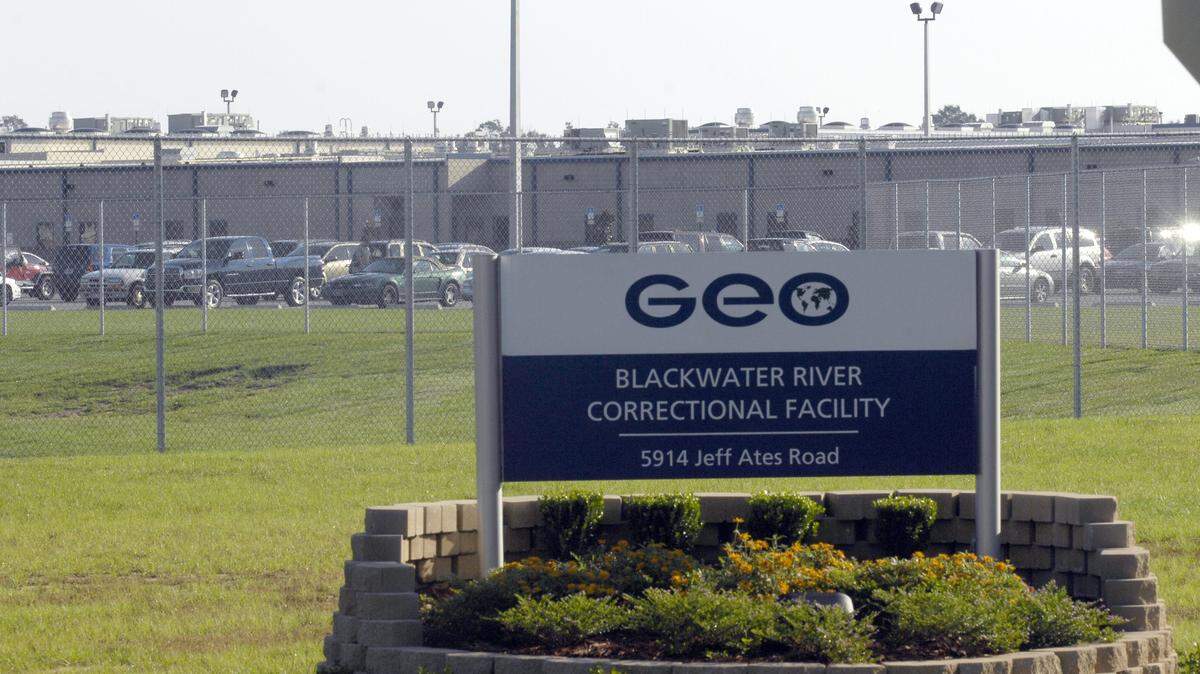
The Geo Group did not respond to a request for comment Friday.
The new data was made public amid a growing chorus of criticism by a handful of lawmakers, including an influential Republican, state Sen. Jeff Brandes, who is vice chairman of the Senate Criminal Justice Committee.
The department found itself on the defensive this week when those four deaths were revealed not by prison administrators — including its communication staff, which has ignored questions from reporters for several weeks — but by journalists who sought out information from the Santa Rosa County medical examiner. After the first two deaths were reported by the News Service of Florida, confirmation was hastily posted on the department’s website.
In a statement released Friday afternoon, the department said it had not made the first deaths public for nearly a week because “we were determining the proper manner for releasing the information.”
FDC Secretary Mark Inch, who has declined to answer questions from reporters, posted a statement on the department’s website.
It said: “We are committed to keeping the public informed about the operations of the Florida Department of Corrections during this evolving health emergency. As we are being transparent, we must also exercise patience and appropriate levels of prudence to determine what information can be provided under state and federal laws. It takes diligence to provide accurate and releasable information about secure operations. I’ve committed to the families of the incarcerated to keep them informed and I plan to continue to do just that.”
Prisons have become a coronavirus hot spot in several states, with some corrections departments sharing advisories with the public and others, like Florida, keeping a lid on deaths and other crucial data. Florida changed course late this week.
The numbers posted Thursday and Friday show the department has tested 330 prisoners, a fraction of approximately 95,000 inmates in the system. In its Friday update, the department listed 108 negative test results and 177 “pending.”
At least 156 inmates who have confirmed or suspected cases of COVID-19 have been put in “medical isolation” in hopes of preventing them from transmitting the virus to fellow inmates. One hundred and eleven of those in medical isolation are at Tomoka Correctional Institution, a prison in Daytona Beach, and Blackwater, in Milton.
The number of pending tests outnumbers those in medical isolation, an FDC spokeswoman said, because the department is conducting sample testing of asymptomatic inmates in medical quarantine who are elderly, have a compromised immune system or have a preexisting medical condition.
Because Florida has largely done away with parole, the state prison system has a larger-than-typical percentage of elderly prisoners, many of whom are afflicted with poor health due to drug abuse on the outside and substandard medical care while in prison.
The Department of Corrections says the 3,906 inmates who the state says are in “medical quarantine” had close contact with a prisoner or staffer who tested positive for COVID-19. That means they are monitored by health services staff and receive temperature checks twice a day to check for signs of fever.
Another 416 inmates are in “security quarantine,” which includes inmates who recently transferred to a correctional facility and are separated from the general population until their conditions can be monitored.
.jpg "unnamed (3).jpg")
The publicly listed information comes more than a month after the first COVID-19 cases surfaced in Florida. Until Thursday, the department did not list how many inmates and employees had been tested for the disease.
The 71 employees who have tested positive for COVID-19 include officers and contract workers. None of them have died, the department said Friday.
Hoping to address any staff shortages, the state this week announced it was offering $1,000 signing bonuses and lowered the minimum age of employment to 18.
The department did not say whether family members and loved ones are being notified when an inmate is put into isolation or quarantine.
One woman, who has a friend at Tomoka said that despite being an approved visitor, she hasn’t been able to get the prison system to tell her whether her friend is in quarantine.
Her friend was living in a dorm with three men who tested positive, and she said she worries about his condition on the days he is not in touch with her. Last time they talked, he said he had a bad cough.
“It’s really difficult because you wait for the phone call to come in,” said the woman, who the Herald agreed not to name due to concerns about her friend’s safety. “If it doesn’t come, what do you do? ... I’m really afraid of how many cases we could see there.”
State Rep. Dianne Hart, a Tampa Democrat and prison reform advocate, said she has been asking for information on inmate quarantines for weeks. She called on the department to test more inmates so they have a better sense of where to contain the disease.
“We’ve been writing letters, asking and asking and asking,” said Hart. “What I really need are tests. I need them to be testing so they really know.”
This story was originally published April 17, 2020 at 9:03 PM.