
Contradictions and confusion: Questions surround DeSantis’ property tax plan
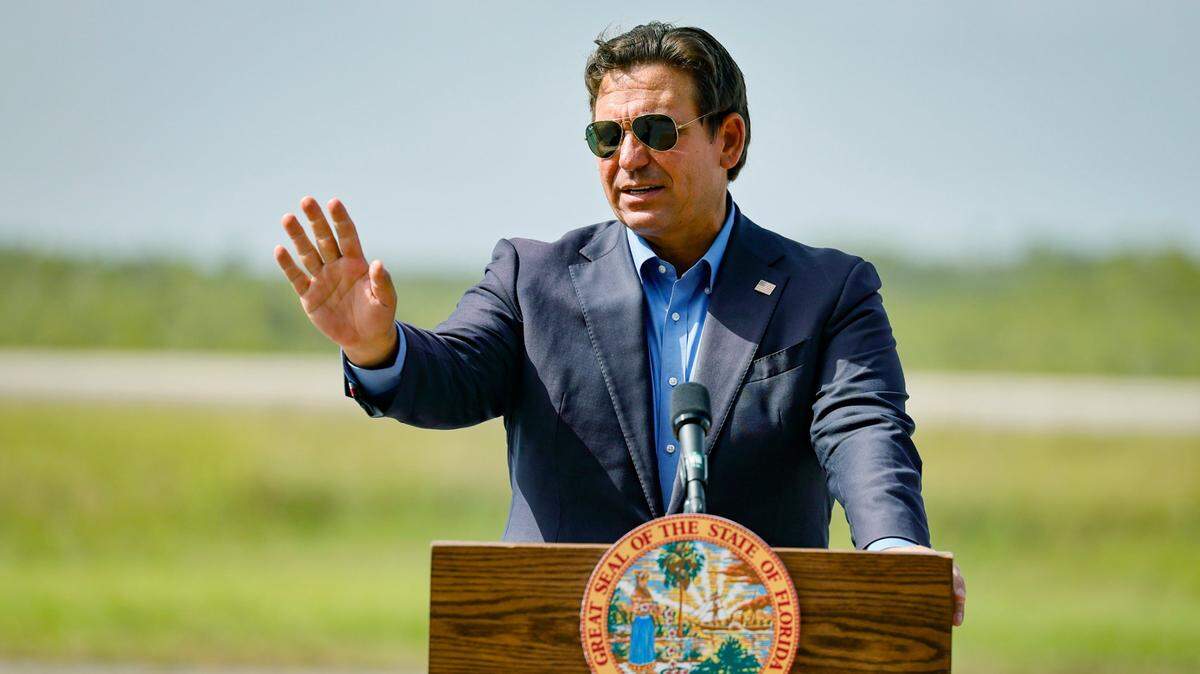
Will Gov. Ron DeSantis’ tax plan eliminate property taxes for Floridians who own the home they live in?
Even the plan itself isn’t clear.
DeSantis’ long-awaited property tax amendment contradicts itself, leaves key details vague and goes much further than what he pitched to the public on Wednesday, such as extending tax breaks to billionaires and megacorporations.
The result has led to confusion among local officials, analysts and observers who are scrambling to understand what would amount to a dramatic reshaping of Florida’s tax structure before lawmakers meet to vote on it next week. Their vote would place the amendment on the ballot for November, when 60% of voters would have to approve it.
“This is the most bush-league rollout of a major policy I’ve ever seen,” said former Republican Sen. Jeff Brandes, who now runs the Florida Policy Project think tank. “The more you dig into it, the more questions you get.”
For more than a year, DeSantis has garnered headlines by promising to eliminate Floridians’ property taxes. The five-point ballot summary voters could see in November states that his plan “requires ... a schedule for full elimination” of property taxes on homes with homestead exemptions.
But the details in the amendment do not say that. It states it would raise the current $50,000 maximum homestead exemption to $250,000 in 2028.
Any increases beyond that would be up to future legislatures. The language says the Legislature “shall” create a procedure for counties, municipalities and school districts to increase the homestead exemption “up to” any conceivable limit. That increase could conceivably be $100 million — or $1.
“It’s vague when it comes to the full elimination,” said Esteban Leonardo Santis, director of research at the progressive-leaning Florida Policy Institute.
Spokespeople for DeSantis did not respond to questions about the apparent contradiction.
The homestead exemption, in essence, reduces the taxable value on owner-occupied homes to give Floridians a break on their tax bills.
In his announcement Wednesday, DeSantis also repeatedly talked about a $500,000 homestead property exemption.
“A $250,000 limit, that eliminates property tax for 60% of Florida homeowners,” DeSantis said. “When you raise to $500,000 limit, that’s 92% of all Florida residents would be tax-free.”
But nothing in the amendment mentions a $500,000 limit, which could never become reality. Even current and former DeSantis communications staffers appeared confused online about it.
“Once the exemption reaches $500k, it will fully eliminate property taxes for 92% of Floridians,” DeSantis Ccommunications Director Alex Lanfranconi wrote on X. “This is truly a historic opportunity!”
DeSantis’ plan also states it is “protecting small businesses” by lowering the maximum increase in the assessed value from 10% to 5% annually. He said Wednesday that it was to prevent local communities from increasing taxes on “small businesses” to make up revenue shortfalls.
“They will only be able to do 5%, so that’s the strongest protection for small businesses,” he said.
But the bill text does not restrict the benefit to small businesses. The way it’s written, the 5% cap would apply to any non-homesteaded property, which would include data centers, snowbirds’ condo homes, vacation rentals — even the $170 million home Meta founder Mark Zuckerberg purchased in Miami this year.
DeSantis said Wednesday that the uber-wealthy should be the state’s property tax base. “Tax someone rich. If some billionaire from Brazil is buying, tax them. Good, that’s fine with me,” he said Wednesday. “I’m looking out for the Floridians here.”
To help local governments weather a sudden shortfall in revenue, the amendment would require the Legislature to create a trust fund to provide grants. But where the money for the fund would come from, how it would be doled out and how long it would exist isn’t mentioned.
The amendment would also restrict the benefits to residents who have moved to Florida by Dec. 31. Anyone who moves here after that date would have to be a resident for five years before benefiting from the amendment.
That would put property appraisers in uncharted territory, said Mike Twitty, the Pinellas County property appraiser and the head of the legislative committee of the Property Appraisers’ Association of Florida.
Property appraisers do validate that someone is a Florida resident to make sure the homestead exemption applies. But they’ve never had to look at how long someone has been a resident, Twitty said.
It’s easier for property appraisers to confirm residency for someone who already has owned a home in the state. Confirming that renters who are first-time buyers have lived in the state for the requisite time is trickier, Twitty said.
“It’ll be a lot more legwork and research that has to be done for us to validate things,” Twitty said.
DeSantis’ plan also restricts what property taxes can be spent on: public safety, “education and public schools,” infrastructure and natural resource projects, issuing local bonds and paying retirement benefits for local employees.
It does not include property appraisers and other constitutional offices that rely on property tax revenue, such as elections supervisors and clerks of court, noted Florida Association of Counties spokesperson Cragin Mosteller. It also doesn’t mention county services such as those for veterans, animal and mosquito control and Medicaid costs.
“There are so many services that counties provide and are required by law to provide,” Mosteller said.
The confusion and lack of details around the amendment has kept some officials from weighing in.
Pasco County schools Superintendent John Legg said his team has hesitated to dive too deeply into the amendment’s implications, knowing that the Legislature — particularly the House — has yet to weigh in. Senate President Ben Albritton has already said he supported it. The House earlier this year passed a property tax plan that would have explicitly eliminated all property taxes except those on schools, something DeSantis’ plan doesn’t protect.
“This is really evolving quickly,” Legg said.
Herald/Times Tallahassee correspondent Romy Ellenbogen and Tampa Bay Times staff writer Jeffrey S. Solochek contributed to this report.