
What to know about Florida lawmakers’ $114 billion deal for a new state budget
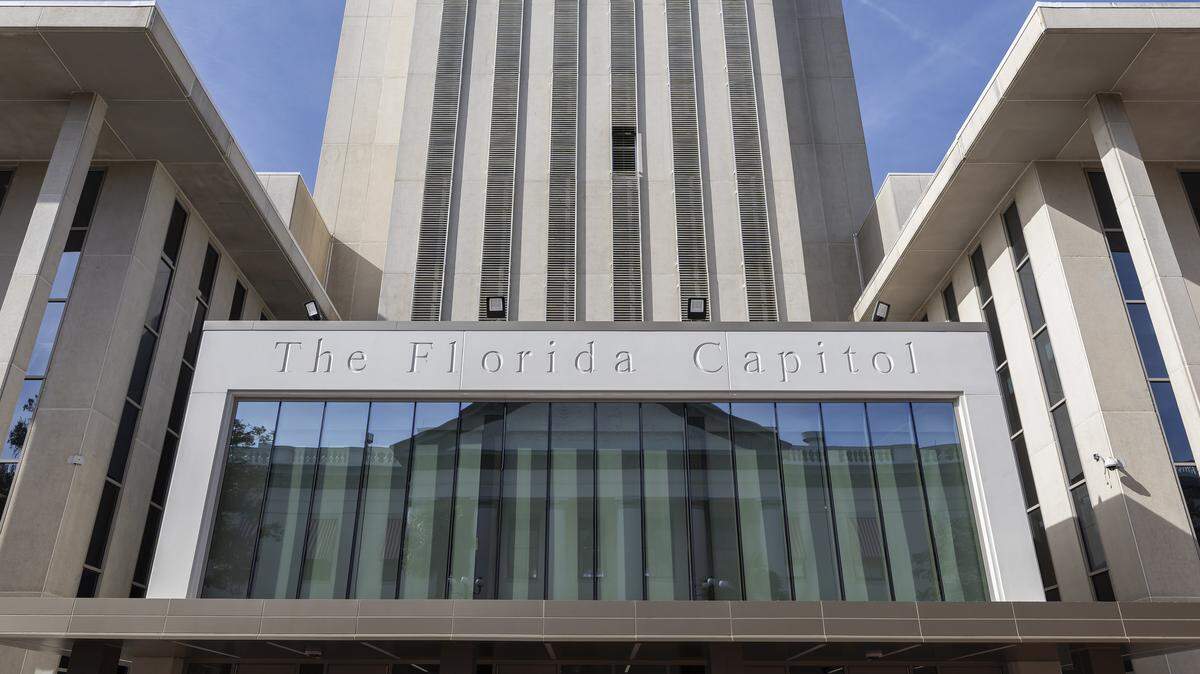
Florida’s legislative leaders, after weeks of negotiations and delays, are ready to give Gov. Ron DeSantis his final budget.
Clocking in at around $114.5 billion, the budget will cover the last months of DeSantis’ tenure as Florida governor and the start of the next administration.
Like last year, lawmakers couldn’t agree on a plan during the regular 60-day legislative session. Late-night meetings between the House and Senate bled into the Sunday of Memorial Day weekend.
“I would say in January, we had enormous more differences of opinion than we do today,” Sen. Ed Hooper, the head of the Senate appropriations committee, said Sunday. “This has really been a situation where we have compromised, we have adjusted. If neither of us leave real happy, it’s probably a good deal.”
Lawmakers intend to vote on the budget on Friday after a required 72-hour “cooling off” and review period. Here’s what to know about what the state could soon fund — and what lawmakers chose to leave behind.
Help from artificial intelligence
Florida lawmakers and DeSantis have been divided on how and where to regulate artificial intelligence. But lawmakers in the House and Senate seem to be in alignment on using artificial intelligence for policing, prisons and more.
Lawmakers agreed to put $4 million toward a machine-learning program that will help determine who is eligible for payments from the Supplemental Nutrition Assistance Program.
Florida’s error rate for that program is high, at about 15%. If the state can’t lower that, it could owe the federal government about $1 billion based on changes made under President Donald Trump’s One Big Beautiful Bill Act.
The Senate also appropriated about $1.5 million for ZeroEyes AI firearm detection technology in four school districts — with the largest amount, $1 million, going toward Miami-Dade.
ZeroEyes’s website said it provides software for surveillance camera systems, using AI and human verification to alert when a gun is detected. Franklin, Hernando and Seminole counties are also getting money for this program.
The House directed $4 million to a “non-lethal” remote artificial intelligence program in Florida prisons that aims to reduce assaults, according to a House budget document. It’s not clear what that would look like. It would be a pilot program at a men’s prison of the state’s choice.
AIDS drug program accountability
The Florida Department of Health made dramatic cuts this year to the AIDS Drug Assistance Program, which gives HIV-positive Floridians access to life-saving medication.
Lawmakers now are poised to put aside $75 million to keep the program running — and are demanding a detailed report about its past and future.
“This is a program that’s been around for decades that people relied on to save their life,” said Michael Rajner, an ADAP enrollee who has lobbied lawmakers about the program. “It’s a program worth fighting for.”
In January, the health department blamed rising healthcare costs when it announced cuts, reducing eligibility thresholds that stood to cut off about 12,000 Floridians from access to affordable life-saving drugs.
Florida’s planned cuts went far beyond those of any other state. Months before announcing proposed cuts, the department forced out key AIDS Drug Assistance employees.
The Legislature’s budget will cap the program at 21,000 participants. Budget chairpersons said some enrollees had since found private insurance or other options.
Lawmakers will require the Office of Program Policy Analysis and Government
Accountability to study how to get the most out of the program, including looking at what led to the department’s proposed changes.
Big-ticket changes to higher education
Florida’s higher education system emerged generally unscathed from budget cuts, clocking in at $8.7 million less than last year’s nearly $6.6 billion poured into the state’s college and university system funding silos.
But lawmakers agreed to a slew of notable changes. One of this year’s most scrutinized budget projects is a $50 million carveout for Hillsborough College, money that purportedly will help with infrastructure but comes as the Tampa Bay Rays have pinned down the Dale Mabry campus as the site for their new stadium.
In an eleventh-hour concession, House lawmakers backed off a proposal to attach $23 million to the transfer of University of South Florida’s Sarasota-Manatee campus to New College of Florida. The university will still give New College the USF satellite campus in the final version of the budget.
The House was successful in completely eliminating “preeminence” funding, a decade-old program that provides extra state dollars to high-achieving public research universities, like USF and the University of Florida. The Senate initially proposed putting $100 million into the program, but House lawmakers refused to budge.
House Higher Education Budget Subcommittee chairperson Demi Busatta, a Miami-area Republican, has downplayed the importance of the program — considered a main driver of Florida universities’ ascent in the U.S. News college rankings — and stressed that top universities will receive funding through other silos.
“Look, the institutions can still call themselves preeminent universities without the funding being there,” Busatta recently told reporters.
Another notable carveout in this year’s budget included $17.5 million to UF’s Hamilton School for Classical and Civic Education, which has received lavish state funding since the Legislature established it in 2022, ostensibly to counterbalance left-wing orthodoxy in academia.
This year’s budget attaches strings to the Hamilton School’s funding package, ordering the department to partner with UF’s Jewish studies center to bulk up the university’s push to combat campus antisemitism. UF enrolls the largest undergraduate Jewish student population of any public university in the nation.
Voucher money stays the same, despite critique
The budget proposal leaves Florida’s $4.5 billion school voucher funding model unchanged, despite a push by senators to revamp the system in the face of a scathing auditor general’s report that called the program unaccountable.
Sen. Don Gaetz, R-Crestview, championed changes including creating a voucher line item separate from the rest of the education budget and issuing all students state identification numbers as ways to better track the money. The Senate unanimously approved the measure, which never got a hearing in the House.
Gaetz called the outcome “unfortunate” and “destructive,” saying an extra burden has been put on public schools, homeschooling families and private schools that serve students with special needs, the latter of which are suing Step Up for Students over delayed and stopped voucher payments.
“I’m pleased the Department of Education has done some marginal work to improve their administration (of vouchers),” Gaetz said Tuesday. “But it’s not going to take care of the problems. We will bring this issue up again.”
Aiding an ailing criminal justice system
Lawmakers greenlit the construction of a new, 600-bed prison hospital. The state will use $50 million in bonding to buy land, though where is unclear.
The chairperson of the House justice budget, Rep. Patt Maney, R-Shalimar, said offsite medical care for inmates is costly. Guards must be paid to accompany an inmate during a hospital stay.
“If we have a prison hospital, on prison grounds, then we can cut that cost of guarding and hopefully control the cost of medical,” Maney said.
Lawmakers also decided to outsource the prison system’s pharmacy, cutting 58 jobs and $68 million from the budget. A spokesperson for the Florida Department of Corrections said the department has selected Clinical Solutions, LLC to provide the pharmacy coverage.
Legislative leaders ended up not putting money in the budget for additional correctional officers. But they did opt to give $35 million to cover the Department of Corrections’ operational deficit and put forth about $79 million to raise the minimum wage by $2 for correctional officers, to $24 an hour.
DeSantis, candidate security dropped
A short-lived proposal to have taxpayers cover security for DeSantis and his family for a year after he leaves office didn’t make it into the budget.
The Senate had proposed the idea, noting in part a rise in political violence.
But the House didn’t agree with the proposal, pointing to the potential cost.
The House did want to cover security for each party’s gubernatorial candidate. That idea also didn’t make it into the final budget proposal.
Tampa Bay Times reporter Jeffrey S. Solochek contributed to this report.