
The Supreme Court just issued the redistricting ruling DeSantis was waiting for
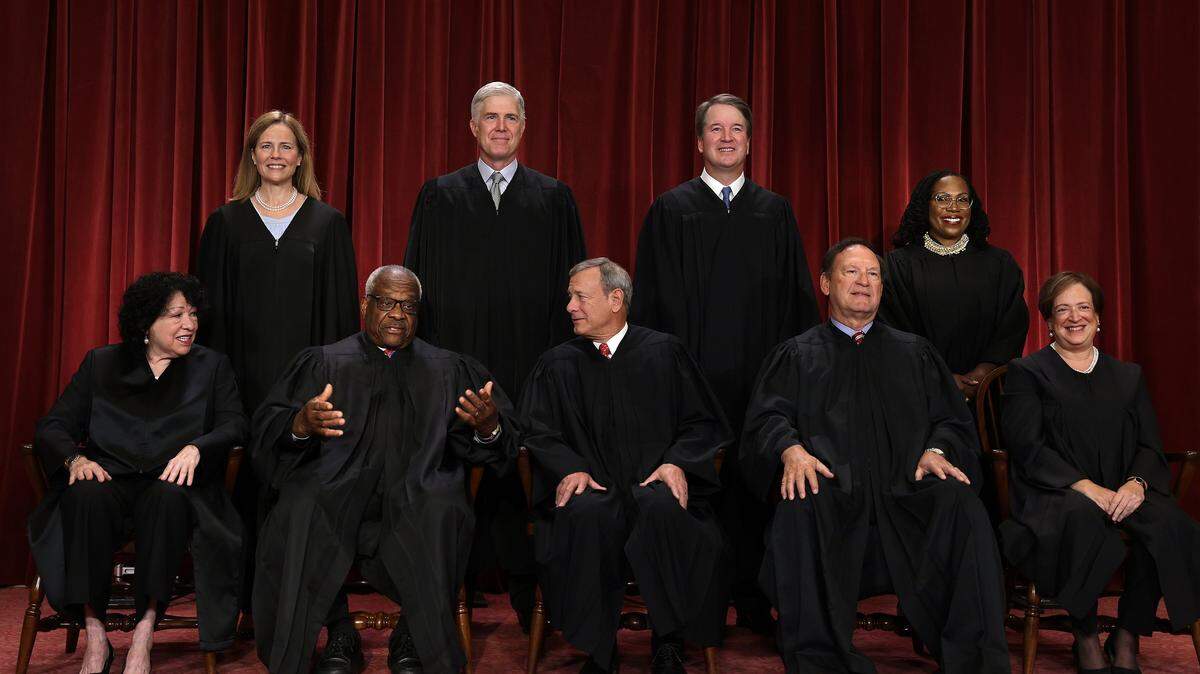
The Supreme Court of the United States issued a ruling Wednesday narrowing the federal Voting Rights Act — a move Gov. Ron DeSantis’ office has been counting on to justify its mid-decade push to draw new voting maps in Florida that favor Republicans.
Wednesday’s ruling in Louisiana v. Callais was about whether state lawmakers can consider race to draw voting districts ensuring minority voters can elect candidates of their choice. In a 6-3 ruling, the court struck down a Louisiana map that drew a new Black-majority district.
The ruling — issued as Florida lawmakers weigh whether to approve DeSantis’ newly drawn congressional map this week — limits how states can use race when drawing political boundaries, even when trying to comply with the section of the Voting Rights Act of 1965 that prohibits racial discrimination.
“Allowing race to play any part in government decisionmaking represents a departure from the constitutional rule that applies in almost every other context,” Justice Samuel Alito wrote in the majority opinion.
DeSantis had been hoping for the ruling to come out before he released his office’s new proposed maps, which cut the number of Democratic-leaning congressional seats in Florida from eight to four. Instead, his office released the maps based on what it told lawmakers justices had “signaled” and were “poised” to do.
What it means
DeSantis’ office told lawmakers earlier this week that “the use of race in redistricting” was “something that the U.S. Supreme Court has signaled is unconstitutional.”
Wednesday’s ruling, however, did not uphold that assertion.
Instead, the ruling raises the legal bar for how states must justify their use of race in drawing new maps. Alito wrote that the Voting Rights Act “can indeed provide a compelling reason for race-based districting,” but it doesn’t necessitate it.
Even though the ruling doesn’t entirely bar states from considering race when drawing maps, it will allow states to, “without legal consequence, systematically dilute minority citizens’ voting power,” the court’s liberal-leaning justices wrote in a dissenting opinion authored by Justice Elena Kagan.
DeSantis took a victory lap immediately after the ruling, telling lawmakers that the decision was justification enough for the state to pass his new congressional maps this week.
“Called this one months ago,” DeSantis wrote on social media shortly after the ruling came out. “The decision implicates a district in FL — the legal infirmities of which have been corrected in the newly-drawn (and soon to be enacted) map.
”His office has honed in on the South Florida district previously held by Sheila Cherfilus-McCormick as evidence that the current voting maps took race into account.
The person who drew the proposed map for his office, Jason Poreda, told lawmakers Tuesday that he started his process by redrawing that district and then worked his way across the state to balance the state’s population across the rest of Florida’s 28 congressional districts.
That’s part of why South Florida districts were the most impacted by the proposed map draft, according to Poreda.
Democrats have argued that his justification was an excuse to draw a map that creates as many Republican-favoring districts as possible across the state — and drawing South Florida Democrats into less competitive districts was the only way to do that.
How the ruling is influencing Florida’s Capitol
DeSantis’ office has argued to lawmakers that the current congressional maps — which he proposed four years ago — are invalid because lawmakers took race into consideration to comply with Florida’s voter-approved Fair Districts Amendment, which bars lawmakers from “denying or abridging the equal opportunity of racial or language minorities to participate in the political process.”
He said Wednesday that the SCOTUS ruling invalidates that part of the Florida Constitution — even though the ruling doesn’t entirely overturn the consideration of race in drawing voting districts.
This claim will likely be a key question in any legal challenge if the Florida legislature approves new voting maps. As of midday Wednesday, the state House had approved the new maps and the state Senate was still debating them.
But DeSantis’ argument about race is also the lynchpin in a much larger legal theory his office developed to justify taking partisanship into account to develop the new maps.
The Fair Districts Amendment bars partisan gerrymandering in Florida, but DeSantis’ office has argued that if the racial protections in that amendment are overturned in court, the entire amendment can be as well.
Poreda told lawmakers Tuesday that he did use partisan data to draw the map.
The bill’s House sponsor, Rep. Jenna Persons-Mulicka, also acknowledged Wednesday that the map and Poreda’s methods were based upon untested theory “in an evolving legal landscape.”
She told the House Wednesday, “I believe that the map before you today is a good map and based on viable legal theories.”
She did not directly answer questions about whether the map complies with Florida’s Constitution as it currently stands, instead she said, “I believe there is a likelihood that that map will be upheld against legal challenges.”
Florida lawmakers were in the middle of debating DeSantis’ proposed maps when the Supreme Court released its opinion.
Senate President Ben Albritton, R-Wachula, called a half-hour recess in order to let lawmakers review the decision Wednesday morning. He was seen by reporters having pull-aside conversations with Senate Minority Leader Lori Berman, D-Boca Raton, and former Senate President Kathleen Passidomo just after the decision was released.
This story was originally published April 29, 2026 at 11:00 AM.
.jpg)