
State lawmakers debate whether Miami-Dade needs development buffer around Everglades
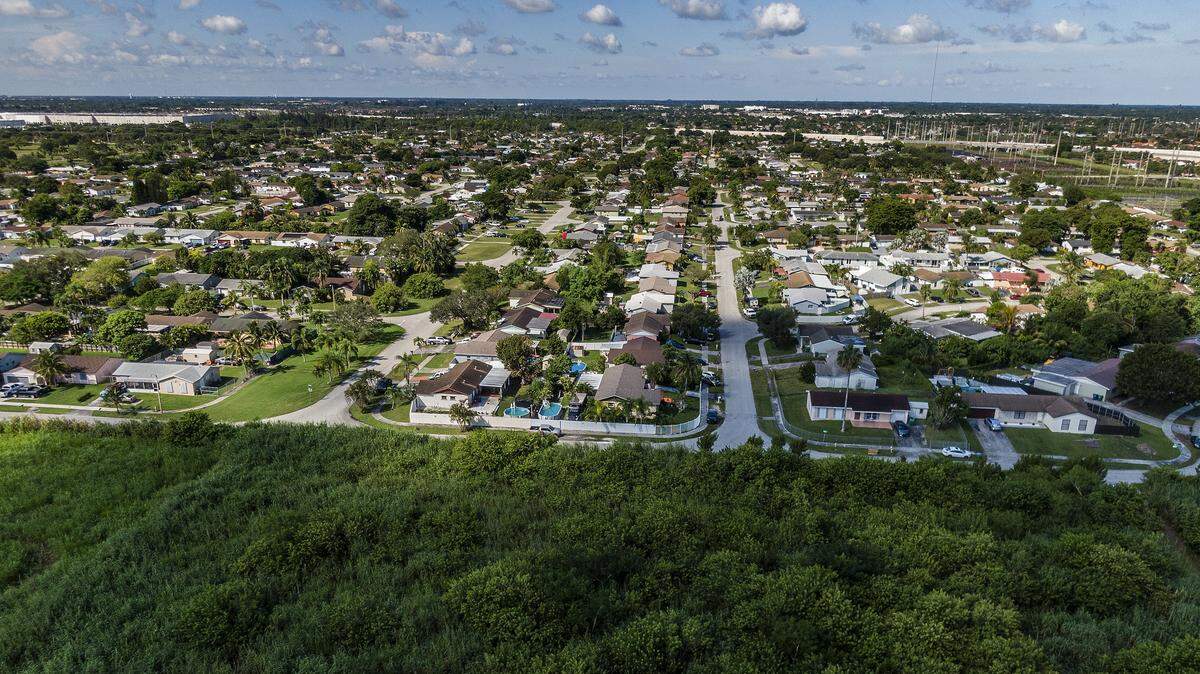
Two Miami representatives took opposing views on Wednesday on whether the state should look at eliminating a tool the Miami-Dade County Commission uses to protect farmland and the Everglades from urban development.
The proposed legislation directs the state’s policy office to study whether “counties can still protect the environment and water quality” without the tool known as the Urban Development Boundary or “UDB.” Eliminating the tool would most prominently affect Miami-Dade but could affect other counties in Florida as well.
The boundary is designed to create a buffer between large residential and commercial projects and two of Miami-Dade’s most sensitive areas: the rural belt of farmland that forms the heart of the county’s agriculture industry, and the Everglades.
County commissioners can already move the development boundary with a two-thirds vote of the 13-member board. But under the bill, land-use changes outside the Urban Development Boundary would require a simple majority vote, which is the current requirement for changes inside the boundary.
Rep. Ashley Gantt, a Miami Democrat, said during the House Intergovernmental Affairs Subcommittee on Wednesday that she saw the proposed study as a precursor to the state doing away with the development boundary tool, which would limit the commission’s ability to set development policies based on feedback from local constituents.
“Urban Development Boundary meetings are always very, for a lack of a better word, controversial in Miami,” Gantt said before voting against the bill.
Gantt continued: “We need to allow local governments to actually govern, and not be the broad, big-handed, Big Brother government because we have the ability to do so.”
But Rep. David Borrero, a Republican lawmaker from Doral who is sponsoring the bill, said the study would help Miami-Dade County eventually create more affordable housing.
“To say that we can’t do a study on the costs and the benefits of having an urban development boundary to begin with … I think it’s contrary to growth,” Borrero said. “The reason why we have such a crisis with housing and the cost of land and the cost of rent and the cost of homes is because there is a huge shortage of inventory for housing.”
He added: “So, quite frankly, we have to do something to create a more efficient process to meet that demand. This takes a giant leap in that direction.”
Borrero’s bill, HB 399, has two more stops in the House before getting a full vote by the chamber. There is a similar bill in the Senate, SB 208, which has passed two committees, but it does not call for a study to get rid of the development tool.
Environmental advocates argue the Urban Development Boundary forces Miami-Dade to direct new construction closer to where people already live, allowing better use of road and transit funds. But wide expanses of undeveloped land offer developers the chance to build new subdivisions — prime real estate for new home buyers.
“We have enough space inside the UDB to do what we need. We’re trying to protect uses like agriculture and wetlands,” said Laura Reynolds, science director of the Hold the Line Coalition, which fights most UDB expansions in Miami-Dade. “We’re trying to fight sprawl and force investment in roads and other infrastructure where people live now. Sprawl puts the burden on taxpayers — full stop.”
This story was originally published January 29, 2026 at 5:00 AM.