
What’s in DeSantis’ proposal to slash property taxes? He’s working on it
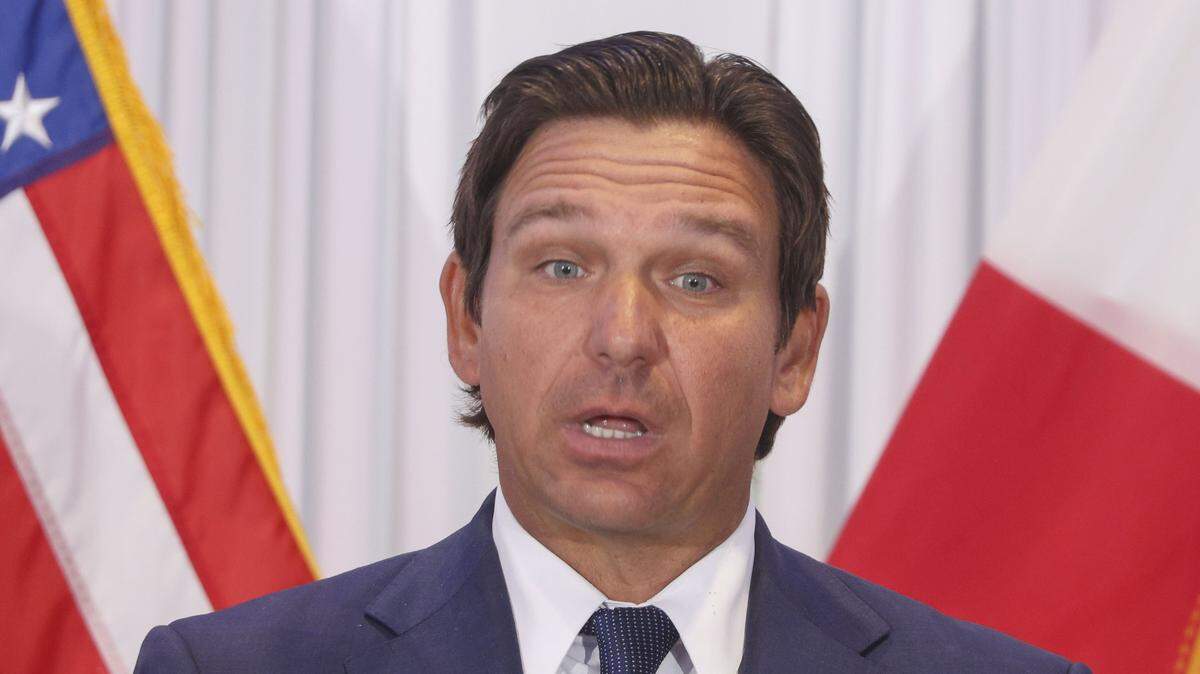
Gov. Ron DeSantis on Thursday said he is collaborating with state lawmakers on a ballot measure that would eliminate homestead property taxes, signaling a potential breakthrough on one of the most contentious issues dividing the governor and Republican legislative leaders.
“We’re working on crafting something that’s gonna be really transformative,” DeSantis said at a press conference in Sebring.
The term-limited governor has made property tax relief a marquee agenda item for the upcoming legislative session — his last before leaving office. DeSantis first floated eliminating property taxes on primary residences earlier this year, but has yet to offer a concrete proposal for doing so.
“The details matter,” DeSantis said. “We don’t want to create perverse incentives.”
Lawmakers can not eliminate property taxes on their own in Florida. They must pass a joint resolution placing a proposed constitutional amendment on the ballot in November. Any ballot question would require approval from 60% of voters to pass.
The governor has been careful to frame his proposal as relief for permanent Florida residents — not a tax break for investors or second-home owners. He suggested that any constitutional amendment could preserve or even increase taxes on non-homesteaded properties.
“I’m focused on Florida residents,” DeSantis said Thursday. “If you’re a Canadian? Tax ’em, I don’t care if you have a home. If you have 10 Airbnbs? Tax it.”
Senate leaders have raised concerns about the fiscal impact on cities, counties and school districts that rely heavily on property tax revenue to fund core services. Meanwhile, House Speaker Danny Perez has pushed for a broader approach, arguing that voters should be presented with multiple options for property tax relief rather than a single up-or-down proposal to eliminate homestead taxes entirely.
DeSantis referred to those plans as “half measures” and urged lawmakers to “go back to the drawing board.” Lawmakers have noted that the governor has yet to put his own proposal in writing.
The governor on Thursday did not identify which lawmakers are now collaborating with him on the ballot measure. Speaker Perez told POLITICO last week that DeSantis had not returned his calls requesting a meeting ahead of the legislative session this January, underscoring the tension between the executive and legislative branches even as discussions appear to be moving forward behind the scenes.
Spokespersons for DeSantis and Perez did not immediately respond to emails requesting comment.
DeSantis has sharpened his attacks on local governments, accusing them of exploiting rising property values to dramatically expand their budgets. He argued that local officials have treated increased property tax collections as a “gusher of revenue,” rather than an opportunity to ease the burden on homeowners.
“You can’t go from $32 billion in 2019 to $56 billion in 2025 and have that be sustainable,” DeSantis said Thursday, referring to aggregate local government property tax revenues statewide.
As part of what his administration has framed as a Florida-style version of the federal Department of Government Efficiency, or DOGE, DeSantis said his team is scrutinizing local government spending for waste and excess. He cited what he described as more than $300 million in overspending in Miami-Dade County and roughly $200 million in Orange County, arguing that local governments should tighten their belts before asking taxpayers for more.
County leaders have disputed those claims as overstated and characterized the probes from DeSantis’ handpicked chief financial officer, Blaise Ingoglia, as politically motivated and redundant with their in-house auditing practices
To blunt criticism that eliminating homestead property taxes would devastate small or rural counties with limited tax bases, DeSantis has also floated using state dollars to backfill lost revenue. His forthcoming budget proposal, he said, would include 100% reimbursement for certain rural counties, effectively guaranteeing they would be made whole if voters approve the amendment.
Cutting homestead property taxes would save scores of homeowners thousands of dollars, but critics have warned that homestead property taxes serve as the most stable funding source for core services like law enforcement, fire protection and schools.
A recent report by the Florida League of Cities, a nonpartisan organization representing more than 400 municipalities, found property taxes account for roughly 43% of municipal general fund revenue statewide. Per the report, public safety alone accounts for more than half of municipal general fund spending, meaning significant revenue losses would likely require service cuts or increased fees unless the state permanently backfills the gap.