
DeSantis still hasn’t called special election for vacant Miami state House seat
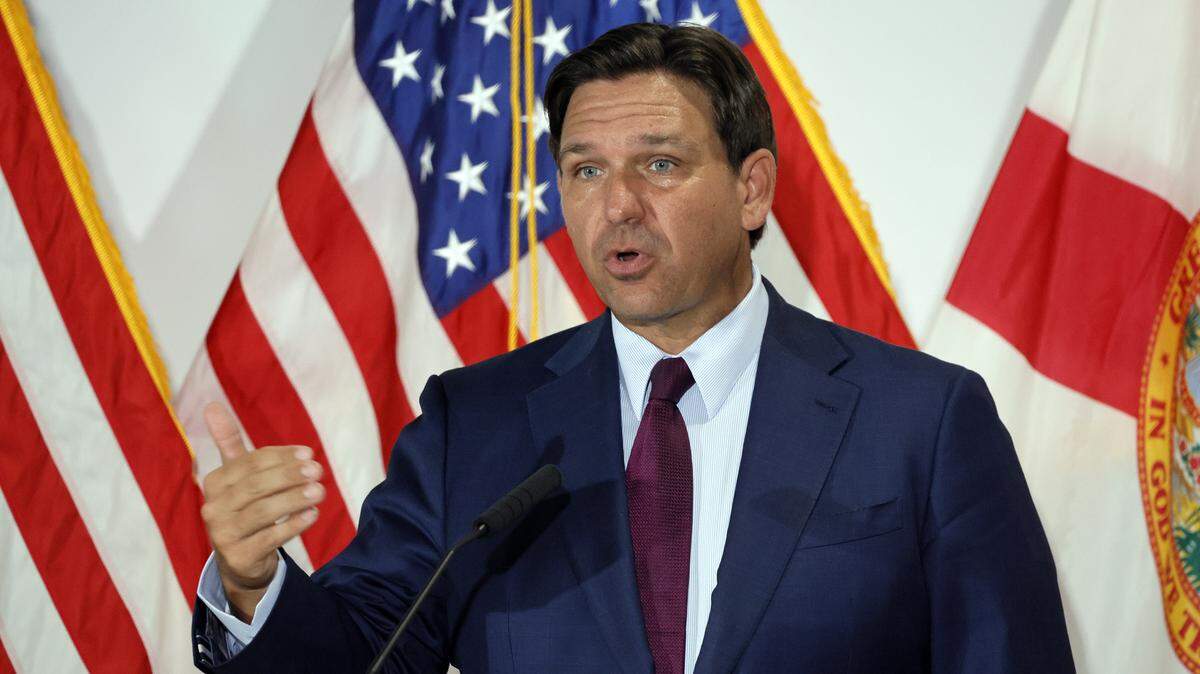
More than 75,000 voters likely won’t have a representative in the state House this legislative session as Gov. Ron DeSantis delays calling for a special election in a Miami-Dade district Republicans flipped red in 2022.
The seat became vacant last month after Miami-Dade County commissioners appointed Vicki Lopez to the County Commission seat formerly held by Miami Mayor-elect Eileen Higgins, leaving it up to DeSantis to decide when voters will choose a new state representative.
But since DeSantis has been in office, he’s taken significantly longer than his predecessors to schedule special elections. In the two decades before DeSantis took office, it only took governors an average of eight days to call for a special election following a vacancy, according to an analysis by the ACLU.
It’s now been 28 days since Lopez was sworn in as a county commissioner, a gap that is garnering criticism of DeSantis from candidates on both the left and the right.
Democratic candidate Justin Mendoza Routt accused DeSantis of playing politics with a state legislative seat that Democrats feel hopeful about winning back.
“Every day that proceeds without the Governor setting the dates for the special election only serves as proof positive that the Governor clearly understands his party’s vulnerability in our community,” Mendoza Routt said in a statement. He is working with Higgins’ campaign manager, Christian Ulvert.
Democrats could have a better chance at the seat in a special election than they did three years ago, when Lopez won election to the Florida Legislature. It wouldn’t break the Republican supermajority in the Florida House, but Florida Democrats have been eager to land special election wins to try to build momentum ahead of the November general elections.
Another Democrat in the race, Gloria Romero Roses, pointed to Higgins’ 19-point mayoral race win last week as inspiration for what kind of candidate can win in the district, which includes Brickell, Key Biscayne and parts of Little Havana and Coconut Grove.
“She was laser-focused on addressing the affordability issues that are affecting a reasonable corner of this district — and by the way, this district is very well aligned, if you will, with the former boundaries of her county commission seat,” Romero Roses said.
Romero Roses said that, for her, the campaign will be “all about affordability.” She added that her larger concern is not partisan, but about the lack of representation for the district, which according to elections data has more independent voters than Republicans or Democrats.
An election is not possible before the regular legislative sessions starts Jan. 13, according to state rules. But candidates said the Florida House could extend its session longer than its typical 60 days, as it did this year, or hold a special session on redistricting in the spring — which could have an outsize impact on South Florida.
Republican candidate Tony Diaz also slammed the governor for not scheduling a special election yet, saying he’s called the governor’s office more than a dozen times about it.
“Everybody’s in Tallahassee right now divvying up our money. Money that could be used to fix a state road, money that could be used to fix a pothole is being divvied up and we don’t have anyone asking for cake for us,” Diaz said.
DeSantis’ office did not respond to questions about the delay, and directed a reporter to where the governor will post updates about special elections.
He has previously acknowledged Democrats are more likely to win in a special election. “Special, off-year, and midterm elections historically benefit the party out of power because its voters are motivated to vote,” he wrote on social media earlier this month.
State Sen. Tina Polsky, a Democrat whose district includes parts of Palm Beach and Broward counties, recently filed a bill aiming to force Florida’s governor schedule a special election within 14 days after the seat becomes vacant.
In other recent special elections, DeSantis didn’t call an election until after a lawsuit was filed. The most recent lawsuit, filed by the ACLU in September, accuses DeSantis of violating his lawful duties.
“Governor DeSantis has more often chosen to deviate from Florida’s longstanding practice of timely special elections, in violation of his mandatory statutory duty,” the ACLU lawsuit said. “Governor DeSantis has called special elections relatively promptly — if it suits him.”
Currently, Florida law does not specify how quickly the governor has to call a special election, it simply calls for at least a 14-day candidate qualifying period and at least two weeks between the primary and the general elections.
.jpg)