
Florida’s Republican House Speaker wades into Trump’s redistricting war
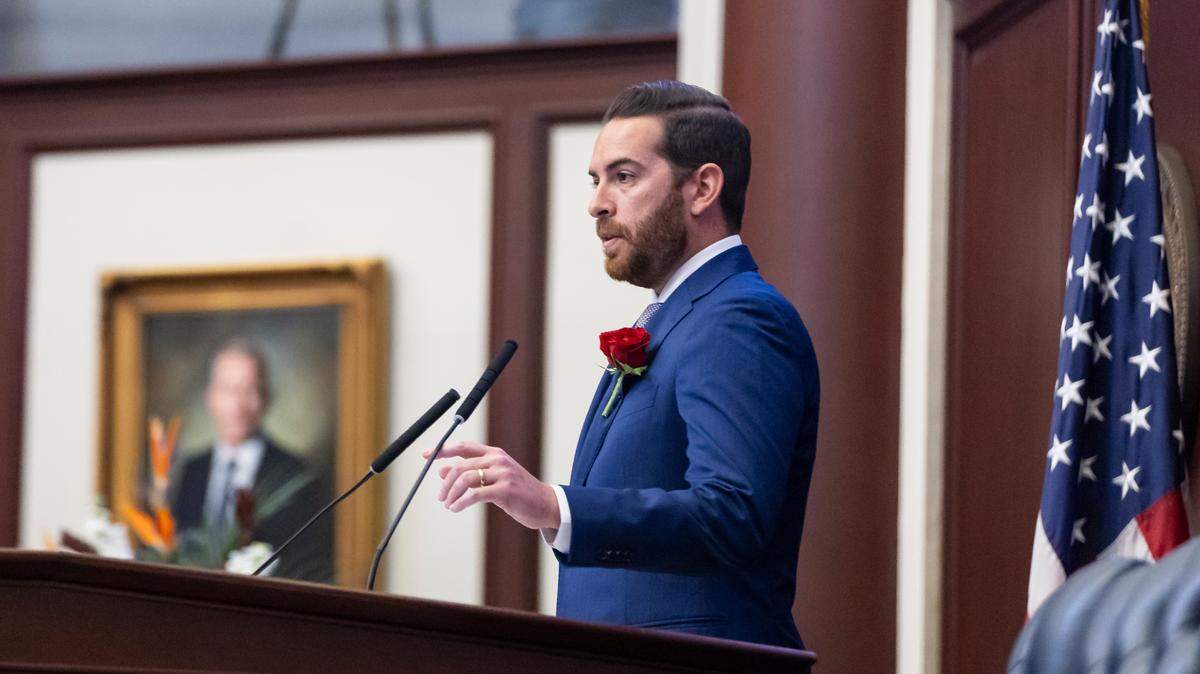
Amid President Donald Trump’s push to get more Republicans in Congress, the Florida House of Representatives is putting together a mid-decade redistricting committee.
House Speaker Daniel Perez sent out a memo to lawmakers Thursday afternoon announcing his creation of the Select Committee on Congressional Redistricting.
Perez, in his memo, said that the House would only focus on the Congressional map because “we do not have the capacity to engage in the full redistricting process” that lawmakers completed just a few years ago.
A state Legislature voluntarily redistricting mid-decade is unusual. But as Trump looks ahead to the 2026 midterm election, he has pressured Texas lawmakers to redraft their map and pick up more Republican seats.
It’s unclear if Florida will be able to pass a new map — Florida Senate President Ben Albritton has declined to comment on whether the Senate would be open to redistricting.
Gov. Ron DeSantis, though, has encouraged the Florida Legislature to redraw the Congressional map, despite his office drafting the map that the state currently has in place.
“I haven’t done it yet, I think that I will when I need to,” DeSantis said in a news conference last week. “But this is obviously something that we’re looking at very seriously.”
DeSantis’ office did not immediately return a request for comment about the Speaker’s committee.
In July, the Florida Supreme Court upheld the 2022 Congressional map DeSantis’ office drafted. That map favors Republicans winning 20 of the state’s 28 seats.
Plaintiffs challenged the map, saying it reduced Black voting power by dismantling a North Florida district held by former U.S. Rep. Al Lawson, a Democrat.
The Florida Supreme Court in a 5-1 decision sided with the state, saying the old district was likely an illegal race-based gerrymander.
Perez’s memo said based on that high court ruling, raising questions now, mid-decade, would “potentially allow us to seek legal guidance” from the state Supreme Court without having to wait until the once-a-decade national reapportionment of seats.
Amelia Angleton, a spokesperson for the speaker, declined to comment on whether the House’s goal was to pass new maps, and instead said that the committee chairperson and members would “drive the conversation to an appropriate destination.”
The House will not put lawmakers who are interested in running for Congress on the committee, according to Perez’s memo. Perez also said that the House would disqualify people who have made statements suggesting “an intent to favor or disfavor an incumbent or political party, which is currently prohibited by the Florida Constitution.”
In 2010, more than 60% of Florida voters approved that constitutional amendment.
The amendment, sponsored by the political committee Fair Districts Florida, says no plan can be drawn with the intent to help or harm a political party’s chances. It also says a district cannot deny equal opportunity to racial minorities.
Rep. Anna Eskamani, D-Orlando, said she thinks the House majority could try to pass new maps favoring Republicans more because of Trump’s goal.
Eskamani said she and other Democrats have spoken with Texas Democrats, who left the state in order to block a vote on the new Texas Congressional plan.
“We have to work together in this moment of, not just uncertainty, but of extremism,” Eskamani said.
In Florida, Republicans hold a supermajority in the House, meaning Democrats don’t have the numbers to stop the chamber from coming to a quorum.
As DeSantis has talked about the possibility of redistricting in Florida, he’s avoided talking about possible political gains.
Instead, based on the Florida Supreme Court ruling, he’s said the focus on redistricting would have to do with “problems with the map” that may have prioritized race too much.
Perez similarly said that would be the focus of the committee, though he acknowledged that “there are national conversations ongoing in other states related to midterm redistricting.”
Dan Vicuña, a senior policy director at Common Cause, said last week that they “don’t have to rely on the pretext that the governor is giving” in order to challenge a new map.
He said there are ways to prove a map is unfairly rigged in favor of a political party even if none of the politicians are acknowledging it.
As the House contemplates redistricting, another element at play is the U.S. Census. Trump on Thursday called for a “new and highly accurate” census that does not count non-citizens.
The U.S. Constitution says that the census will count “the whole number of persons” in each state. DeSantis has, like Trump, pushed for a census that excludes the count of non-citizens.
It’s unclear if Trump on Thursday was talking about making changes ahead of the 2030 census, or if he was issuing a mid-decade re-do.
Florida was undercounted in the 2020 census, according to the U.S. Census Bureau’s own numbers. A Florida TaxWatch study estimates that the state should have received one additional seat in Congress.
This story was originally published August 7, 2025 at 2:15 PM.