
The $10 million central to Hope Florida charity probe may harm its tax status
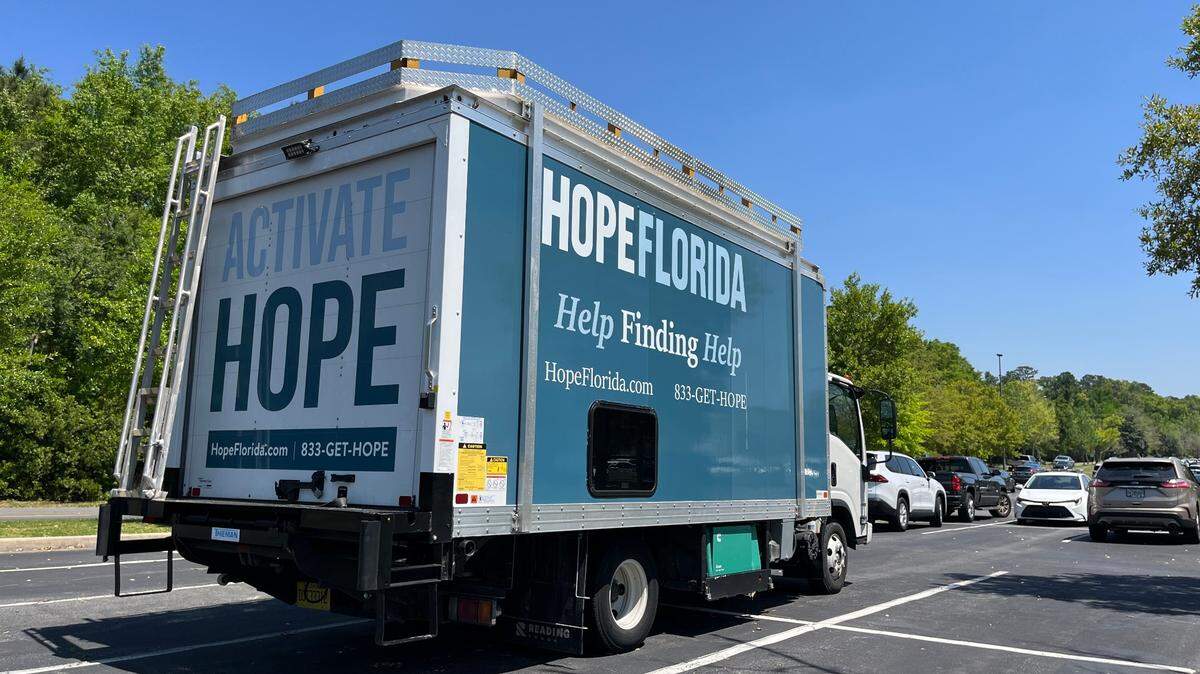
The president of the Hope Florida Foundation told its board on Monday that the embattled charity was getting its financial house in order.
During the second public meeting in the two-year-old organization’s history, the board appointed a new member whom it named as its first treasurer. And charity President Joshua Hay assigned members to come up with a budget and a process for evaluating grants.
But the state-created charity did not address what one board member in April called the “elephant in the room”: Hay’s decision last year to accept, and quickly give away, $10 million from a Medicaid settlement to two other nonprofits, which then gave a similar amount to a political committee intent on defeating the recreational marijuana ballot initiative.
The State Attorney’s Office in Leon County has an open criminal investigation into the transactions.
The board’s decision to ignore the $10 million transfer, experts say, could jeopardize the tax-exempt status of the state-created Hope Florida Foundation, an IRS-recognized 501(c)(3) headquartered in the Department of Children and Families to assist first lady Casey DeSantis’ top initiative, Hope Florida.
The Hope Florida program is intended to move Floridians off of government assistance, and the charity is supposed to give money to churches and local nonprofits that help those people.
But since its creation in 2023, the Foundation has been riddled with problems exposed by the Herald/Times. Its first board meeting last year was held in secret — in violation of state open meeting laws — and it has been functioning without any budget or audits, as required by law. Even Monday’s meeting — held up by Hay as a step in the right direction in terms of good governance — lacked a public agenda, was not noticed through the state Department of Children and Families’ administrative register, and didn’t have the meeting’s Zoom link posted on the Foundation’s website until the weekend.
The Herald/Times also reported this month that during its first fundraiser, the Foundation paid for hotel rooms, drinks and custom golf bags for DeSantis’ top staffers and legislators but never notified them of the value of those gifts, which is required under state ethics laws.
During its first public meeting on April 17, board member Stephanie White — who is married to former state Rep. Frank White — asked Foundation attorney Jeff Aaron whether the $10 million settlement funding was public money, which would be illegal to divert.
But White did not address the matter at Monday’s meeting, telling the Herald/Times afterward that she is “looking forward to having policies and procedures put in place so that we can provide needed grants to organizations in Florida that help children and families.”
Foundation board member Tina Vidal-Duart had previously requested that an outside attorney look into the matter, since Aaron acknowledged he had been accused of committing federal crimes related to it. But she, too, was silent on the topic Monday. (White and Vidal-Duart were the only ones out of the six-member board not given officer positions on Monday.)
Vidal-Duart did not return a phone call from the Herald/Times on Monday. Aaron did not respond to a request for comment. A spokesperson for the state Department of Children and Families, where the Foundation is headquartered, never answered why the meeting wasn’t noticed as other meetings are.
State Rep. Alex Andrade, the Pensacola Republican probing the Foundation’s spending, urged the board at the April 17 board meeting to recoup the money so as to not jeopardize the organization’s charity status, a point reflected in the meeting minutes the board approved on Monday.
After an expert told the Herald/Times that a charity like the Foundation could be heavily taxed on money diverted to a political campaign, which the IRS views as lobbying, Andrade said he was concerned about the Foundation being a liability to the state.
“If the [charity’s] activity exposes state coffers to the risk of an excise tax from the IRS, you have to begin to question whether or not its existence is justified,” Andrade said after the meeting Monday.
Hay claimed in Andrade’s House hearing on April 15 — two days before the Foundation’s first public board meeting — that while he had signed off on giving the $10 million to two 501(c)(4) organizations in the form of two $5 million grants, there were “deficiencies with monitoring” where the money went next.
That argument isn’t legitimate to the IRS, said Nathan Goldman, an associate professor of accounting at North Carolina State University who writes a tax column for Forbes.
“The classic defense for these organizations is that if they give to somebody else and they use it for lobbying, then all of a sudden they’ve kind of had their hands washed,” Goldman said in an interview. “But that’s why this rule’s in place, because it’s putting the burden on the original organization, that you need to understand where that money’s going to.”
Goldman said that the “slap-on-the-wrist” punishment from the IRS would be to tax the organization — the Hope Florida Foundation — for all the money it overspent on lobbying at 25%, which is higher than the corporate tax rate of 21%.
In this case, if the entire $10 million later went to defeating the recreational marijuana amendment, then the Foundation could face a tax penalty of up to $2.4 million, based on the amount Hay said the charity had raised in total and lobbying rules by the IRS.
“On the higher end of the spectrum, they’d lose their 501(c)(3) status, and everything that they’re doing becomes taxable,” Goldman said.
Similarly, Shanna Ports, senior legal counsel for the Campaign Legal Center, a campaign finance watchdog, previously told the Herald/Times that if political contributions are a “substantial” part of a charity’s activity, it could lose its tax-exempt status.
This story was originally published June 30, 2025 at 9:11 PM.