
DeSantis signs bill to ease maintenance costs for Florida’s condo owners
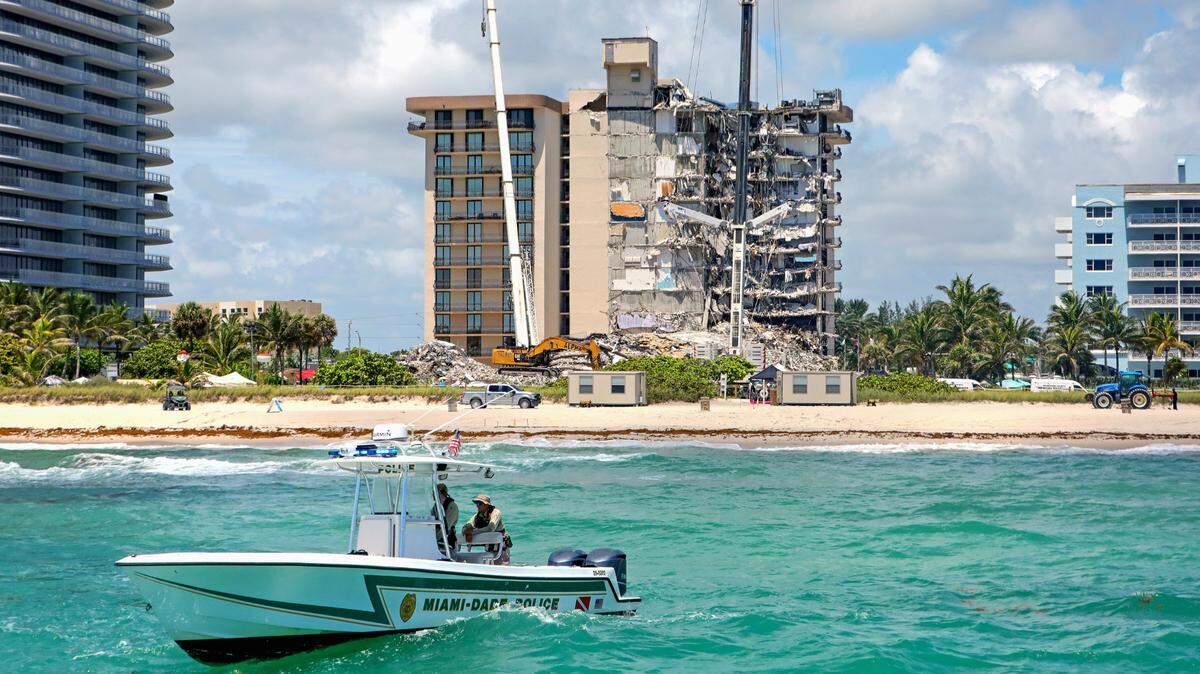
Gov. Ron DeSantis on Monday signed legislation seeking to help condo owners comply with safety laws enacted after the deadly residential tower collapse in Surfside, claiming a win for cash-strapped unit owners while using the public event to further his feud with the Florida House.
The bill — signed in Clearwater on the eve of the four-year anniversary of the collapse of the Champlain Towers South — doesn’t include any new money to help finance pricey and mandatory repairs. But lawmakers believe it will help condominium owners afford the projects necessary to make their buildings safer and avoid a repeat of the tragedy in Surfside, which killed 98 people.
The legislation, HB 913, allows associations to take out lines of credit to fund reserves, invest HOA fees in a limited way to help pay for future repairs without a vote by membership and pause contributions to reserves for up to two years if they are already making immediate repairs needed after mandatory building inspections.
The legislation goes into effect on July 1.
The bill has been largely lauded by the House and Senate, though some lawmakers and condo owners have said there’s more work to be done to lower costs for residents and curtail poor management by condominium associations.
DeSantis also signed related legislation, HB 393, on Monday that extends the My Safe Florida Condominium Pilot Program, which will give associations up to $175,000 to harden their buildings and help them come into compliance with the new condominium-safety laws. It goes into effect immediately.
The money for that program isn’t new, but includes nearly $30 million that largely went unspent last year while the state was getting the program up and running.
During the press conference, Ronni Drimmer, the condominium board president of a 55-and-older association in Clearwater, thanked the governor for his advocacy on what she sees as an affordability crisis for unit owners in buildings like hers. But she said there were other problems left unaddressed, namely, insurance.
Her association dropped their insurance with the state-run Citizens Property Insurance Corp. for hurricane coverage in 2025 after the company increased the deductible to replace their roof beyond what it would cost to do the work.
“So, we’re in a little bit of a precarious situation right now,” Drimmer said.
She said her association was “on the list to get something” from the condominium-hardening program, and was hopeful the money would come through.
But she told the Herald/Times afterward that she doesn’t think the new condominium legislation ultimately goes far enough to offer financial relief for condominium owners. She said the Legislature should have addressed the issues in January like the governor wanted.
“If they went at the condo fixes sooner, it would have been better,” Drimmer said. “We are still faced with large increases to come [in] budgeting for 2025.”
UNINVITED BILL SPONSOR
DeSantis on Monday blamed the House for not getting legislation done earlier in the year as condo owners and associations pleaded for relief from looming bills newly required by state law. He brought up again how he wanted a special session in January for both immigration enforcement and condo relief — but lawmakers took up only the former that month.
“I know a lot of people were very disappointed in the leadership, particularly in the House of Representatives, for not being willing to address it at that time,” DeSantis said.
The Herald/Times reported in March that legislation passed in the wake of the Surfside tower collapse created a financial crisis for unit owners that gave an opening to developers looking to replace old buildings with luxury high-rises. Two key reforms that DeSantis signed into law in 2022 are central to the dynamic: mandatory building inspections requiring immediate repairs, and mandatory reserve studies requiring associations to save for future maintenance.
Exactly what caused the building to collapse remains under investigation by the National Institute of Standards and Technology. The agency issued preliminary findings on Monday and expects to release a final report next year.
House Speaker Daniel Perez, a Miami Republican who led on condominium reform after the Surfside tragedy, was against using the special session to address costs associated with enacting the safety measures imposed by legislation he sponsored three years ago.
“The House and Senate both said the condo issue could be handled in the regular session, and it turns out we were 100% right,” Perez said in a statement responding to the governor.
Perez called this year’s legislation a “joint effort” by sponsors from both chambers.
But DeSantis mostly gave credit to the Senate for the final product, even though the bill that passed included priorities from both chambers.
“I think the Senate in Florida had a good product, and unfortunately, kind of at the last minute, probably the last week, that eventually passed,” DeSantis said. “And we were able to get something that’s now on my desk and that we will sign here today.”
Rep. Vicki Lopez, a Miami Republican and top lieutenant to Perez who sponsored the legislation signed Monday by DeSantis, said she wasn’t invited to the bill signing but was “thrilled” it would become law.
“Since being elected to the Florida House, this issue has been a top priority for me, and I’m incredibly proud of what we’ve achieved together,” Lopez told the Herald/Times. “Working alongside Speaker Perez and the Florida House, we delivered meaningful solutions for condo owners across Florida including the 667 associations in my district.”
Lopez called the final legislation a “thoughtful balance: ensuring the structural safety of our buildings while providing much-needed financial relief for families facing the significant costs of reserve requirements.”
Sen. Jennifer Bradley, a Fleming Island Republican, said she was invited to the bill signing but was unable to make it as she is out of state with her family. She said DeSantis “delivered on his promise to provide relief for Florida condo owners.”
“After much listening, my bill provides needed relief without sacrificing safety. Condo owners want safe buildings, greater transparency and accountability for associations, greater financial flexibility and extended timelines,” Bradley said. “This bill does all these things.”
Other lawmakers say there is still work to be done.
Sen. Rosalind Osgood, a Tamarac Democrat, said she wanted to see condominium buildings under six stories carved out from the new requirements around saving for future maintenance. She filed a bill to that end this year but it wasn’t heard. The bill that ultimately passed requires any condominium building with three habitable stories to comply.
Sen. Ileana Garcia, a Miami Republican who has worked with hundreds of Florida condominium owners on myriad issues including affordability and association accountability, said the legislation “takes a significant step toward protecting condo owners from bad actors while prioritizing their safety.”
But she wants the state Department of Business and Professional Regulation, which regulates condominium associations, to “dramatically improve its procedures and best practices.”
“Condo owners are ready to move forward, yet the DBPR division often fails to thoroughly investigate and keep cases open,” Garcia said. “They have a fiduciary duty that cannot continue to be sidelined.”
This story was originally published June 23, 2025 at 5:47 PM.