
Miami lawmakers once protected in-state tuition for so-called Dreamers. No longer.
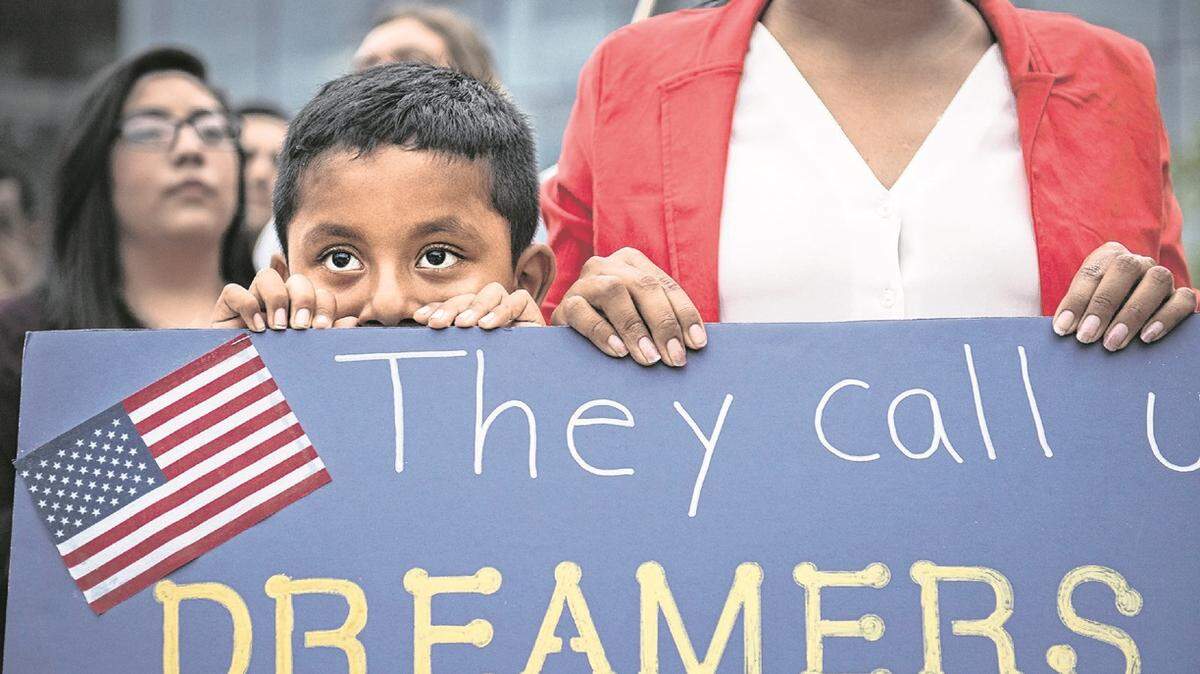
A decade ago, Miami-Dade lawmakers were instrumental in securing cheaper, in-state tuition rates for undocumented college students in Florida known as “Dreamers.” That legacy is now over.
Late Tuesday evening, the Legislature passed a bill cracking down on undocumented immigration, including a provision to end the tuition discount for students who came to the country illegally with their parents.
The bill was championed in part by Florida House Speaker Daniel Perez — a Miami Republican with Florida International University in his district.
“We will discontinue the policy of allowing illegal aliens to receive in-state tuition at state colleges and universities,” said Perez during a speech Monday opening a special session of the Florida Legislature.
Perez added: “Under this bill, we will ensure that Florida is working harder than any other state to support President Trump in his efforts to restore integrity to our nation’s borders.”
Securing in-state tuition for children of undocumented immigrants became a political flashpoint a decade ago, in 2014, when the current lieutenant governor sponsored the measure in the House with the support of then-governor Rick Scott, who is now a Republican U.S. senator.
Under that law — which would be revoked in the unlikely scenario that Gov. Ron DeSantis signs the Legislature’s newly passed bill – undocumented students in Florida can get a waiver and pay Florida-resident tuition fees at public and state colleges as long as they meet certain requirements. They must have gone to high school in the state for at least three consecutive years and enrolled in college within two years of high school graduation. The 2014 legislation also benefited the children of veterans and students without reliable housing or living in abusive households.
Granting in-state tuition discounts to undocumented students was an overture to Hispanic voters during a moment when Republican politicians were beginning to pay more attention to the influence of Latino voters at the ballot box in what was still a swing state with razor-thin margins.
“I can assure you that 10 years from now, if we do nothing, we will look back and Florida will be worse for it,” then-state Rep. Jeanette Nuñez, now Florida’s Republican lieutenant governor, said at the time.
But times have changed. In November, President Donald Trump won majority-Hispanic Miami-Dade County – where half the population was born in another country — while campaigning on the promise of mass deportations.
Over the weekend, Nuñez reversed her position.
“It’s time to repeal this law,” Nuñez posted on X on Jan. 25. “It has served its purpose and run its course.”
As lawmakers debated the broader immigration bill on Tuesday, some senators from the delegation, including three Republicans, tried to extend the discount for students already enrolled in college through an amendment that failed.
“We are voting yes on this amendment because it is our personal belief that these individuals should be allowed to pay the current rate until they complete their education,” Sen. Ana Maria Rodriguez, a Doral Republican and Senate Miami-Dade delegation chair, told the Herald/Times Tuesday.
(Sen. Ileana Garcia, a Miami Republican, was absent for the amendment vote but said she would have supported it).
The amendment was similar to what Senate President Ben Albritton said he wanted during a December press conference, but Albritton didn’t support it in the end. His position on ending the in-state provision lost him at least one Republican vote on the immigration bill, possibly more, which could threaten his ability to override the governor’s impending veto of the legislation.
In the House, two amendments filed by Rep. Marie Paule Woodson, a Hollywood Democrat whose district includes part of Miami-Dade County, to protect in-state tuition for undocumented students were defeated by a simple voice vote. So, there’s no record of how individual lawmakers weighed in.
Woodson said they were supported by her caucus, but she didn’t have a chance to discuss them with Republicans, including from the Dade delegation.
“The process was moving pretty fast,” said Woodson. “It’s not that we had the bill for a few days where I could’ve gone and talked to them about it.”
Rep. Vicki Lopez told the Herald/Times last year when the governor tried to end the tuition discount for undocumented students that the delegation blocked it.
“Although we stopped it this year, I feel like I have to continue to fight the battle to make sure it doesn’t happen next year and the years that follow,” Lopez, a Miami Republican, said back then.
But she hasn’t discussed the matter with the newspaper since Albritton first proposed phasing it out in December. She didn’t respond to a request for comment.
Lopez voted Tuesday alongside 81 other House members in approving the immigration bill that ends the in-state tuition provision for the undocumented students.
Ironically, the governor, who has been pushing for months to undo the 2014 law, may block the newly passed legislation from taking effect by issuing a veto over his objections to other aspects of the bill. But it’s now clear that both he and the Florida Legislature want to do away with what was once a priority for Florida Republicans.
Before Sen. Alexis Calatayud, a Republican from Miami, voted against the immigration bill Tuesday, she said it was because of the provision ending the in-state tuition for the undocumented students. She said she supported Trump’s effort to “combat illegal immigration and protect our communities from criminal illegal immigrants.”
And she cast doubt that Trump wanted to target undocumented students in his immigration-enforcement agenda.
“I am passionately empathetic to the thousands of people who were brought here to our great state because of no fault of their own,” Calatayud said. “And so is President Donald Trump.”
Calatayud noted how in June Trump proposed giving green cards “automatically” to foreigners who graduate college in the United States. And she said he had sympathy for the undocumented students, offering to “work with the Democrats on a plan” to protect them during a recent interview.
“This past December, President Trump said: ‘We have to do something about the Dreamers because these are people that have been brought here at a very young age and many of these middle-aged people now. They don’t even speak the language of their country’,” Calatayud said.
Using one of Trump’s staple phrases of his recent electoral victory, she added: “The revolution of common sense is not without compassion.”
Sen. Shevrin Jones, a Democrat from Miami Gardens who filed the failed amendment extending in-state tuition for current students, pleaded with his colleagues to not let students who want an education get “caught up in our political game.”
Senators estimated during the discussion that there are 6,500 undocumented students enrolled in colleges and universities across the state. Jones’ office said about 300 of them are enrolled in Florida International University.
“Do y’all know where a lot of these young people are? They are in Miami,” Jones said. “They’re at FIU. They’re at Miami-Dade College. These students are right there.”
This story was originally published January 29, 2025 at 4:21 PM.