
Oyster farmers, environmentalists fight permit for drilling near Florida river basin
Xochitl Bervera’s commute takes about 15 minutes, and she’ll argue it’s the prettiest drive on earth.
Each morning, Bervera boats into the middle of Apalachicola Bay, where she has raised oysters full-time for two years.
The ride, surrounded by the salt marshes and seagrass beds, reminds Bervera of why she loves her job in Northwest Florida — and it underscores what she could soon stand to lose.
A few months ago, Bervera learned of a company that wants to drill an exploratory oil well just up the river from her farm. She worried for the more than 125,000 baby oysters she tends to each day.
“It could make or break what grows in our very delicate bay,” said Bervera, founder of the Apalachicola farm Water is Life Oysters. “So I thought to myself: ‘I need to do whatever I can to stop this.’”
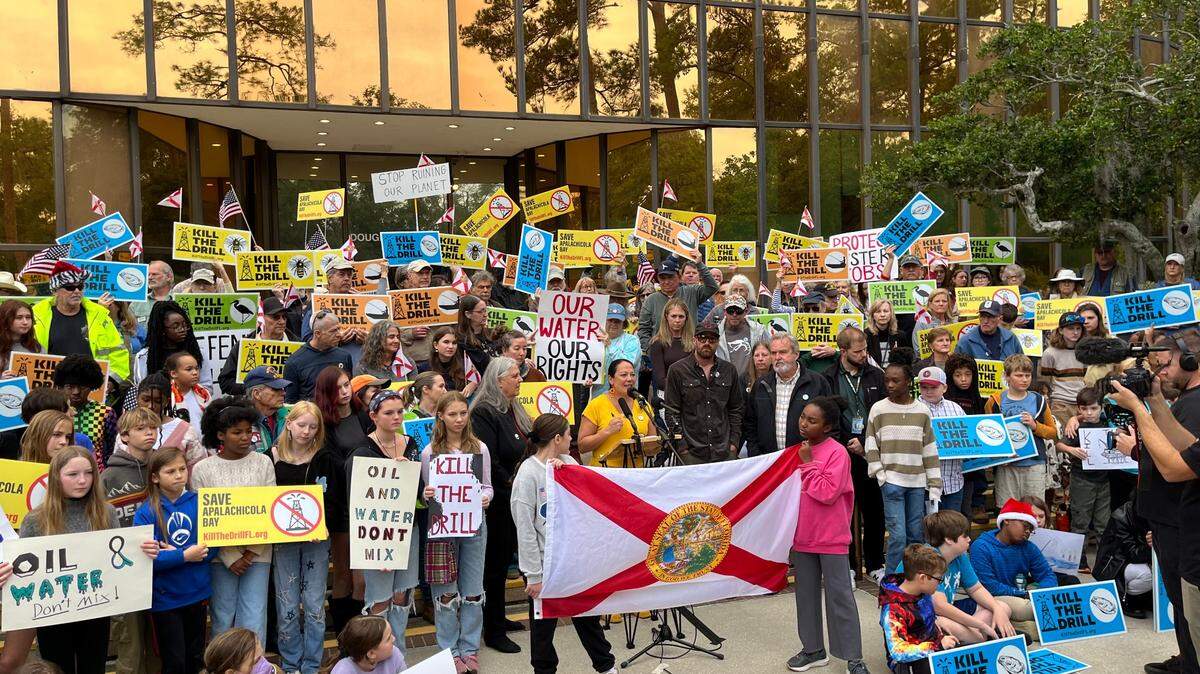
Bervera was one of a handful of speakers flanked by about 200 protesters on the front steps of the Tallahassee headquarters of the Florida Department of Environmental Protection on Monday afternoon. She joined the crowd in sending a message to Gov. Ron DeSantis and the environmental agency he oversees: ‘Kill the drill’ and tell regulators to rescind their support for approving the exploratory oil drilling permit.
In April, the Florida Department of Environmental Protection filed its formal intent to issue the oil and gas drilling permit to the Louisiana-based Clearwater Land & Minerals FLA, LLC. The company wants to drill an exploratory well roughly 14,000 feet into the earth, according to filings, and the state agency indicated it aims to let them.
Less than two months later, the nonprofit Apalachicola Riverkeeper launched a legal challenge against the environmental agency and urged a judge to deny the permit over potential harm to the Apalachicola river basin and the surrounding economies that depend on the healthy river for jobs, like shellfish farming and angling.
The nonprofit argued there’s a risk of polluting the ecosystem and that approving the permit sets a dangerous precedent for the future of protecting Florida’s remaining wild places.
“By prioritizing the potential short-term economic gains of an oil company and landowner over the protection of our natural resources, the DEP sends a message that profit for a few trumps environmental stewardship and sustainable economy for the many,” the group argued in its legal petition, filed in June.
Just down the road from the protest Monday, in a Tallahassee hearing room, the first of what is slated for several days of arguments was underway between company lawyers and environmental advocates over whether the oil permit should be allowed. The hearings, overseen by administrative law judge Lawrence Stevenson, are scheduled to wrap up by Friday, though a decision isn’t expected immediately.
A lawyer for Clearwater Land & Minerals, Timothy Riley, told the judge on Monday that the company will show there is minimal environmental threat at the site less than two miles from the Apalachicola River, according to a Politico report. Riley said there is “a high likelihood of finding oil and gas in quantities that are commercially viable for extraction” at the proposed drilling site, the report states.
In an emailed statement, Florida Department of Environmental Protection spokesperson Alexandra Kuchta pointed to the notice of hearing document and said the agency couldn’t comment further because the litigation is active.
Of the roughly 400 oyster and clam farmers around Florida represented by the Florida Shellfish Aquaculture Association, about 75% of oyster farmers are located in Gulf, Wakulla and Franklin counties and could be threatened by the decision to allow exploratory oil drilling upstream, according to the association’s executive director, Adrianne Johnson. For the oyster farmers nestled along the Gulf of Mexico, it’s not just the potential for ecological impacts that could upend their seafood harvest — it’s also bad marketing.
People consuming oysters or clams don’t want to eat shellfish potentially growing in contaminated water, Johnson explained. The idea of nearby oil drilling alone could turn customers away from the family-owned businesses near the river.
“Oil drilling is bad for business. It’s bad for our oyster farmers whose livelihoods depend on clean water and it’s bad for our coastal communities who count on working watermen and women for their local economies,” Johnson said in an interview. “By protecting the Apalachicola River we are protecting the businesses who make up the backbone of Florida’s seafood industry in the region.”
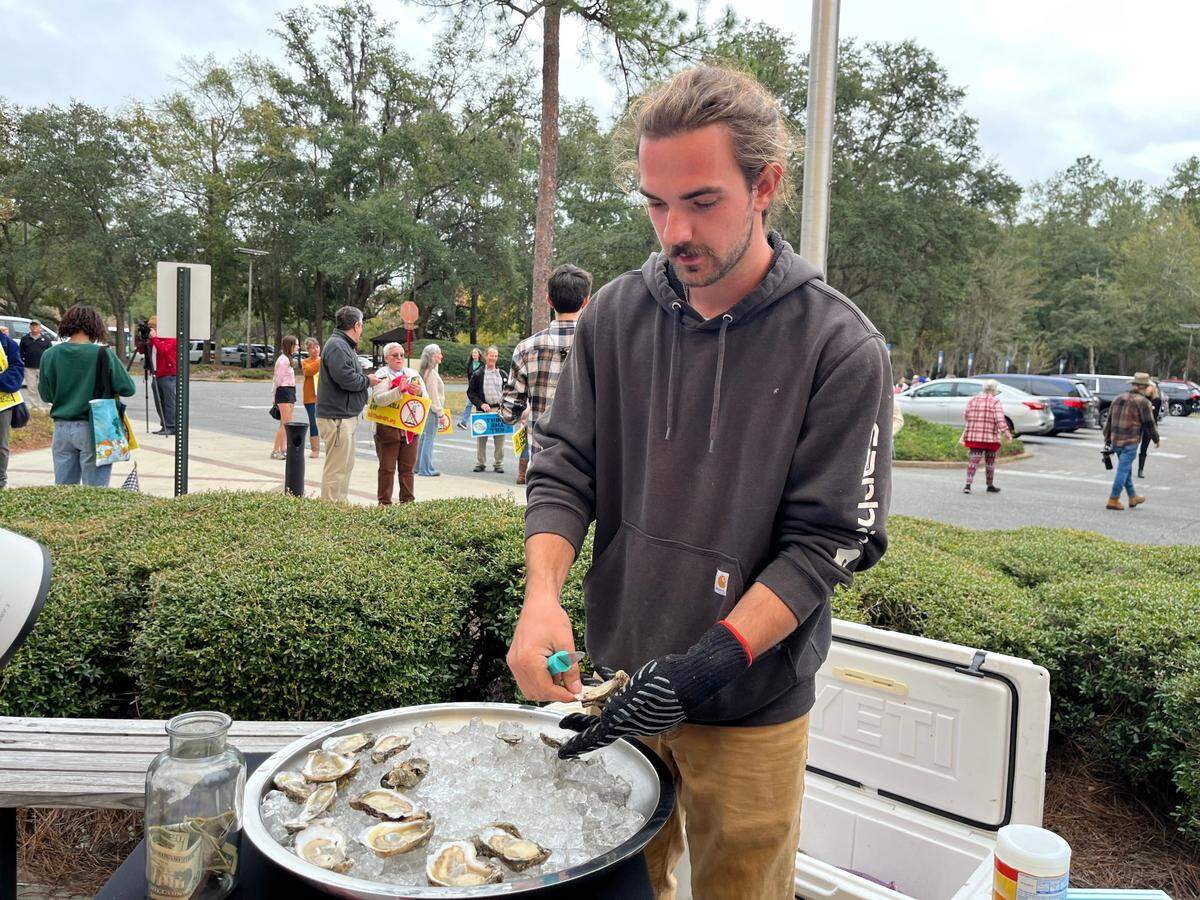
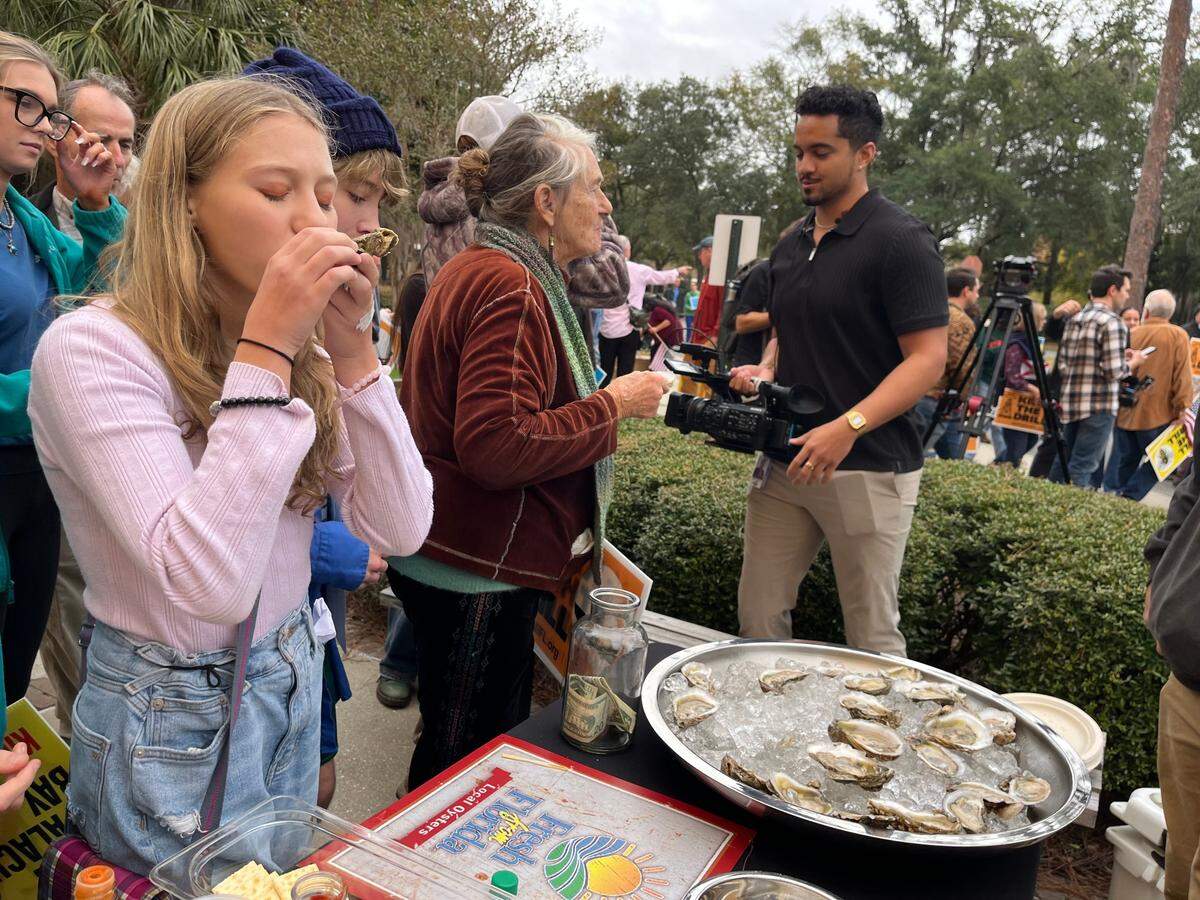
Beside the crowd of protesters Monday, farmers from around the Apalachicola Bay area brought some of their home-grown oysters and displayed them on a tray of ice with lemon slices — a symbol of what they say they could lose. Although the oyster population isn’t what it used to be, most of the local economy still revolves around it, said David Damon, owner of JP Roberts Hurricane Shutters in Crawfordville.
Cameron Baxley, the Apalachicola Riverkeeper who has flown over the proposed drilling location by plane, said the nearby Tupelo honey and recreational and commercial angling are other industries potentially at risk. There are 1,300 species of plants and hundreds of fish and reptile species that call the river basin their home.
If approved, the drilling permit would expire one year after it’s issued. If the company didn’t begin drilling within that timeframe, the state could extend the permit for an additional year, according to state documents. The company could be fined $15,000 per day if they end up polluting the surrounding land, water or wildlife during drilling.
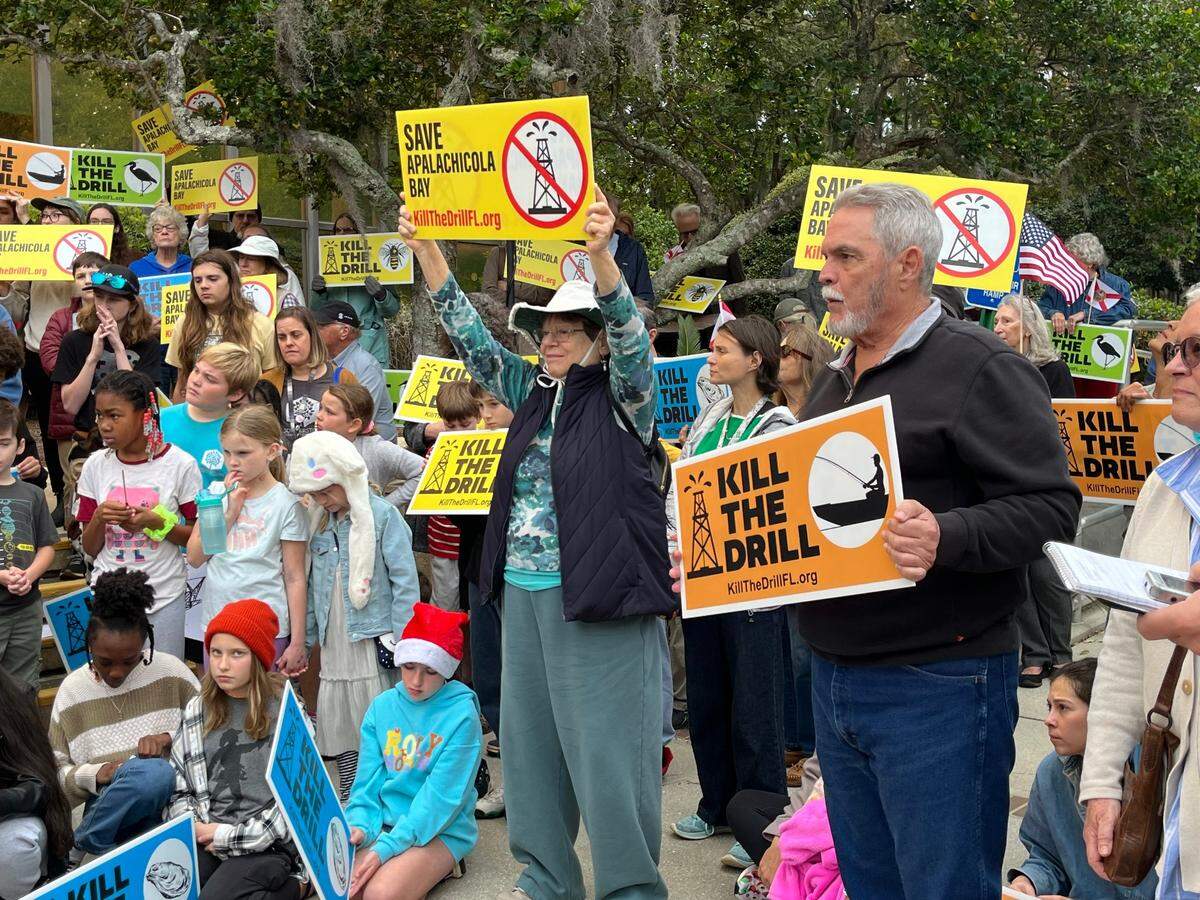
Protesters waved signs Monday vowing to “Kill the Drill” and “Save Apalachicola Bay.” Students joined business owners in decrying the idea of drilling in the area, where the remnants of its once-booming oyster industry still attract tourists.
To protesters, the prospect of drilling in the area also brought flashbacks to the 2010 Deepwater Horizon oil spill, which devastated the Gulf economy.
“The oysters have crashed. The shrimp have gone to hell. The populations of marine life since the oil spill with Deepwater Horizon has been a disaster,” said Jack Rudloe, founder of Gulf Specimen Marine Laboratory, a nonprofit that provides marine life to schools and laboratories. “We don’t need this in Apalachicola Bay. We don’t need drilling.”
Nearby, Grayson Hall shucked and served oysters from Apalachicola Bay. His brother’s business, Southern Oyster Farms, is one of the few full-time oyster operations left in the area, he said. Drilling there would be devastating.
“It would kill him,” Hall said. “It would kill his farm.”