
Florida government ramps up anti-abortion campaign. Courts have declined to intervene.
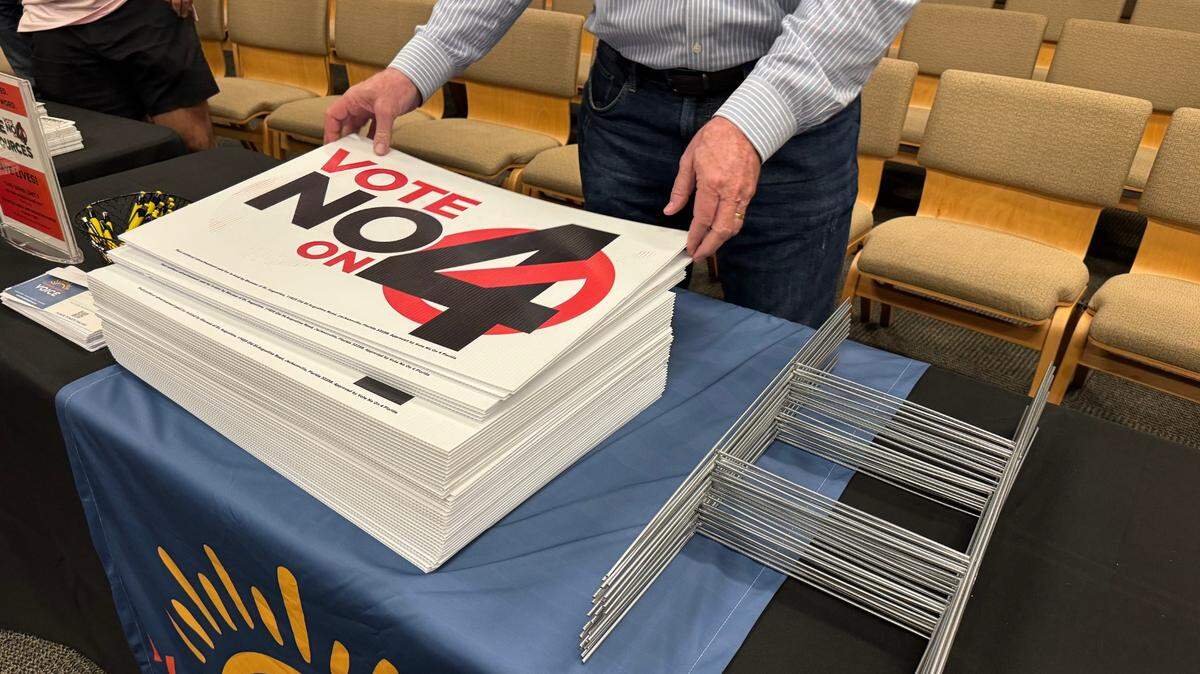
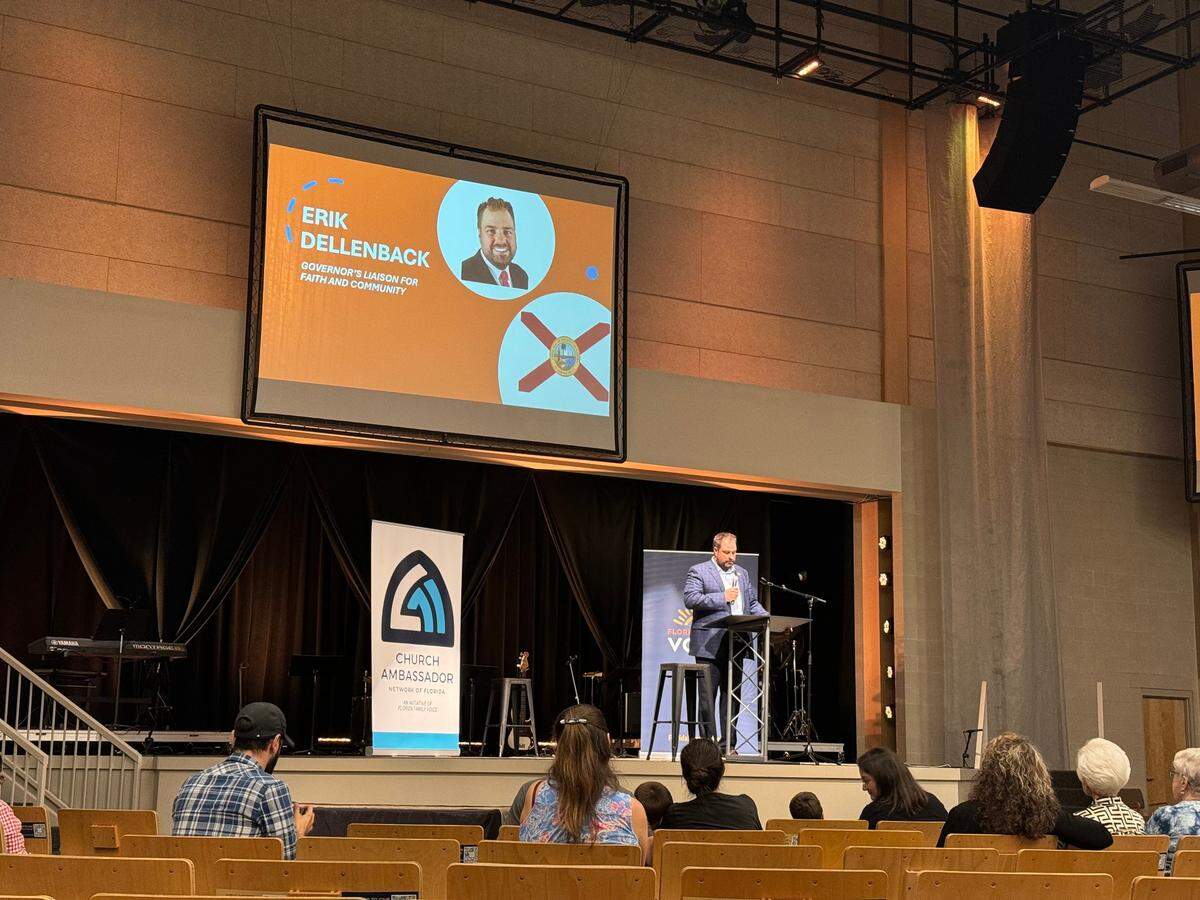
Inside a Tallahassee church on Monday night, organizers behind the effort to defeat abortion access on the Nov. 5 ballot in Florida coached dozens of people on how to campaign against Amendment 4 – while standing side-by-side with a representative of the governor’s office and offering a state-funded website as a campaign resource.
Organizers encouraged the crowd to take home “Vote No on 4” yard signs. They urged churches and pastors to get more involved in the fight. And they shared QR codes linking to a Florida health agency’s anti-Amendment 4 website – one that has already survived two legal challenges seeking to declare it an illegal use of state funds.
Erik Dellenback, a state employee who leads the governor’s faith and community initiative, made it clear that Gov. Ron DeSantis had sent him in his official capacity as a representative of his office.
“Tonight, I represent government,” he said. “But I have spent way more time as a faith person than I have as a government person. And this was a biblical issue before it was a political issue.”
With less than three weeks to go until Election Day, the Monday night event underscores how the DeSantis administration has dropped most pretenses of separation between state government and campaign to defeat abortion access in Florida. It has spent millions on TV ads countering the Amendment 4 campaign, threatened TV stations that run pro-abortion ads and intermingled state initiatives with campaign events. And, so far, with government watchdogs warning the administration has crossed a bright line, the judicial system has declined to intervene.
Three times this month, the courts, including the Florida Supreme Court, rejected requests to stop DeSantis and other state officials from using their official authority and office to advocate against an issue on the ballot.
They have declined to say whether Florida’s state government has run afoul of state laws that limit the political activities of state officers and government employees. And they have signaled that, in Florida, the responsibility for enforcing rules meant to regulate the government’s engagement in political activity largely falls on the governor’s allies, some of whom are in lockstep with him in the effort to stop voters from overturning Florida’s new six-week abortion ban.
“It’s almost like there are no guardrails. I would argue that the state Supreme Court is letting him do whatever he wants,” said Ben Wilcox, the research director for Integrity Florida.
In Florida, there are laws that set boundaries between the political activities public officers can engage in, and that bar career government employees from using their official positions to “secure support for, or oppose any candidate, party, or issue in a partisan election.”
“I think Floridians should be outraged that our government is using our resources to push their opinion on measures that are going to be on the November ballot,” Wilcox said.
The governor’s office defended the administration’s efforts, saying state agencies “have the authority to educate the public on resources available under Florida law.”
“Where outside voices engage in misinformation that could confuse women and children and jeopardize their health and safety, it’s all the more important for the state of Florida to provide such education,” DeSantis’ spokesperson Bryan Griffin said in a statement.
Courts largely step aside
Legal challenges against the administration’s taxpayer-funded campaign efforts remain active, but the courts have largely stepped aside, creating a favorable environment for the DeSantis administration’s ongoing efforts.
Last week, the Florida Supreme Court rejected a petition by Palm Beach County attorney Adam Richardson accusing DeSantis, Attorney General Ashley Moody and the secretary of the Florida Agency for Health Care Administration of breaking the state’s election interference law.
Richardson wanted the judicial system to determine that the Florida Agency for Health Care Administration website that reiterates much of the same rhetoric used by anti-Amendment 4 groups is illegal.
Moody’s office argued that high-ranking state officials like the governor are exempt from the law that prohibits state officials from using their offices to influence an election – and that “leaders have both a duty and right to say which course of action they think best, and to make use of their offices for this purpose.”
That’s not interfering with an election, “it is just good government,” Moody’s office argued.
The Florida Supreme Court last week declined to say whether DeSantis and state officials were breaking the law or whether DeSantis is exempt from the election interference law.
Instead, justices – noting that Richardson cited a criminal statute – said the enforcement of such a law is “to be enforced by an official representative of the state: the attorney general, a statewide prosecutor, or a state attorney in the first instance, or supplementally by the Florida Election Commission as to civil remedies like fines and injunctive relief.”
Under that premise, the enforcement would fall largely to DeSantis’ allies, such as Moody, and boards that are stacked with political appointees.
In a separate legal case, a Leon County circuit judge also refused to block the state Agency for Health Administration from using its website to spread information about Amendment 4.
The courts “must trust the people to decide what information is important to them,” Judge Jonathan Sjostrom wrote in a decision earlier this month.
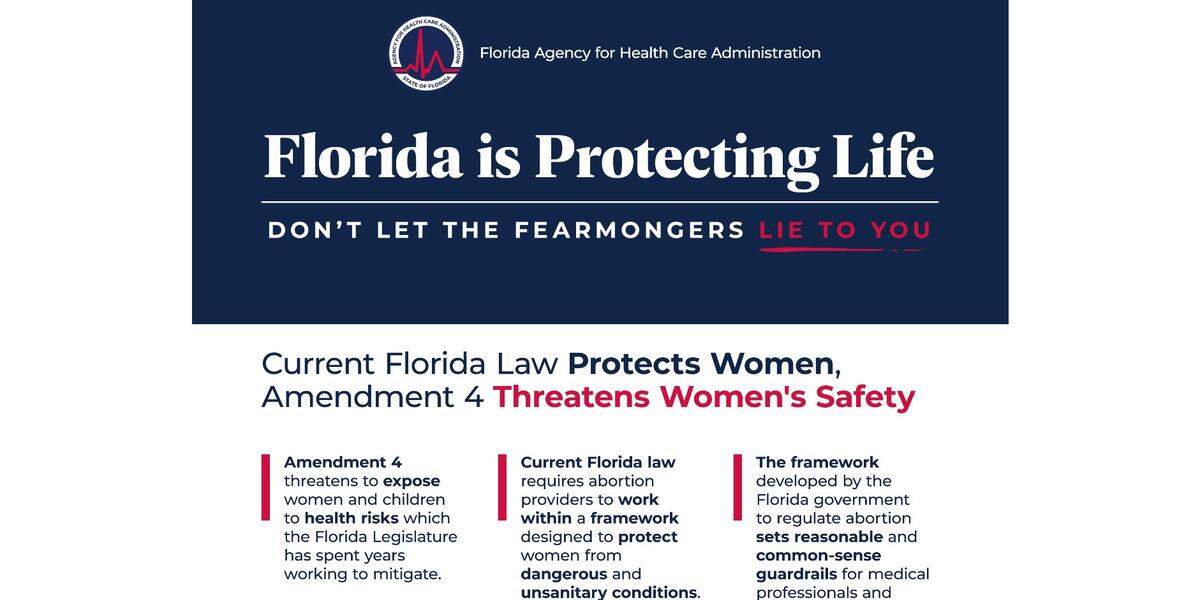
At the Monday night event, the state’s Amendment 4 website was promoted as a resource. A representative with the anti-abortion groups Florida Family Voice directed the crowd to the website to better understand what is true and what isn’t regarding the ballot measure.
“Definitely check the resources from the AHCA website,” Aaron DiPietro, the legislative affairs director for Florida Family Voice, which hosted the event with the Vote No on 4 campaign, told the crowd.
Mat Staver, the founder of the anti-abortion group Liberty Counsel, has called the legal challenges to the AHCA website an attempt “to muzzle government officials from their First Amendment right to speak in their official capacities on matters of public concern.”
Supporters of ballot initiatives keep fighting
On Wednesday, attorneys representing the political committee sponsoring the abortion ballot measure filed a federal lawsuit in Tallahassee against the Florida Department of Health over threats to TV stations to take down a Yes on Amendment 4 campaign ad, alleging that the ad contained false statements.
Lauren Brenzel, the Yes on 4 Campaign director, called the state’s taxpayer-funded campaign a “crusade” and an “unconstitutional government interference” in the citizens-led ballot-initiative process to amend the state’s constitution.
Records show the state agency is ready for a fight: It signed contracts with two law firms, totaling up to $1.4 million, to provide legal representation in regard to “false political advertisements.”
Also in Leon County, Jason Pizzo, a Democratic state senator from South Florida, sought an injunction to block the Florida Department of Transportation from paying for and running ads that he says are advocating against Amendment 3, which would legalize recreational marijuana.
Attorneys for the state argue the ads — which say “DUI crashes increase in states with legalized marijuana” — are proper use of public dollars because they are public safety announcements and do not mention Amendment 3.
On Thursday, Pizzo said his lawsuit had been dismissed. In a statement to the Herald/Times, Pizzo said the ruling to dismiss “further demonstrates that there is no practical recourse for Floridians to challenge objective violations of the law.”
“My legislative colleagues should realize that when our constituent’s money is allowed to be used to finance political messaging against their own interests, we’ve completely surrendered our autonomy to appropriate, our authority to direct, and our fiduciary duty to protect those same resources,” he said.
Dan Gelber, an attorney and former Democratic state lawmaker from Miami Beach, believes the DeSantis administration has been “playing cute and loose” with longstanding rules.
Local and state government officials have long been counseled on the rules against using the public’s money to campaign on political activities, Gelber says.
“I think they don’t care,” he said. “All these things are not just a scratch your head kind of conduct. They’re abusive of public coffers. The money and attention of the government is not supposed to be spent advancing an election issue.”
Virginia Canter, the chief ethics counsel at Citizens for Responsibility and Ethics in Washington, told the Herald/Times Tallahassee Bureau that laws intended to erect a firewall between the government and political activity are key to ensuring public agencies represent all people.
“Public office should be used to serve the public interest,” she said, “not to serve anyone’s private or political interests.”
Herald/Times Tallahassee Bureau reporter Romy Ellenbogen contributed to this report.
This story was originally published October 16, 2024 at 12:39 PM.