
Florida Senate passes sweeping health care legislation. Here’s what it would do
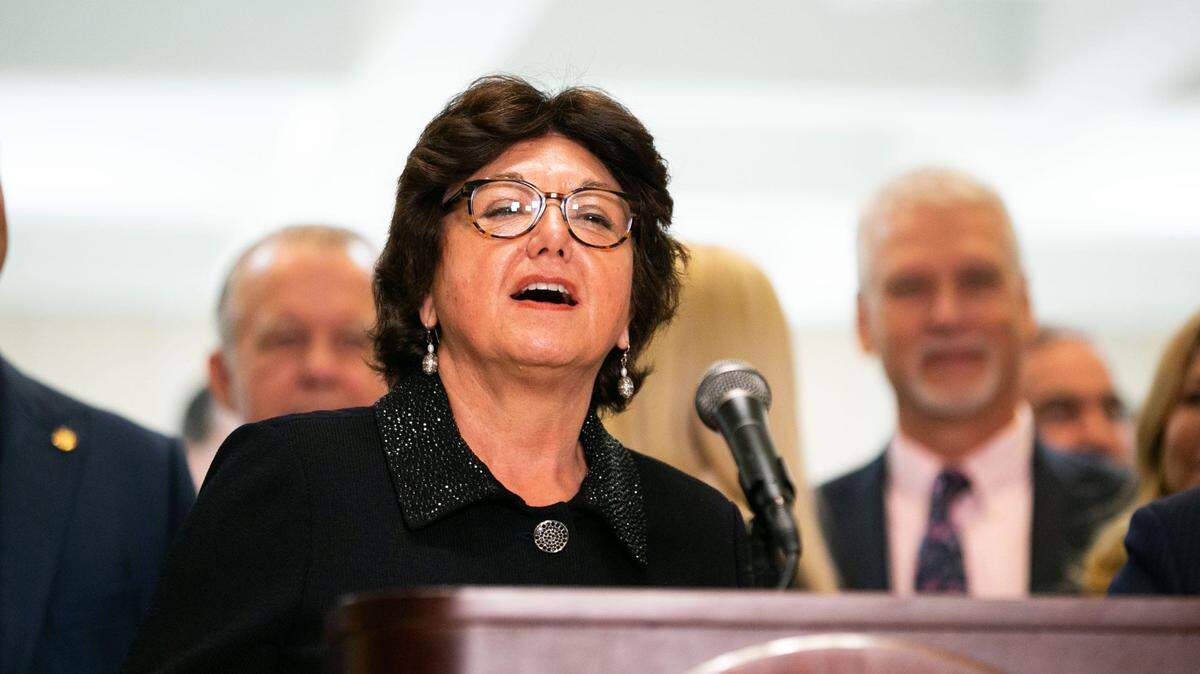
Florida senators on Thursday passed a sweeping package of changes meant to ease Florida’s health care worker shortage and provide people with more access to care.
The overall package will cost hundreds of millions of state and federal dollars, and was unanimously approved by the Senate. The Florida House will still have to pass its package, but Speaker Paul Renner has expressed support for the priority legislation of Senate President Kathleen Passidomo.
The sweeping package does not consider expanding Medicaid. In her opening speech to the Legislature earlier this month, Passidomo made clear that Medicaid expansion was not on the table.
Sen. Colleen Burton, R-Lakeland, who sponsored the bill, said on Thursday that the legislation will help “enormously” in increasing access to health care.
Here’s a look at some of the provisions in the bill, SB 7016, and what they do.
Getting more mental health care in underserved areas
Hoping to ease a crisis in mental health care access, lawmakers want to reimburse student loans for Florida psychologists, counselors and social workers in the mental health field if they work in an underserved area, which includes places like public health programs, correctional facilities and rural hospitals.
Mental health professionals who qualify for reimbursement could receive up to $75,000 over four years.
Florida law already allows loan reimbursement for certain medical professionals outside of mental health workers like physicians and nurses. The bill raises the maximum amount those medical workers can receive.
In 2022-23, the Department of Health accepted about 2,700 applications for loan reimbursement, which would be worth nearly $41 million in payments. But the program’s funding was $16 million. The bill passed by the Senate on Thursday would give it another $30 million each year.
A repayment program for dental students will also allow dental hygienists to qualify and receive up to $7,500. It also allows dentists in private practice to have their loans reimbursed if they are in an underserved area. The bill allocates an additional $8 million for the dental program.
All practitioners who receive loan repayment would have to volunteer for 25 hours annually in a free clinic.
Filling medical residencies and bringing in foreign doctors
Another measure puts money toward filling physician residency slots and would fund certain health clinics if they take on trainees.
The bill would put $50 million toward filling 500 residency slots, including 200 positions that have not been filled in more than three years.
It also establishes the TEACH program, providing $25 million a year for federally qualified health centers, community mental health centers, rural health clinics or community behavioral health clinics to support their clinical training program.
Participating clinics would be reimbursed depending on the student’s role and hours worked.
The bill also could allow Florida health care providers to hire foreign doctors more easily. A graduate of a foreign medical school would not need to go through residency in Florida as long as they have an active, clear license in another country, they have practiced medicine for four years preceding their submission for a Florida license, they have completed similar training in a recognized country and they have an offer for full-time employment from a Florida health care provider.
Maternal health care
A 2023 March of Dimes report identifies 13 Florida counties as maternity health care deserts. About 11% of Florida women have no birthing hospital within 30 minutes of them.
Regular access to maternal health care is important for healthy pregnancies and healthy infants — and historically, minority women have less access to regular prenatal care, according to the March of Dimes. As such, minority women also have higher rates of deaths during or soon after pregnancy.
The legislation would expand a pilot program that focuses on maternal health care for minority populations. The program began in 2021 in Duval and Orange County and uses telehealth to provide pregnant and postpartum women with education and services, as well as with medical devices to monitor things like glucose levels and blood pressure. The bill would set aside about $23 million to bring the program statewide.
The bill would also grant more powers to some birth centers, which now only handle low-risk pregnancies and cannot do cesarean sections. Under the bill, birth centers could get an “advanced” designation and be able to handle cesareans and administer anesthesia.
Advanced birthing centers would need to be staffed around the clock, and must employ an obstetrician and an anesthesiologist as medical directors.
They must also have a written agreement with a blood bank and a written transfer agreement with a local hospital. The statute does not define how near the local hospital would have to be. When asked by some Democrats about the safety of the centers, Burton said that they are held to the same standard as ambulatory surgical centers.
There are no direct incentives for advanced birth centers to be built in rural areas or maternal care deserts.
Sen. Tracie Davis, D-Jacksonville, said the advanced birthing centers seemed to her like a “boutique” option for pregnant women.
“If rural care and rural access is where we’re going, my feeling is that’s where we should have these places situated first,” Davis said.
Medical help outside of emergency departments
The legislation would require hospitals to attempt to connect patients who enter the emergency department for non-emergency needs or who say they don’t have a primary care doctor with appropriate avenues for care.
The diversion plan could help reduce the hospital and taxpayer dollars spent on health care, especially for indigent populations, and to reduce strain on emergency departments.
For Medicaid patients, the hospital must reach out to the patient’s health care plan to try and establish a primary care provider for the patient.
Hospitals will still be required to screen and stabilize any patient that enters the emergency department.
A study from the Journal of Urgent Care Medicine said 13% to 27% of emergency department visits in the U.S. could be addressed in other settings, and that diverting those patients could decrease health care costs by $4.4 billion.
Access to free clinics and screenings
More people would be able to access Florida’s free clinics under the bill, which raises the maximum income for eligibility from 200% to 300% of the federal poverty level.
That’s $74,580 for a family of three, according to the U.S. Department of Health and Human Services.
Free clinics provide only diagnostic services or nonsurgical treatment, and only to low-income patients.
The bill also sets aside $10 million for the Department of Health to establish a grant program for nonprofits to fund no-cost health care screenings.
Senators surprised Passidomo by naming the grant program after her parents, Alfonse Cinotti and Kathleen Cinotti. Passidomo’s father, an ophthalmologist who died last year, was an advocate for community eye care and volunteered to provide free eye screenings.
“I miss my dad a lot but his legacy is going to live on in this bill,” Passidomo said.