DeSantis’ ‘free state of Florida’ faces new restrictions on First Amendment rights
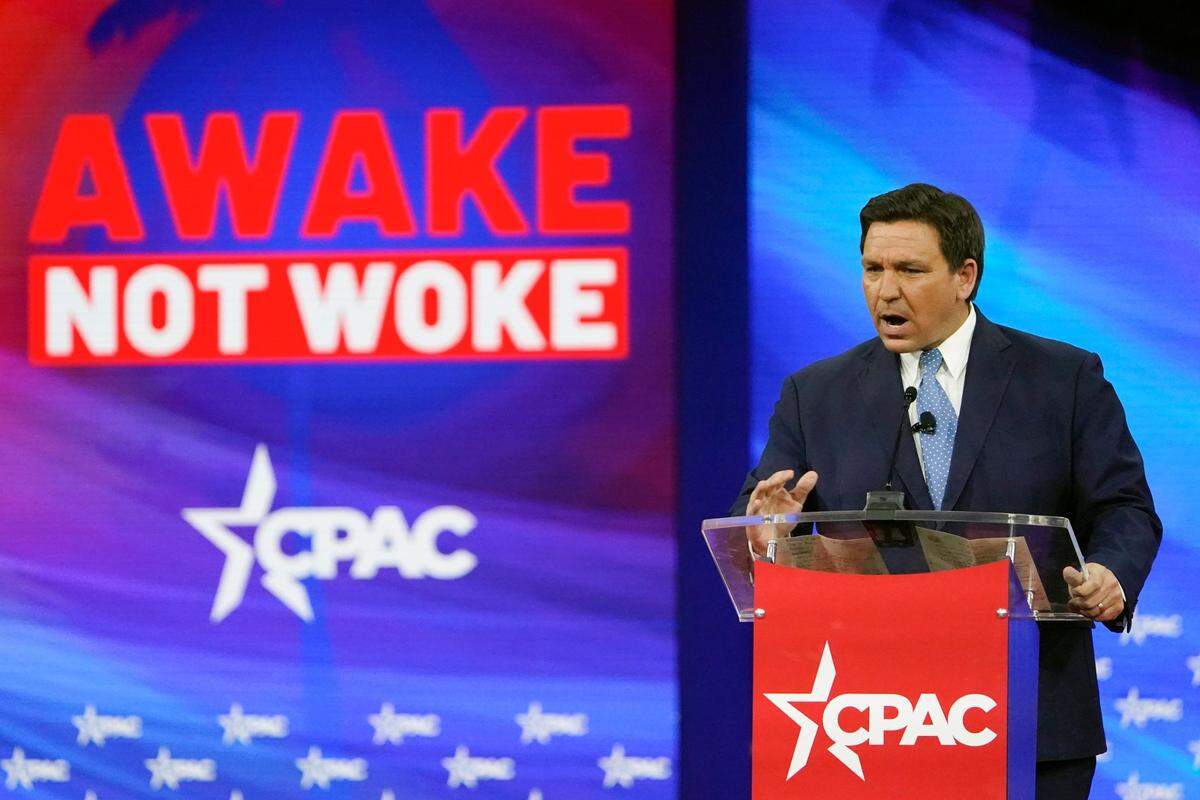
Free speech will be undergoing some changes in what Gov. Ron DeSantis has declared the “free state of Florida.”
A series of bills sent to the governor this week by Florida’s Republican-led Legislature will impose new sanctions on what is acceptable speech and assembly in schools, communities and businesses.
Other bills create new exemptions to the state’s public records law, including in university presidential searches and executions.
Read next: ‘Culture wars’ session of Florida Legislature is nearly over, but emotions are still raw
If the governor signs the measures as expected, teachers will be barred from any instruction that makes students feel they bear personal responsibility for historic wrongs because of their race, color, sex or national origin. Employers could be sued for training programs that make employees feel guilty for historic wrongs. And any instruction about sexuality or gender between kindergarten and third grade, or in a manner that is not age-appropriate or developmentally appropriate for other students, could open a district up to sanctions and lawsuits.
Florida legislators are scheduled to end their annual session on Monday, when they pass the final bill of the session, a $112 billion state budget.
But the primary focus of the session was driven by many of DeSantis’ priorities, including advancing “parental rights” in schools after the restrictions imposed by school boards during the COVID-19 pandemic.
Opponents say the effort was also intended to stoke the heated emotions of ethnic and class warfare, as culturally conservative, mostly white voters fear the changes coming from an increasingly diverse and multi-ethnic society.
National trend
“This reflects a national trend,’’ said Kirk Bailey, spokesperson for the ACLU of Florida.
He predicts that what he calls Florida’s “educational censorship” laws will find their way into similar proposals in other states.
“We are in one of several bellwether states in the country and, because we passed them here, they’re going to give strength to advocates in other states who want to see similar kinds of things,’’ he said.
In addition to restrictions on speech in schools, legislators adopted several other proposals:
▪ HB 1467: Expands ability for school districts to ban books, allowing a member of a district without a student in the district to object to a book, and allows the state to compile a comprehensive list of books that are banned. Parents also may not read to a class unless a book is pre-approved by the school’s media specialist.
Proponents say the measure will allow communities to know exactly what books and materials students have access to at school. Opponents warned that the state might be empowering activists to ban books.
▪ HB 921: Places a $3,000 limit on contributions from out-of-state donors to political committees that are collecting petition signatures for citizens’ initiatives. It also prevents local governments from using taxpayer funds to influence the outcome of elections. A similar measure, which would have capped all contributions at $3,000, was struck down by a federal judge last year and opponents warned that HB 921 faces a similar fate.
▪ HB 703: The hiring of state university and state college presidents would become more secret under a bill passed by legislators after lawmakers defeated similar attempts over the last seven years. The measure exempts and makes confidential personal identifying information of an applicant for president of a state university or college during the early stages of the selection process.
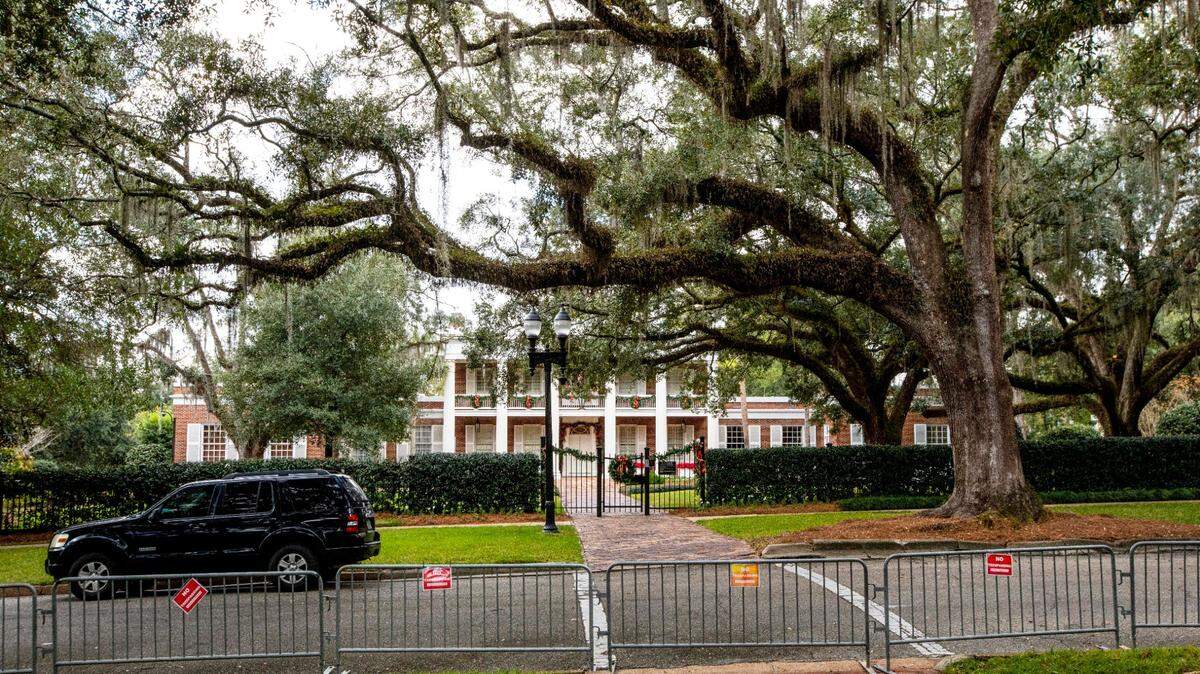
▪ HB 1571: Curbs picketing and protests outside people’s homes, including the Governor’s Mansion and homes of university presidents. Opponents fear the measure will be another opportunity for discretionary enforcement and used to arrest and criminalize people of color who are exercising their First Amendment rights. Proponents said the bill was sought by some sheriffs and is needed to protect people from harassment near their private property.
▪ HB 873: Exempts from public record the drugs used for the lethal injections in capital punishment. Drug manufacturers prohibit the use of their lifesaving drugs for executions, and critics say this will shield purveyors on the black market.
▪ HB 395: The Legislature also wants to add one program to the education curriculum. HB 395 requires the governor to annually issue a proclamation designating Nov. 7 as “Victims of Communism Day,” beginning in the 2023-24 school year. High school students enrolled in the U.S. government course must spend at least 45 minutes of instruction on “Victims of Communism Day” to discuss communist dictators and how the victims of communism suffered under the regimes.
National attention
Many of the proposals have attracted national media attention, a situation that has angered Republican legislators who say the issues are being intentionally misrepresented in an effort to stoke tensions against them.
“I believe the vast majority of the angst was created by misreporting, by mischaracterizing, by headlines that are good for click bait but have nothing to do with the four-page bill that we actually put out,’’ House Speaker Chris Sprowls said on Thursday after sending a bill to restrict speech relating to gender and race to the governor for his signature.
“So did it create angst in the public? For sure, and when it’s talked about in the White House press room and things like that, but the reality is, none of that is a reflection of fact.”
But Democratic lawmakers and other rights advocates who opposed the measures argued that the intention of the language is clear.
“It’s an attempt to ban speech with which they disagree,’’ said Pamela Marsh, executive director of the First Amendment Foundation. “That’s not what the founders intended, and it’s not the way the courts have interpreted the First Amendment.” (The Miami Herald and the Tampa Bay Times belong to the First Amendment Foundation, which advocates for open government in Florida.)
Marsh and others predict that if the bills become law, many of them will be challenged as unconstitutional.
“If somebody feels disenfranchised because they weren’t able to express their belief system, and they are sanctioned or sued over it, we will see lawsuits,’’ warned Rep. Michael Gottlieb, a Davie Democrat and lawyer.
He noted that HB 1557, which is titled the Parental Rights in Education Bill by Republicans and called the “don’t say gay” bill by opponents, and which allows a parent to sue a school district if the parent believes that a teacher has addressed a subject that is not in an “age appropriate or developmentally appropriate way,” could effectively “disenchfranchise the entire LGBTQ community.”
He said that the role of government “is to ensure an orderly classroom,” but the bill attempts to use government to suppress speech.
“The suppression of anybody’s thought, regardless of how abhorrent it is, is contrary to our Constitution,’’ Gottlieb said. “It’s contrary to our concept of liberty and it’s un-American.”
But Rep. Randy Fine, a Palm Bay Republican who advocated for the classroom restrictions, said such a statement indicates there is “a fundamental misunderstanding.”
“You don’t have free speech rights at school,’’ he said. “I can’t go up to my teacher and say, ‘You’re an idiot.’ Teachers have to teach to the curriculum. Free speech is what you do when you’re not at work.”
Marsh disagreed.
She noted that the U.S. Supreme Court ruled in a 1969 case, Tinker vs. Des Moines Independent School District, that public school officials may regulate speech “that would materially and substantially disrupt the work and discipline of the school,” but that “students do not shed their constitutional rights to freedom of speech or expression even at the schoolhouse gate.”
Constitutional questions
Another classroom restriction, HB 7, prohibits instruction that “compels” students to believe they bear personal responsibility for historic wrongs because of their race, color, sex or national origin.
Sen. Lori Berman, D-West Palm Beach, noted that the proposal was patterned after a Trump administration executive order titled “Combating Race and Sex Stereotyping,” which in December 2020 was invalidated by a federal court.
She predicted HB 7 will also be ruled unconstitutional. “It absolutely stifles freedom of speech,’’ she said.
But Sen. Manny Diaz, R-Hialeah, defended the limits on classroom teaching as reasonable.
“As a teacher, you should never know my politics,’’ said Diaz, a former high school teacher. “You should never know where I stand on those issues because my job is to provide you with the knowledge of what occurred.”
Marsh also warned that public access to legal documents will now be harder to find under a last-minute effort by the Senate to resurrect a House bill to strip Florida’s newspapers of revenue from legal notices.
She said that a compromise passed last year had been in effect only 67 days and yet lawmakers wanted to rewrite it and strip Florida’s newspapers of revenue from legal notices.
“There was a lot of work done to create a platform, the Floridapublicnotices.com website, where everybody can go to find the legal notices published in every paper in the state,’’ she said. “It was a lot of work done to create that bill last year, but this bill just wiped it away. All the preparation, all the training, all the investment wiped out.”
Marsh commended Democrats for proposing several good government bills but blamed the fractured Senate Democratic caucus for the passage of the public records exemptions, which require three Democrats to vote in favor to constitute the required two-thirds majority.
“The Democrats can’t get their bills passed. They can’t stop most bills from passing, but because the exemptions require a super-majority that’s the one thing they can do,’’ she said. “And this year, they failed.”
Sprowls, the House speaker, said the takeaway from the divisive debates is simple.
“We’re trying to send a message: Treat people equally. Don’t tell people that they’re bad because of their race. Don’t tell people they’re bad because of their gender. Don’t blame people for the sins of other people,’’ he said. “So I think it’s a pretty reasonable thing.”
This story was originally published March 12, 2022 at 6:00 AM.