South Florida female lawmakers clash over bill criminalizing revenge porn, deep fakes
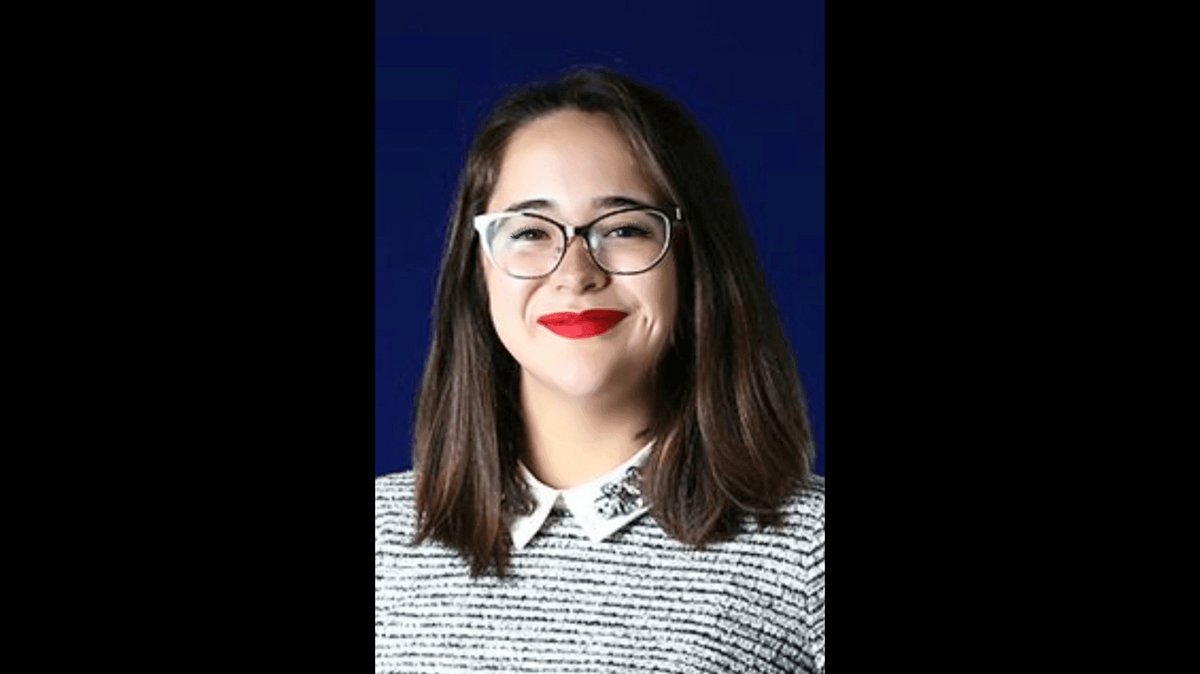
Hallandale Beach City Commissioner Sabrina Javellana got up the courage to speak before a Senate committee Tuesday about her experience as a victim of a deep fake — images taken from her personal, social media account were doctored to appear as pornographic images and posted on an anonymous website.
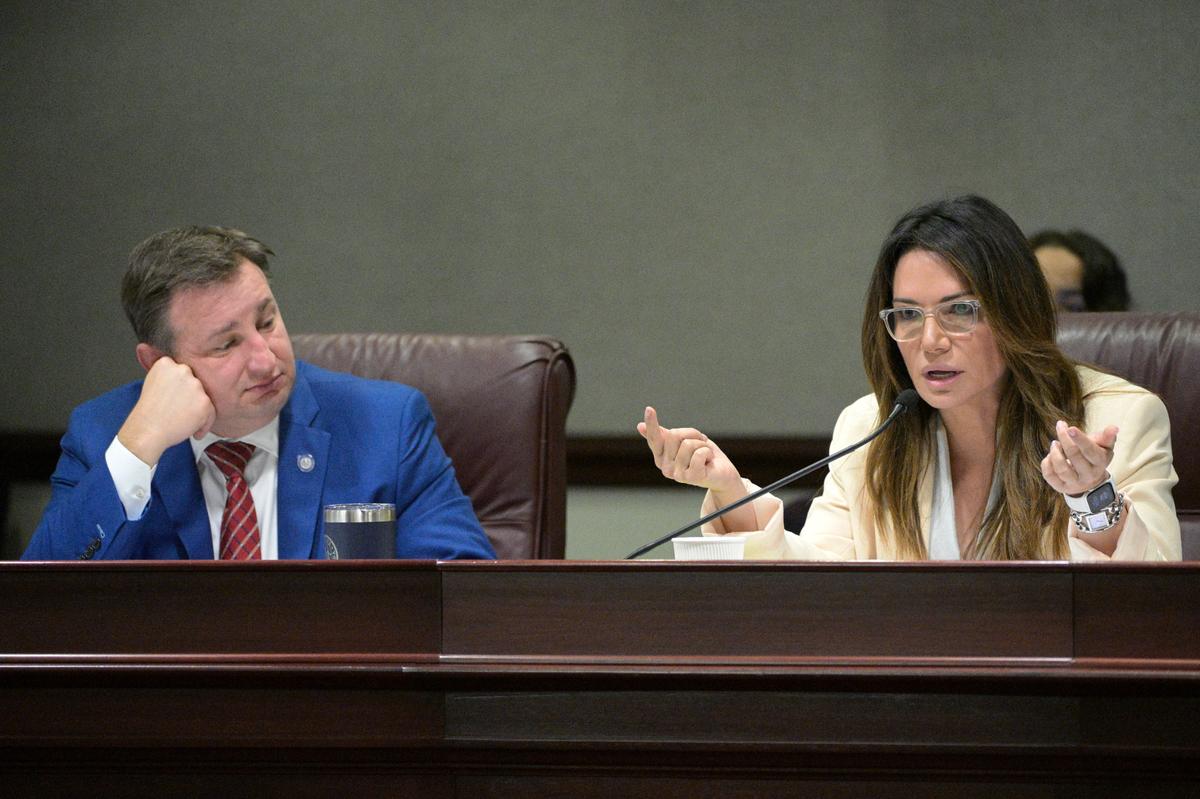
She urged the committee to pass the bill to impose penalties on the activity as a cyber crime and she said she was prepared for questions, but she was not prepared for the reaction she got from Sen. Ileana Garcia, a Miami Republican who has recently deleted her social media accounts.
“It had never dawned on me how bad the situation is, but sometimes it’s caused by, I don’t know I guess, our journey for validation,” Garcia said.
She criticized parents for “very innocently” posting nude pictures of their children on social media and concluded: “I think that the responsibility starts with us, with you, and the content that you put out there. We expose too much of ourselves sometimes.”
For Sen. Lauren Book, the Plantation Democrat who sponsored SB 1798 in response to her images being manipulated and posted on websites, the comment stung.
“I didn’t put my images out there. I didn’t parade them on social media,’‘ Book replied calmly. “They were stolen from me and my family, put out there, created, disseminated and are being sold. I’ll never get them back.”
Javellana said she was offended by Garcia’s comment.
“It did not make any sense. It was like victim shaming,’‘ Javellana said.
But the incident underscored the tensions that have emerged between lawmakers in a highly polarized legislative session characterized by bitter partisan feuds.
After the meeting, Garcia said her comments about social media were not intended in any way to refer to Book or Javellana and she is “no one to judge” their situation.
“I totally feel what she’s going through. That is a horrific situation to be in,’’ she said. “... As the chair of the Children, Family and [Elder Affairs Committee], and as someone who wanted to hear the bill, why would I be talking down to the victims?”
Hallandale Beach commissioner’s story
Javellana had told the committee that last February, someone reached out to her to tell her they had found nude images of her on an online 4Chan thread.
“I thought that’s ridiculous,’’ she recalled. “This has to be fake. The pictures looked so real, but they were not. They were stolen images from my social media.”
Someone had “very strategically” photo-edited them to look like real nude images, she said.
Javellana, who was elected to the city commission in November 2018 at the age of 21, said she didn’t know what to do, so she approached her city’s police department, which referred her to the Florida Department of Law Enforcement Cyber Crimes division. She signed affidavits, confirmed the photos were not real pictures, and investigators attempted to find the source. But they were stymied and told her the activity “is technically not illegal.”
The Senate Children, Families and Elder Affairs Committee unanimously passed the bill, which will make it a third-degree felony for anyone to knowingly obtain sexually explicit images from a phone or other digital device, create deep fakes, and promote them without consent of the victim. Deep fakes are images created using a person’s likeness and while they often look authentic, they are not real.
It also establishes new standards for Florida’s revenge porn statute by criminalizing the theft of sexually explicit images and it increases existing civil damages against individuals who have willfully and knowingly chosen to inflict what Book calls “sexual terrorism.”
“Cyber trafficking is very real. It’s very scary, and it’s happening to people across the state of Florida every single day,’’ she told the committee. “Teachers, moms, social workers, nurses, teenagers — let’s give victims some hope and bad actors have reason to think twice.”
New event triggers Book’s previous trauma
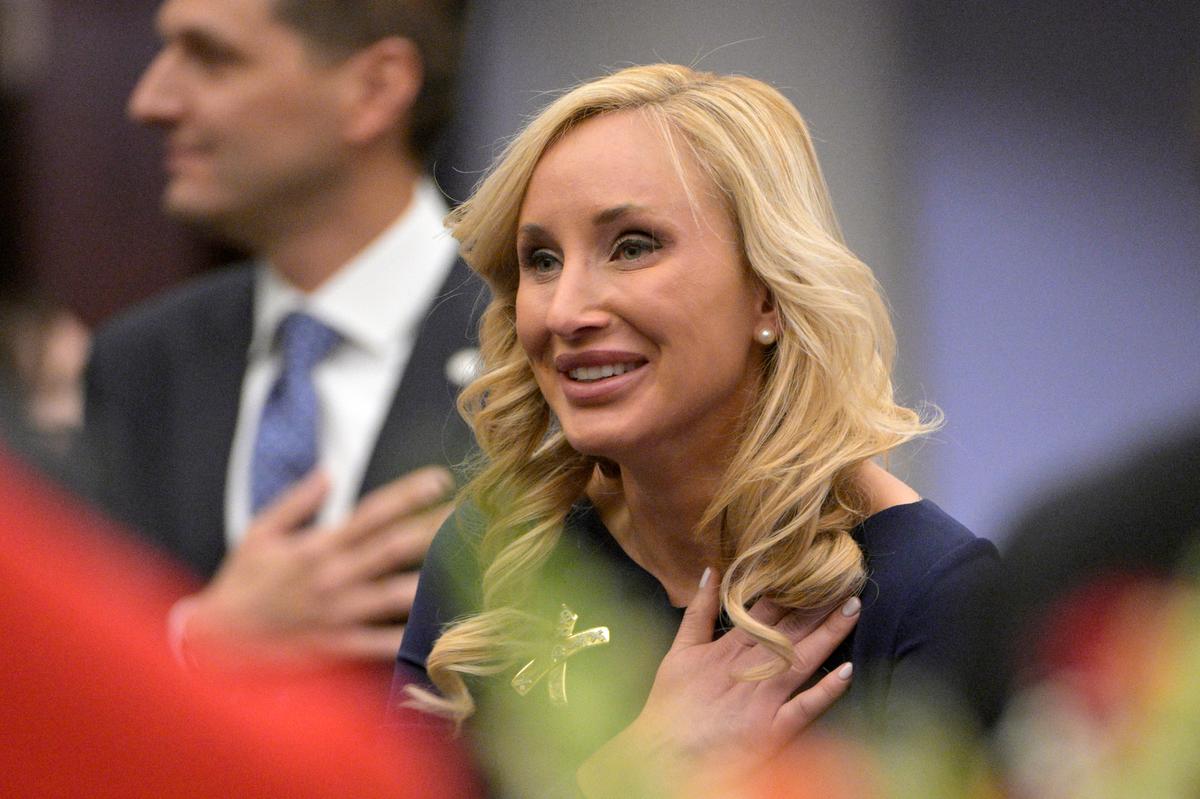
Book, who was sexually abused by her nanny for six years when she was a child and has since channeled the pain into a lifetime of helping other abuse survivors, has had her own encounter with deep fakes and cyber crime.
But for several months this year the cyber stalking she experienced began a brutal trigger of her previous trauma. In November, as the Legislature was meeting in special session, a 19-year-old Plantation man was arrested on cyber stalking and extortion charges after he allegedly faked sexually explicit photos of Book and threatened to distribute them to media outlets.
Book told the Associated Press last month that investigators learned that the images had been bought and traded online since 2020 and were sent from virtual private networks in Sweden and Russia.
She had images on her phone of her and her husband, as well as a post-operation photo of a lumpectomy scar. Although she doesn’t know how those and other images were stolen, she said she believes hackers took them from the cloud.
Like Book, Javellana is a survivor of sexual assault.
“I was raped my freshman year of college,’’ she told the committee, noting that she is a recent graduate of Florida International University.
The deep fake harassment triggered her trauma, she said. She had planned to take the Florida teachers certification exam to become a teacher, but she worried what might happen if parents, or students found the pictures online.
“Because they’re there, and I didn’t take the exam,’’ she told the committee. “So it’s had a lot of impact on my life, my mental health, my professional career.”
Garcia supports the bill
Garcia, the chair of the committee, said she supported the bill but, after having worked at the Department of Homeland Security on a human trafficking campaign, she has concluded that “the very rules and laws that we have to protect us actually counter us.”
“The issues with where do you draw the line between freedom of expression and pornography?’’ she said. “... Sometimes I see parents very innocently posing with their kids or putting nude pictures of their children on social media and I think to myself, wow. They have no clue as to what they’re exposing themselves to what they are inviting in.
“But I think that the responsibility starts with us, with you and the content that you put out there. And then, the responsibility will continue with legislators like the ones on this committee today.’’
Book responded that there are 29.3 million images of child pornography and child abuse material on the internet and yet Florida has only 20 cyber investigators for 21 million Floridians. She underscored that the photos stolen from her and Javellana were not their fault.
“While I have been a survivor of childhood sexual abuse and all of you know my story, this is one that I never thought I would have to endure,”’ Book said. “And I am terribly devastated to have to be here to have this conversation.”
Javellana said in an interview that perhaps Garcia misunderstood the bill.
“Because if she really understood the bill, and what it means for survivors and victims of this, of revenge porn and deep fakes, she wouldn’t have said that,’’ she said. “It definitely didn’t feel very supportive of victimhood. It felt like it was blaming us for posting pictures online. Nobody asked for this, this invasion.”
Garcia responded: “I’m the chair of the committee. I had wanted the bill to be seen. So how would I not understand the bill?”
Garcia says she feels she’s a victim, too
She said the incident, and the fact that Book and Javellana may have misinterpreted her comments, are another episode in a trying few weeks that have left her “always in fear as a Republican, Hispanic female in the Florida Senate of saying things because someone’s going to get offended.”
Garcia, who was elected in 2020 after having defeated Democrat José Javier Rodríguez by 32 votes, is expected to be facing another Democratic opponent in the November election.
Garcia took down her Twitter and Facebook accounts after a January interview with CBS4’s Jim Defede in which she said that people should “move on” from racism. She said Tuesday that she decided to remove her social media because it was her way of “taking my own advice. They’re just things that you should just avoid.”
She said she is sensitive to the fact that Book and Javellana are victims, but added: “I also think that I am constantly a victim,’’ she said. “I hate to play that card in this world of politics, where every single thing that I say is being questioned and taken out of context.”
This story was originally published February 8, 2022 at 7:33 PM.