
Florida lawmakers again take aim at government ads appearing in newspapers
Newspaper publishers and press advocates say they thought they had a deal.
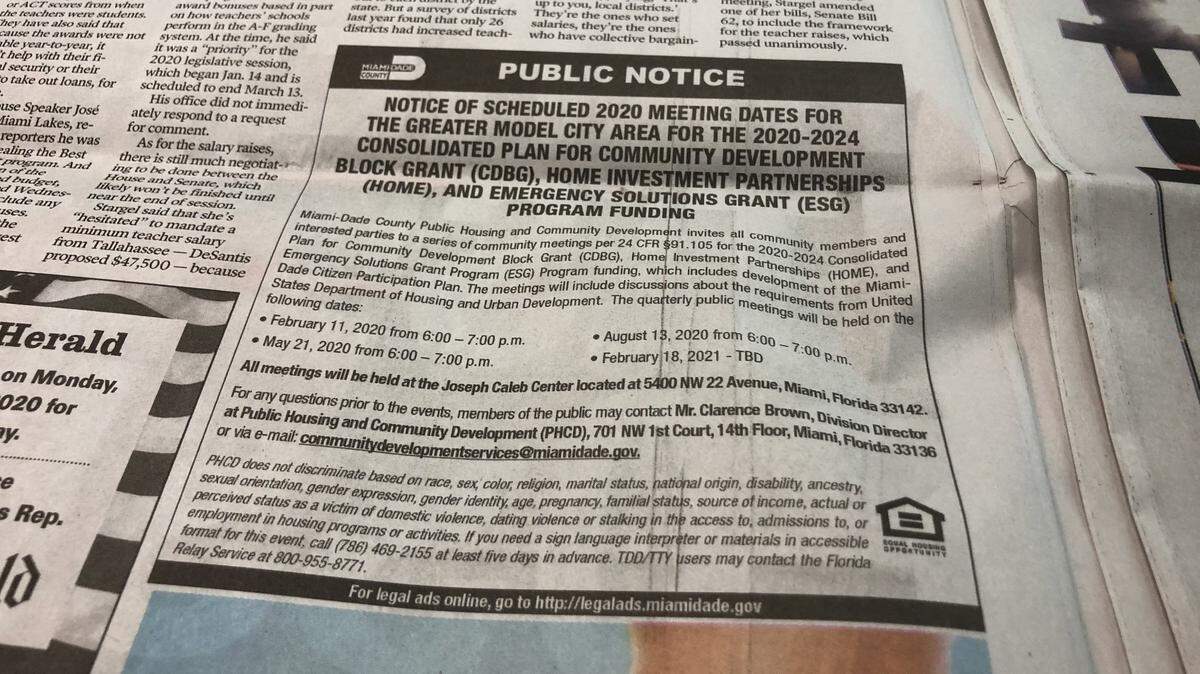
A 2021 bill, House Bill 35, changed the way legal notices are published in Florida. Instead of requiring their publication in paid newspapers, the bill allowed legal notices to be posted in free publications and on newspaper websites. Lawmakers hoped to open the market for the notices to greater competition, driving costs down for the local governments required to post them.
The measure was the result of extensive negotiation between lawmakers and the newspaper industry. With the support of the Florida Press Association, which represents most of the state’s newspapers — including the Tampa Bay Times and the Miami Herald — it passed unanimously in the Senate and 105-9 in the House. Gov. Ron DeSantis signed it into law, and it went into effect Jan. 1.
Now a Florida House committee is resurrecting the issue. A proposal brought by the Judiciary Committee would allow local governments to publish legal notices on a public website instead of having a third-party publisher handle the task.
“A free press is not subsidized by the government,” Rep. Erin Grall, R-Vero Beach, said at Tuesday’s meeting of the House Judiciary Committee, which she chairs.
Grall said the measure was aimed at making legal notices even more widely available to Floridians while saving local taxpayers money. The bill would also allow any resident to request to have legal notices mailed or emailed to them. A staff bill analysis said it was unclear whether the measure would save local governments money because of the potential new cost of mailing out legal notices.
The legal notices now required to be posted by news organizations include notifications of local tax increases, hazardous waste disposal notices and reminders about upcoming public meetings. The Florida Press Association currently runs a website, floridapublicnotices.com, that acts as a searchable database of legal notices in Florida.
The notices, which cost at most 70 cents per square inch of ad space, provide a decent revenue stream for print publications. The smaller the paper, the more important this revenue is, press advocates say.
Newspapers were already planning for less legal notice revenue this year as a result of the 2021 law.
The Times Publishing Company, which owns the Tampa Bay Times, could lose a sum running into the seven figures in 2022 as a result of last year’s legislation, said Joe DeLuca, the Tampa Bay Times’ executive vice president and general manager.
Still, that measure won the support of newspapers because it ensured the legal notices would be published by an independent third party and it expanded access to the notices to more Floridians, he said.
“It was a compromise that was made in order to best benefit the citizens of the state of Florida,” DeLuca said, noting he does not support this year’s version of the legislation.
The bill in the House this year is similar to one sponsored last year by Rep. Randy Fine, R-Palm Bay. His version passed the House, largely along party lines, before the Senate later passed the compromise version that ended up being signed into law.
In an interview, Fine said he doesn’t remember the newspaper industry ever supporting the bill.
“That is revisionist history,” Fine said. “Very ironic coming from people who are supposedly in the news business.”
The Senate sponsor of the 2021 measure, Ray Rodrigues, R-Estero, said at the time that the newspaper industry decided to negotiate with the Senate instead of the House. Fine’s original bill did not have enough support to pass the Senate, Rodrigues said then. But the Senate did want to pass something.
Rodrigues said in an interview he was not familiar with this year’s legal notices effort. The bill does not yet have a Senate sponsor.
At Tuesday’s committee meeting, William Hatfield, the editor of the Tallahassee Democrat, criticized the notion of having local governments post their own legal notices. He argued local governments had “no incentive” to post important notices prominently.
The bill’s detractors were also perplexed by the timing of the House’s proposal. The new law has only been in effect for about one month. Why change it?
A spokesperson for House Speaker Chris Sprowls, R-Palm Harbor, did not respond to emailed requests for comment.
Jim Fogler, president and CEO of the Florida Press Association, said his organization has had to mobilize quickly to let lawmakers know they are not happy with the proposal.
“We were totally caught off guard,” Fogler said. “We’re still not clear why this year’s legislation was filed based on the agreement we had with legislators.”
This story was originally published February 2, 2022 at 4:30 PM.