Bill would build on reforms to program for Florida kids with birth-related brain injuries
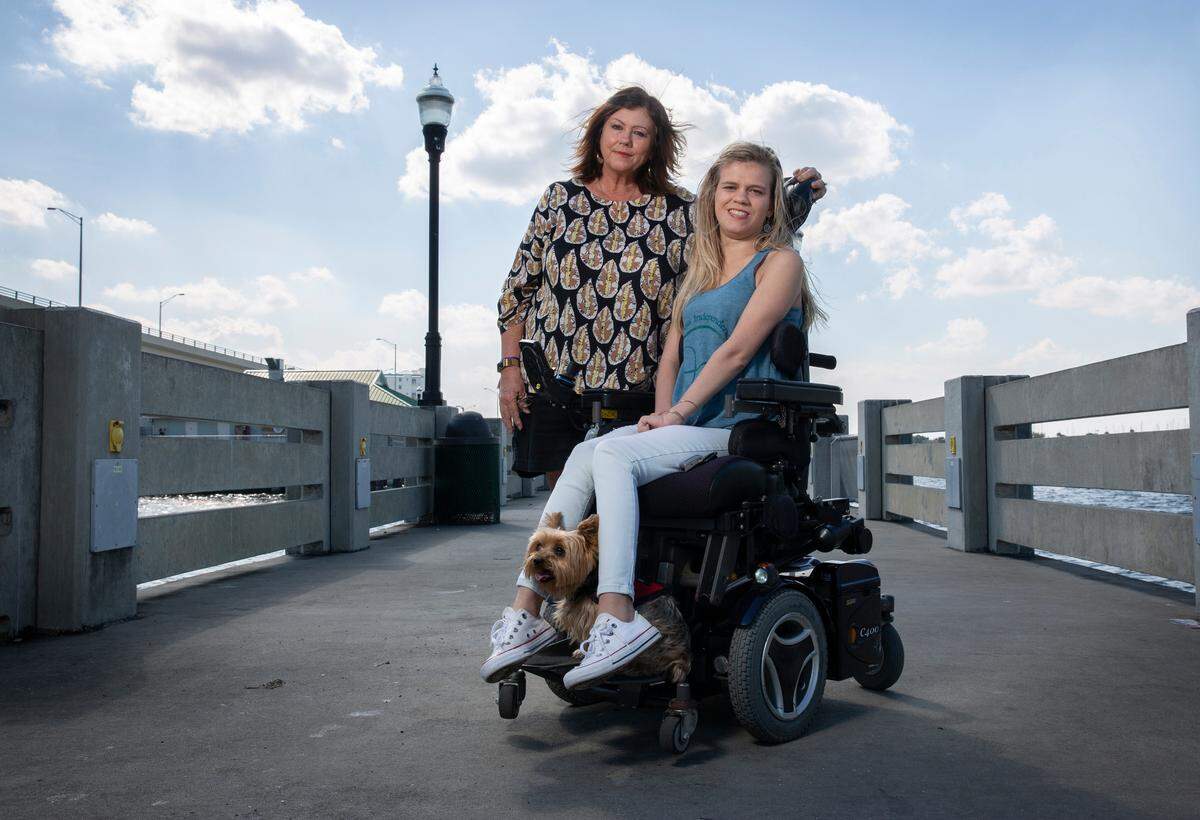
_fitted.jpeg "Delaina Parrish was born without the ability to walk or speak words. She ended up in a Florida program called NICA, aimed at helping kids like her while protecting doctors and hospitals from lawsuits. Now an adult, her life is testament to both the promise and failings of NICA.")
When the Florida Legislature passed a law last April overhauling the state’s compensation program for infants born with catastrophic brain injuries, several lawmakers acknowledged the reform package did not go far enough. They promised to return the next year to finish the job.
A Broward County lawmaker who helped push the 2021 legislation has kept her pledge. She filed a bill for the 2022 session, which begins next month.
The bill, filed on Nov. 29 by Plantation Democratic Sen. Lauren Book, includes additional benefits or compensation for both the 224 children or adults currently enrolled in the Birth-Related Neurological Injury Compensation Association, or NICA, and families of the 206 NICA children who have died.
The Florida Legislature created NICA in 1988 in response to pleas from obstetricians who said their medical malpractice insurance premiums had become too burdensome. The law forbids the parents of children born with catastrophic brain injuries from suing their doctor or hospital, and steers them into NICA, where children were promised “medically necessary” and “reasonable” medical care for the rest of their lives.
Beginning in April, the Miami Herald, in partnership with the investigative newsroom ProPublica, published a series of stories documenting how NICA — fed by modest annual assessments charged to physicians — had amassed nearly $1.5 billion (now grown to $1.7 billion) in assets while delaying or denying care to mostly frail, profoundly disabled children. Administrators sometimes spent thousands of dollars seeking to avoid paying hundreds on children with devastating injuries.
After decades of neglect, lawmakers took notice. Within weeks, the Legislature unanimously passed a NICA overhaul. The legislation included a $150,000 boost — from $100,000 to $250,000 — in the one-time parental award, retroactive to all current enrollees, and a $40,000 increase in the program’s death benefit, from $10,000 to $50,000, retroactive to the parents of children who are deceased.
Other reforms included a $100,000 reimbursement to make homes accessible to wheelchairs and other mobility equipment, a $10,000 annual mental health subsidy, and the requirement that administrators ensure each child has wheelchair-accessible transportation.
And in a rebuke to the then-top administrator, the law explicitly requires NICA leaders to promote the well-being of the disabled children in the program. Although that might seem self-evident, the series included an email by Executive Director Kenney Shipley calling the notion “pretty silly.”
“We are not here or funded to ‘promote the best interest’ of the children,” Shipley wrote in a 2013 email expressing disdain for a bill that would have required NICA to explicitly inform parents of benefits to which they were entitled. That legislation failed.

This year’s legislation also expanded NICA’s board of directors from five to seven, and for the first time set aside seats for a parent enrolled in the program and an advocate for children with disabilities.
Members of the previous board, dominated by healthcare and insurance industry representatives, were ousted as part of NICA’s makeover.
“NICA’s obligation was always supposed to be, first and foremost, to those Florida families whose children have suffered catastrophic brain damage during birth,” said Book, who co-sponsored the 2021 legislation. “We know now that this was, unacceptably, nowhere near the case. But we aren’t done yet.”
Showdown with a whistle-blower
For decades, NICA administrators had told parents seeking medicine and therapy for their kids to get it from Medicaid. Only after Medicaid denied a claim and appeals were exhausted — a process that could drag for weeks or months — would NICA consider covering the cost.
One of the new bill’s most far-reaching provisions would end NICA’s reliance on Medicaid, the safety net program for impoverished or disabled Floridians. The state Agency for Health Care Administration, which oversees Medicaid, spent more than $140 million over the past 33 years to cover hospital stays, home nursing and other medical needs for children in the program, according to a recent report by AHCA administrators.
NICA’s newly formed board reversed that policy in October, adopting new rules that put NICA first in line to pay for medical care for those individuals who are covered by both NICA and Medicaid — about 125 of the 224 people currently in the program. That will make it much easier for parents to get care and equipment for their children.
But the policy change applies only to Medicaid-covered expenses incurred after the legislative reforms were signed into law in June. Whether AHCA will attempt to claw back the more than $140 million Medicaid has spent in the past is uncertain.
NICA remains mired in a court fight over a lawsuit by a whistle-blower who said the Medicaid-pays-first policy, in effect, steals from taxpayers, who fund Medicaid. The lawsuit will continue and NICA is not waiving its legal defense against the suit.
“To truly move forward, NICA must be accountable for its past.” said Scott Austin, the lead attorney for the plaintiffs in that lawsuit.
Among other provisions intended to ease the burden of current families, the bill would:
▪ Increase the number of hours parents can be paid — and the amount — when they do the work of licensed nurses, such as suctioning breathing tubes, administering drugs and overseeing tube feedings. Many NICA parents must quit their jobs to care for their children.
▪ Require NICA for the first time to reimburse parents for dental care, as well as therapeutic interventions, such as physical, occupational and speech therapy.
Parents told the Herald, and records confirmed, that administrators often refused to pay for dental care, arguing that it wasn’t related to a child’s birth injury. Many severely disabled children, however, require sedation within a hospital setting just to get a cleaning and X-rays.
▪ Provide up to $10,000 for each family seeking to obtain a guardianship when their child reaches adulthood. Most families require a lawyer to represent them in court when they are trying to protect a disabled child who lacks the capacity to make decisions on his or her own.
▪ Require NICA to pay up to $30,000 for generators so families can keep lights, air conditioners, refrigerators and medical equipment powered in the event of a hurricane or other power outage.
“Our second piece of legislation is now focused on delivering a robust package of aid to families who have long been short-changed by the NICA program,” Book told the Herald. “These are parents who have been unreasonably denied aid, who have had to figure out how to afford new custom in-home hospital beds, new wheelchairs, and other such necessities for their child’s health, safety, and well-being.”
“Every time I speak with these families, it’s a painful reminder that we cannot go back and change the past, but with new leadership at the helm of NICA, new regulation and oversight developed with the input of families themselves, and an absolute commitment from the Legislature to get this right, I am very optimistic for the future of the NICA program and for the deserving families it serves.”
That new leadership includes a replacement for Shipley, who ridiculed the idea that NICA was primarily meant to “promote the best interest” of children, as opposed to protecting doctors and hospitals from the consequences of their mistakes.
‘I never heard my son cry’
Invoking the immense fragility of NICA children, as well as the “extreme caregiving” demands on parents, one NICA mom said lawmakers must continue to usher in reforms.
“Marriages have faltered and failed. Children have died. And all the while, physicians have been protected. Where was our protection?” asked Patricia Parrish, whose 23-year-old daughter, Delaina, is severely disabled physically, but graduated from the University of Florida and now advocates on behalf of others with disabilities.
“Our emotions are pouring out. It’s a lot to process all at once,” Parrish said of recent changes just after a NICA meeting Thursday at which board members openly acknowledged parents’ suffering. “The first step is being heard. We are at last being heard.”
Responding to tearful pleas from parents, the bill also provides additional compensation to the families of children who succumbed to their birth injuries — either at birth, or some time after they entered the program.
Parents of deceased children have been attending NICA meetings since this summer, beseeching board members to include them in the $150,000 retroactive supplement and the annual $10,000 mental health subsidy that lawmakers extended to parents of children whose care is still overseen by NICA. The families said they would continue to share their stories publicly until their pleas were addressed.
NICA records show that extending the $150,000 supplement retroactively to the parents of deceased children would cost NICA $30.9 million. Providing mental health care for those families would cost an additional $2 million.
“The issue of even dealing with NICA after our loss has brought on much [trauma],” said Ruth Jacques, whose story was detailed by the Herald last April. Jacques’ son, Reggie, was starved of oxygen at birth, and was born with severe neurological damage. He died from his injuries after 95 days.
“Mental health counseling is an essential part of helping us figure out how to pick up the pieces that are left of our lives and make the best of it,” Jacques told the Herald. “We cannot undo what we had to endure but we can get help in knowing how to cope — and, oh God, how I need it.”
Sherri Cruz also urged that lawmakers extend benefits to the parents of deceased children during last week’s board of directors meeting. She was one of about 40 parents who logged in to the virtual meeting — several of them the moms and dads of children who are gone.
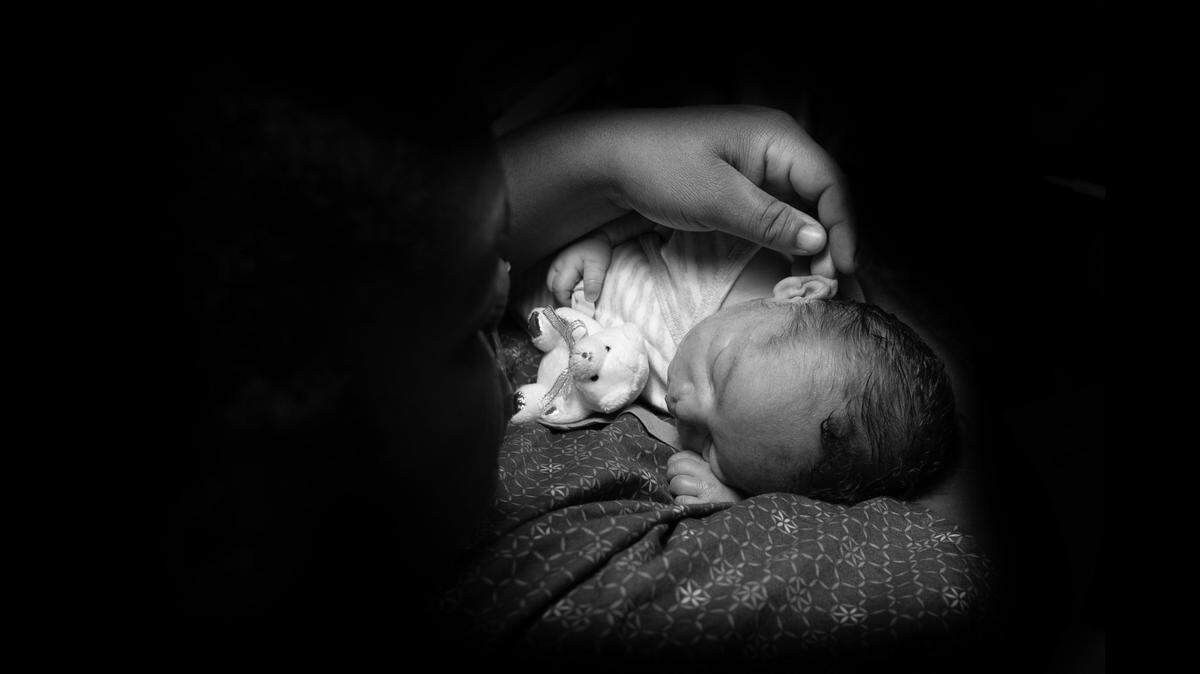
Her son, Mateo Titus Cruz, was born on Oct. 26, 2018. He died 15 hours later. “I never heard my son cry. He never smiled up at me when I stroked his cheek. When his father gave him his first bath, he never got to splash or shiver from the sensation. His eyes were open, but never gazed into mine,” she told the board.
“The moment he was born, his brain was dead.”
Cruz said that by refusing to extend the retroactive parental award to parents of children who died, NICA seemed to be confirming that its primary goal was to protect doctors, not assist families.
Mateo, she said, “deserves honor.” He’s not “just another case number on a list.”
This story was originally published December 15, 2021 at 1:00 AM.