Federal judge hears arguments over sports betting in Florida — ruling delayed
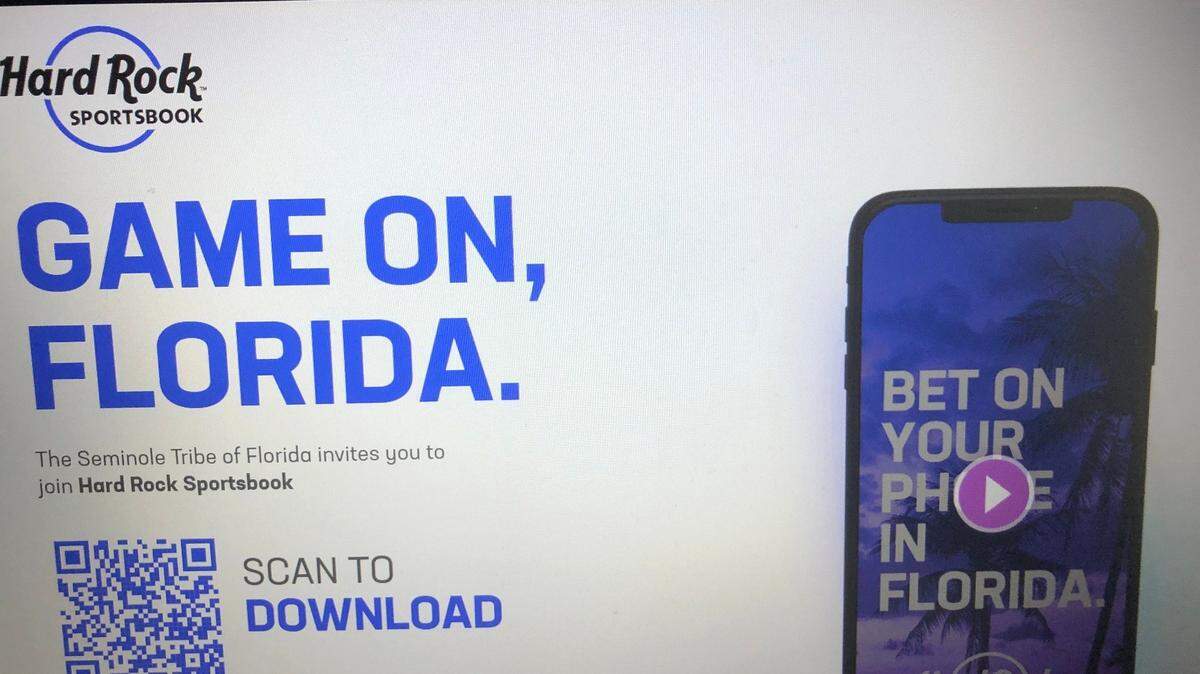
A federal judge on Friday delayed her decision over whether to temporarily halt the gaming compact that authorizes the Seminole Tribe of Florida to operate a sports betting business, chastising lawyers for the U.S. Department of Interior for being unprepared, and vowing to have a decision by Nov. 15.
“It’s hard to not sit here and think the government’s sole litigation strategy is to delay the court from ruling,” said Judge Dabney L. Friedrich at the end of a two-hour hearing in two cases brought by the owners of Magic City Casino and Bonita Springs Poker Room and a group of plaintiffs that includes No Casinos and Miami businessmen Armando Codina and Norman Braman.
The lawsuits in the U.S. District Court for the District of Columbia against U.S. Secretary of the Interior Deb Haaland allege that the federal government improperly allowed the state of Florida to violate federal law when Gov. Ron DeSantis and the Florida Legislature approved the gaming compact that illegally authorized off-reservation sports betting in violation of federal law.
They are asking the court to halt the sports betting and order the state and tribe to get voter approval, as they argue is required under Florida’s new constitutional amendment approved in 2018.
After vigorously criticizing Rebecca Ross, the lawyer for Haaland for being unprepared to argue their case fully at the hearing, Friedrich gave the federal lawyers until Tuesday, Nov. 9, to submit supplemental briefings.
Business impact already felt, lawyer argues
Hamish Hume, a lawyer representing the Havenick family’s West Flagler Associates, which owns the Magic City and Bonita parimutuels, said that four days after the Seminole Tribe quietly began a soft launch of online sports betting, West Flagler Associates had already seen a 35% drop in its daily wagers.
He said employees of West Flagler went to one of the Seminole Tribe’s casinos and learned that sports betting was only offered online and that in-person gaming would not start for some time.
“It suggests they may be trying to acerbate the launch, to create some kind of fait accompli,’’ he said. “All this does is more vividly illustrate what is happening under the imprimatur of federal approval under the Indian Gaming Regulatory Act.”
West Flagler argues that it will “lose millions in revenue” due to the competitive advantage this gives the tribe “because individuals in Florida can now gamble from the comfort of their homes, which will significantly, if not completely, impair Southwest Parimutuels’ ability to compete with the tribe.”
The compact allows sports bets at six of the tribe’s reservations but permits Florida’s existing racetracks and jai-alai frontons to develop their own mobile apps and to conduct off-reservation sports bets if they are chosen by the tribe as its partners. The parimutuels would then be allowed to take 60% of the proceeds from each bet with the tribe receiving the remaining 40%.
At issue is a provision in the deal that says that a bet is “deemed” to be placed on the tribe’s land because of what the tribe calls a “hub and spoke model” by having bets anywhere in Florida go through the server on tribal land.
Hub and spoke debate
The hub and spoke model violates IGRA, Hume argued, because federal law requires all gambling to occur “on Indian lands.” He said that the only way the state could authorize sports betting is through a citizens initiative and statewide voters’ approval.
“There are now millions of people all over the State of Florida who are nowhere near Indian lands who are able to place sports bets from their laptop,’’ he said. “That is an end-run around the citizens initiative requirement of the Florida Constitution and it is not something they permit. IGRA is being abused.”
Gene Stearns, lawyer for Monterra LLC, and No Casinos, said that his clients want the judge to reject the entire compact as unlawful, not just the portion allowing online sports betting because the federal government is barred from allowing the state to agree to a compact that violates state law.
“You can’t use a backdoor effort to violate Florida law and introduce pervasive gambling from one end [of the state]to the other,’’ he said. “The people have the right to do this, and the secretary doesn’t.”
Under the deal signed by DeSantis and approved by the Florida Legislature, anyone in Florida over age 21 can start placing and collecting online wagers on sporting events “via the internet [or] web application” from anywhere in Florida beginning on Oct. 15. In exchange, the tribe has agreed to guarantee payments to the state of at least $2.5 billion in revenue sharing over the first five years of the 30-year agreement.
Stearns argued that his clients, which include Codina and Braman, have a right to bring the lawsuit.
“The character of the community is what gives a party standing and the character is dramatically changed by giving them exclusive activity,’’ he said.
He added that while the federal law regulating gambling on tribal land helped to make the Seminole Tribe’s “one of the most successful ventures in the state of Florida...there is a point where you overreach and we are overreaching.”
Hume argued that by giving the tribe a monopoly in Florida, and making it a felony for anyone else to offer sports betting in the state, the compact violates the equal protection clause of the U.S. Constitution by discriminating based on race and ancestry.
Ross objected to that argument and argued that both Stearns and Hume were incorrect.
Friedrich, who had insisted that the government failed to present its arguments in pretrial briefs, then pressed Ross to give the court a simple answer: “Does the government think online gaming is occurring on Indian land. Yes or no?”
Ross responded: “No, I can’t answer that.”
The hearing was available to the public through a toll-free number provided by the court, but it was frequently interrupted by unmuted conversations from unrelated parties, the sound of dogs barking and occasional disconnections.
This story was originally published November 5, 2021 at 5:25 PM.