FanDuel, DraftKings launch sports betting ballot initiative to fund education
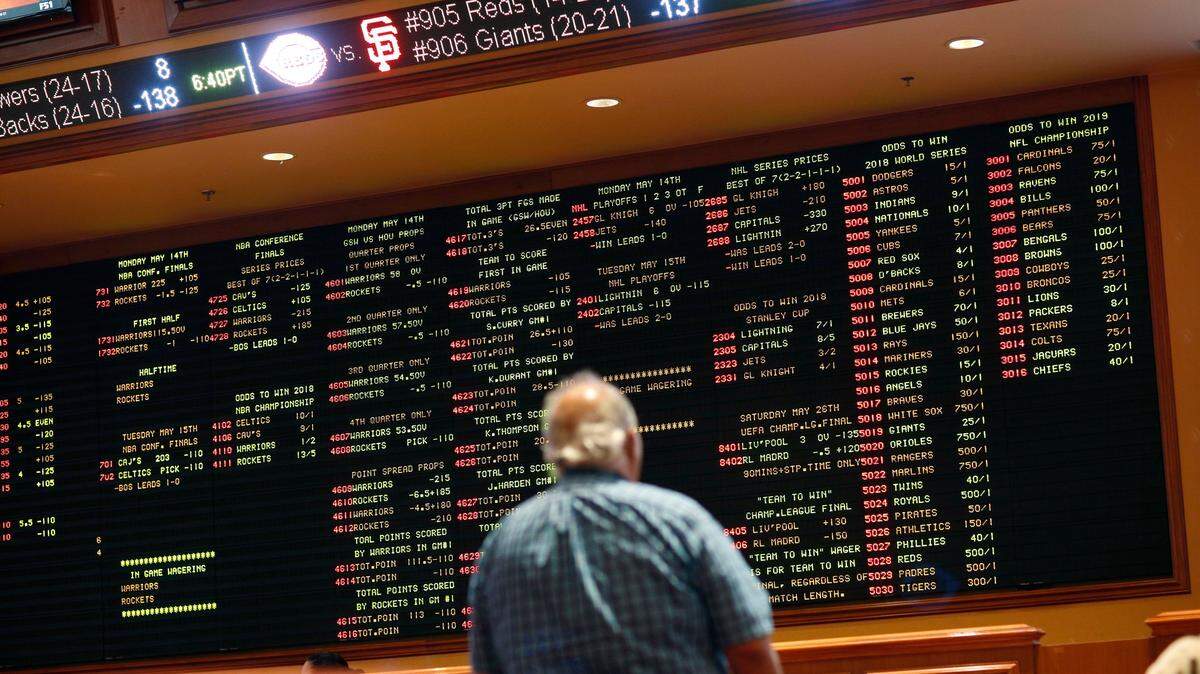
Two of the nation’s top sports betting platforms, FanDuel and DraftKings, are proposing a constitutional amendment for the 2022 ballot that would authorize online sports betting at all Florida parimutuels, professional sports stadiums, and anywhere else in the state using a mobile sports betting platform.
The initiative is backed by Florida Education Champions, a newly formed political action committee whose primary supporters are the two online sports betting platforms that operate in other states and across the globe. The platforms were iced out of the coveted role of handling the state’s sports books in a recent gambling deal reached by Gov. Ron DeSantis and the Seminole Tribe of Florida. The third major player in the sports betting field, Bet MGM, has not made it clear if it will be involved.
The proposal, filed this week with the Florida Division of Elections, offers the same sweetener used by proponents of the Florida Lottery 35 years ago: taxes on all gaming transactions, in this case sports betting, would go to education.
But if approved, it could undercut a key portion of a 30-year gambling agreement the state has with the Seminole Tribe by upending the provision that opened the door to sports betting at the tribe’s casinos and parimutuels, as long as all transactions went through an internet server located on tribal land. That arrangement allowed the state to bypass a constitutional requirement that any expansion of gambling receive statewide voter approval.
Organizers of what is called the “Sport and Event Betting ballot initiative” are promoting the effort as one that will “bring competitive sports betting to Florida and allow fans to use their favorite online sports betting platforms, such as DraftKings and FanDuel.”
If passed, the proposed amendment would allow entities and organizations that conduct online sports betting in at least 10 other states to operate in Florida within eight months of the measure’s approval.
“No sooner than 20 months after the effective date of this amendment, online sports and event betting may be conducted by other entities and organizations if authorized in accordance with general law,’’ the text of the amendment reads.
According to the agreement with the state, the emergence of a competitor to the Tribe’s sports book operation would allow the Seminoles to reduce their annual payments to the state commensurate with the drop in revenue.
But the governor and legislators made sure the sports betting provision of the compact, which some lawmakers conceded may not withstand a legal challenge, could be separated without upsetting the remainder of the agreement that gives the Tribe the exclusive authority to operate full casino games in Florida.
A $50 million question
Sen. Travis Hutson, a St. Augustine Republican who was involved in gaming compact negotiations, said the proposed amendment, if passed, could “hurt us by $50 million” in annual revenue sharing from sports betting. That is a fraction of the $500 million the Tribe has guaranteed to give the state each year over the life of the agreement.
“The compact was designed to be severable on sports betting,” said Rep. Randy Fine, R-Palm Bay, who was chair of the Florida House Select Committee on Gaming. “Would the Tribe have to pay us less? Yes. But the fact of the matter is that revenue could very well be made up and then some through commercial [sports betting] because you can charge commercial sports betting whatever you want.”
Christina Johnson, spokeswoman for Florida Education Champions, said the ballot initiative’s goal is to “generate substantial revenue that can be directed to Florida’s public education system — without raising taxes.”
But to get the 60% voter approval needed to become law, the measure must first overcome several hurdles. The language of the measure must be approved by the Florida Supreme Court and organizers must collect 891,589 valid signatures from Florida voters.
Organizers also must overcome a new law which takes effect July 1 that imposes a $3,000 limit on contributions to political committees collecting petition signatures. To avoid that limit, organizers are expected to front load contributions to their political committee so that they can spend freely on expensive petition-gathering efforts.
The Seminole Tribe, which has recently organized a new subsidiary called the Seminole Hard Rock Digital to manage and lobby for its sports betting operation, is expected to be the effort’s most vigorous opponent.
“This is a political Hail Mary from out-of-state corporations trying to interfere with the business of the people of Florida,” said Gary Bitner, a spokesman for the Seminole Tribe.
Hurdles remain
The agreement between the Seminole Tribe and the state also faces obstacles. After it was signed by the governor, the compact was ratified by the Legislature with overwhelming approval. It now must be approved by the U.S. Department of Interior before it can take effect.
Federal regulators have 45 days after they receive the signed agreement to approve or reject it. The governor’s communications staff told the Herald/Times that the compact was sent to the Department of Interior on June 3.
Regardless of the outcome, organizers of the ballot initiative are not waiting for the ruling. Their political committee is ready to start fundraising and collecting petitions to get the ballot amendment before voters in November 2022, Johnson said.
Getting the ballot initiative on the 2022 ballot is expected to be a multimillion-dollar effort, as are most efforts to get anything on the ballot. Hutson said sports betting is a popular issue among voters, based on internal polling he has seen on the issue.
Ron Book, lobbyist for both Magic City casino in Miami and the Miami Dolphins, said he could see both of his clients supporting the initiative because the current situation requires them to negotiate directly with the Seminole Tribe, which is allowed to keep 40% of the proceeds from every bet.
He said Amendment 3, the constitutional amendment approved by voters in 2018 that requires any expansion of gambling to get voter approval except that which is negotiated in an agreement with a Native American tribe, “gives the Seminole Tribe a monopoly over our domestic, home-grown businesses, to the clear detriment of the businesses and people who work in them.”
Although the parimutuels are suffering financially, Book expects many of them to “aggressively support,’’ the initiative and he predicts the public will approve it.
“I think the public now better understands what they were approving when they passed Amendment 3,’’ he said.
Organizers of the ballot initiative echo that argument.
If voters approve their proposal, “That means no monopolies or limited options,” organizers say on their website.
This story was originally published June 25, 2021 at 4:28 PM.