Legislators strip local governments of ability to regulate home-based businesses
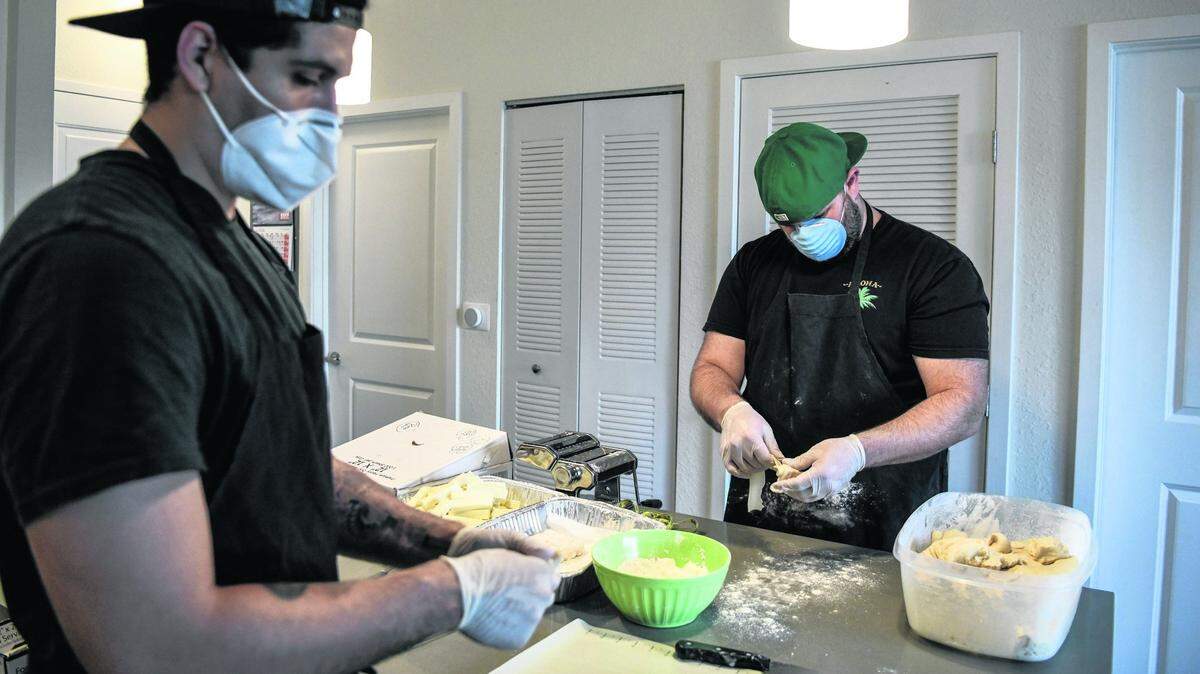
A bill that sent one of the strongest shudders through city and county governments because it prevents them from imposing new regulations on home-based businesses was passed Friday after the Florida Senate narrowly approved it on a botched vote on the final day of the legislative session.
A priority of House Speaker Chris Sprowls, SB 403 requires local governments to regulate home-based businesses the same way they approach other commercial enterprises. Critics warn that it will dismantle local zoning laws and leave neighborhoods unprotected against unwanted commercial activity, unless they have a homeowners association.
“Many municipalities put extra regulations just on a home-based business that differs from any other business or anybody else in that neighborhood,’’ said the House sponsor, Rep. Mike Giallombardo, R-Cape Coral. “So this will just create a standard and say that they cannot treat the home-based business any different than any other home in the area.”
A weaker Senate bill would have given local governments some flexibility, but on Friday Giallombardo drafted an amendment to the Senate bill that attempted to find middle ground.

Rushed votes
What followed was a flurry of actions as lawmakers tried to speed through the final day of the regular session and adjourn early. Some legislators said they were left unclear about what the proposals did.
The amendment requires that the owner of a home-based business live in the home and have no more than two additional employees. The home-based business must be a residence, and the exterior must comply with the architecture and the exterior of every other home.
It was the latest example in the parade of preemptions passed by the Republican-led Legislature over local home rule authority this session. In the last two months, local officials have seen state lawmakers restrict their authority over clean energy regulation, police budgets, Key West cruise traffic, and the ability of cities and counties to respond to public health emergencies and natural disasters.
Under the bill, parking generated by the business “may not be greater in volume than would normally be expected at a similar residence where no business is conducted” and “local governments may regulate the use of vehicles or trailers operated or parked at the business or on a street” as long as the regulation is no more stringent than for a home “where no business is conducted.”
Opponents called it an encroachment on residential property rights.
“If I’m in a nice residential neighborhood and I spent $800,000 on a house and all of a sudden my next door neighbor starts putting up Bob’s Mechanic Shop, that’s going to devalue my property,’’ said Sen. Jason Pizzo, D-Miami. “The whole state is affected because one person had an idea or a need.”
Republican Rep. Mike Beltran operates his law office out of his home in Lithia, a Tampa suburb. He said his neighborhood includes lawyers, pet sitters, painters, photographers, computer technicians, a car service, and accountants working from home.
He suggested that if people were concerned about their property values they should move to a community with a homeowners association, which could regulate what local government can’t do. “But don’t have the government telling us what to do,” he said.
The House approved the amendment and subsequent bill and quickly sent it to the Senate where the vote was 19-18 to accept the House amendment. It was one of the closest votes of the session.
A procedural misstep
Sen. Lauren Book, D-Plantation, Sen. Ileana Garcia, R-Miami, and Sen. Linda Stewart, D-Orlando, did not vote but were in the chamber, a violation of Senate rules. Republican senators Aaron Bean of Jacksonville, Jennifer Bradley of Fleming Island, Gayle Harrell of Stuart, Ed Hooper of Clearwater and Tom Wright of Port Orange voted against it.
WIth the vote in question because of the rules violation, Sen. Gary Farmer, D-Lighthouse Point, called a point of order. Rules Chair Sen. Kathleen Passidomo, R-Sarasota, agreed that the vote should be reconsidered, so the Senate moved to request the House return the bill to allow the Senate to conduct another vote.
Content with its victory, the House refused and adjourned the session.
“We didn’t know what the amendments actually meant, and they didn’t give us time to read them,’’ said Stewart who was away from her desk when the vote happened. After reviewing it later, she said she probably would have voted for it.
Book and Garcia also said they would have voted yes.
“I was watching the board to be sure my caucus was where they wanted to be on an issue that people had differing opinions on,’’ said Book, who replaced Farmer as Democratic leader this week. “The president locked the [vote] board before I was able to vote. I voted ‘yes’ right after the board closed, which would not have changed the outcome.”
After the vote, Sen. Annette Taddeo, D-Miami, changed her “yea” to “nay,” which has no effect on the vote.
The resulting bill, if approved by Gov. Ron DeSantis, is opposed by both the Florida League of Cities and the Florida Association of Counties. Opponents warn it could have far-reaching implications for millions of homeowners in residential communities.
“I’m concerned that this turns into Main Street on my street, and it really makes me worried,’’ said Rep. Matt Willhite, a Wellington Democrat.
He suggested that a growing business could “get deliveries 40 times a day because you’re the middleman for a business...so you’ve got three times as much traffic on your streets, and now we’re talking about having to pay to have the streets repaved and all this increased traffic in the area.”
Cities and counties currently have restrictions in place intended to balance the rights of homeowners who want to open a small business and the rights of their neighbors in residential areas. But the bill now requires them to regulate home-based businesses with the same approach as other commercial enterprises, upending zoning laws across the state.
“It is communities that should be empowered, not Tallahassee,’’ said Cragin Mosteller, spokesperson for the Florida Association of Counties. “Once again our legislators chose big government over neighbors and neighborhoods.”
This story was originally published April 30, 2021 at 6:39 PM.