
Shark Tank investor among those who tried to sell N95 masks at a high price to state
The price would have been one of the highest the state would agree to pay for the highly coveted N95 protective mask: $7 a piece for 1 million masks.
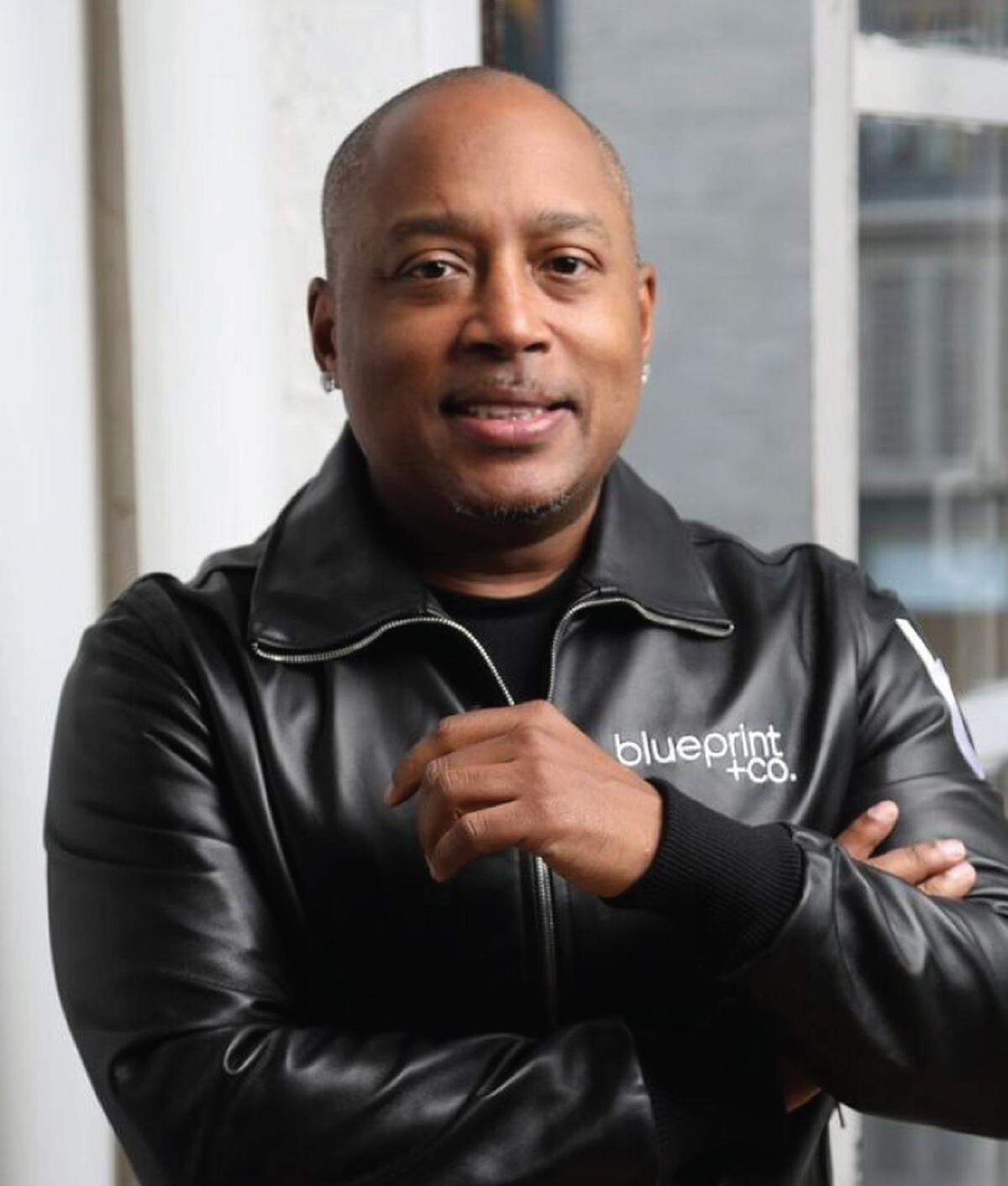
The source of the offer had cachet and seemed legit. He was Daymond John, CEO of the Shark Group and one of the stars of the popular TV show “Shark Tank.” He said he could get them for Florida but the cost would be more than three times the market price for the masks, which normally sell for under $2 each.
Deals had been falling through for weeks and Jared Moskowitz, director of the Florida Department of Emergency Management, decided the state would pay any price to get them into the hands of desperate healthcare workers in COVID-19 hot zones in Florida.
“This was not somebody off the street, this was Daymond John,’’ Moskowitz said. “He came to me and said, ‘I’ve been in the clothing business. I have connections with factories in China.’ ”
But instead of signing a purchase order with the vendor, the state signed a purchase order for an escrow agreement March 25 with the law firm that was to handle the transaction, Foley & Lardner.
The unusual arrangement said the state would agree to pay $7 million to the Shark Group, and put the money into an escrow account handled by the law firm. Also signing the deal was Joe Jacquot, the governor’s general counsel, who came to work for Gov. Ron DeSantis after four years as a partner at Foley & Lardner.
It’s another example of how, in the frenzied rush to feed the demand for the supplies the state never expected it would need, Florida officials waived all the contracting rules and opened an unlimited checkbook to line up middlemen and unconventional vendors.
Also named on the deal, which was signed by Moskowitz and John, was Jared Rosenstein, Moskowitz’s legislative affairs director and former legislative aide, Morri Chowaiki, executive vice president for the Shark Group, Larry Fox of the Shark Group, and Kevin Hyde of Foley & Lardner. Attempts to reach Chowaiki of the Shark Group were unsuccessful.
Despite all the high-profile signatures, the $7 million no-bid offer they all agreed to fell through on April 13.
After the story was published, John responded on Twitter, saying “I did not set any prices” and his team worked with the state to “save lives” and “to vet the offers based on my manufacturing expertise.”
Deals made with unauthorized vendors at inflated prices are now being scrutinized by 3M, the company that makes the masks, which has assembled a team of lawyers aimed at filing lawsuits across the country, and in Canada, to go after fraud and price gouging of its coveted masks.
“3M is not aware of how the Shark Group would gain access to our respirators as it is not an authorized distributor of 3M products or one of our channel partners,” said Jennifer Ehrlich, spokesperson for 3M in a statement Wednesday. “3M list prices, which are published on our website, are far lower than what appears to have been offered to the State of Florida.”
3M is targeting the deals even though many of them, like the offer made by the Shark Group to Florida, fell through, although Ehrlich said they had no information on this agreement.
“3M is filing lawsuits in cases where third parties use the company’s name, brand or trademark to engage in price gouging of N95 respirators and other illegal and unethical behavior,’’ she said. “We have no knowledge of whether that occurred in this situation. We are happy, though, to assist law enforcement authorities if they wish to look into this matter.”
Last week, 3M filed a lawsuit in federal district court in Orlando against Orlando-based Geftico, LLC, which it says fraudulently claimed it had access to 3M masks and attempted to sell them to the federal stockpile at 500% above the average list prices. On Tuesday, 3M filed suit against a company in Ontario, Canada.
As the state’s stockpile of the protective masks dropped to a dangerously low level in March, Moskowitz and his staff at the Division of Emergency Management embarked on a frantic attempt to sign $600 million in no-bid purchase orders with dozens of vendors, many of whom were not authorized by 3M to sell the N95 masks.
Days after the state inked the $7 million deal with John’s company, it signed a $225 million deal — for 30 million masks at $7.50 a piece — brokered by Miami lobbyist, Manny Reyes, son of the Miami commissioner, Manolo Reyes.
As the Herald/Times reported, both those deals fell through and only a fraction of the 90 million masks the state sought have actually materialized. “Many people were duped,” Moskowitz said.
But the transactions also offer a window into the way business is handled in Tallahassee, especially as the governor’s emergency order lifted all requirements that supplies be purchased following normal competitive bidding rules.
Why Foley & Lardner?
“Foley & Lardner was provided to me from the general counsel’s office,’’ Moskowitz said Tuesday.
Under the arrangement, the state would put the money into the firm’s escrow account “with an agreement between the seller and the buyer that we would hold these funds in escrow until such time as the masks were delivered by the seller,’’ said Jim Clark, general counsel of Foley & Lardner. The state would then “inspect the masks and determine that the masks were of the number, type, and quality represented by the seller,’’ and the law firm would pay the Shark Group.
“The escrow agreement was designed to protect the state from getting ripped off by an unscrupulous seller,’’ he said. “Our firm has never been in the business of buying and selling face masks. We had no relationship to the seller.”
The escrow agreement was the first one the law firm would do for the state and was needed “because of the time crunch,” Clark said. Moscowitz said there would be at least five other escrow arrangements for supplies, but only two are still active.
Did Foley & Lardner get a cut — a percentage of the $7 million deal? Moskowitz said no, it was paid $375 an hour to serve as the escrow agent, a discount on its normal fees, he said.
“The reason we decided to go through an escrow agent is more and more vendors wanted money up front because we were identifying potential fraud in the marketplace,’’ he said. “We used the legal escrow process to protect the state. It has worked in every case. If the vendor didn’t deliver the product, the money was returned through the escrow agent.”
He also said the failure of the state to list the Shark Group as a vendor with a separate purchase order was an oversight. “That was a mistake,’’ he said.
Note: This story has been updated to distinguish who signed and who was named on the escrow agreement and to add comments made on April 22 by 3M and Daymond John .
This story was originally published April 22, 2020 at 6:00 AM.