
Want to amend FL Constitution to ban assault weapons or allow pot? It may get harder.
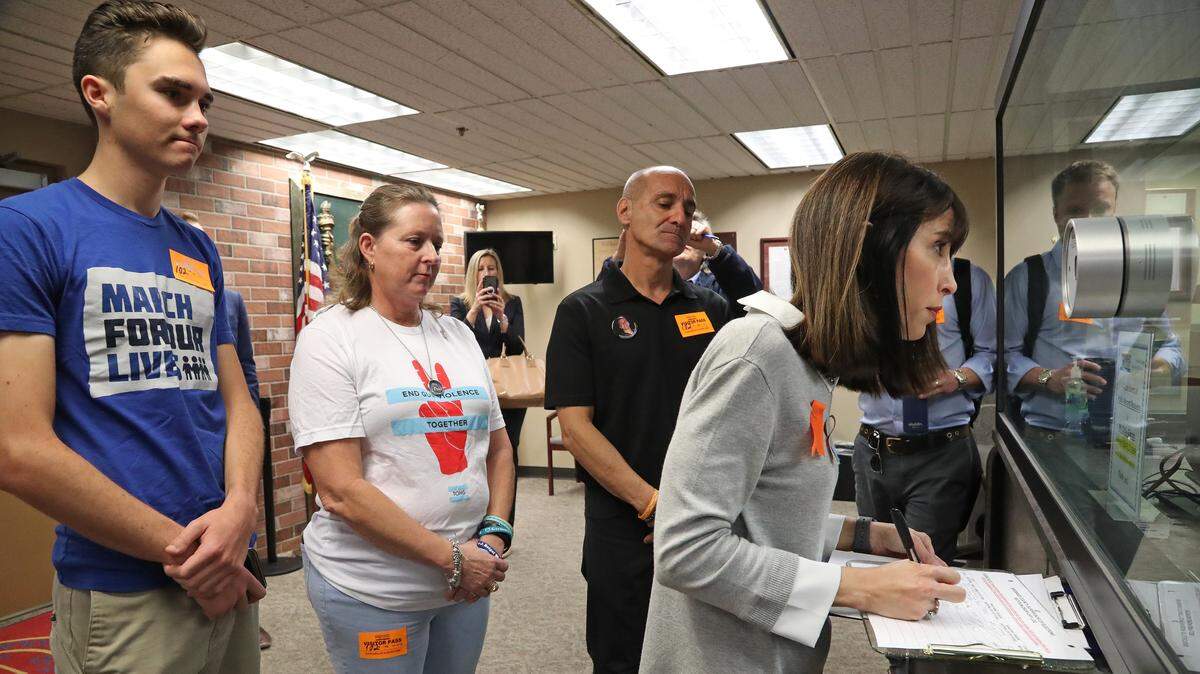
At the urging of Gov. Ron DeSantis and corporate interests, Republican lawmakers last year made it dramatically harder for groups to gather petitions to change the Florida Constitution.
This year, they’re looking to make it even tougher — so much so that even some GOP senators object.
A Senate committee, along party lines, advanced Wednesday a bill that would likely increase the cost and the amount of time it takes to get amendments on the ballot.
Groups wanting to amend the state’s Constitution would have to gather more than three times as many signatures before being deemed eligible for the ballot by a review from the Florida Supreme Court. On top of that, each signature could cost more.
The changes would be so drastic that Sen. Jeff Brandes, R-St. Petersburg, called the requirements “burdensome and close to legislative bondage.” Brandes and two other Republican senators, who all voted for the bill, said they wouldn’t vote for it again unless it was modified significantly.
“It shouldn’t be one of these convoluted processes where you get tripped up at one place or the other,” Sen. Tom Lee, R-Thonotosassa, said. “It is too strong. It is too convoluted.”
The next stop for the bill, Senate Bill 1794, is the Senate floor. A similar bill in the House has already made it to the House floor.
In the two decades that Republicans have controlled Florida’s Legislature and the governor’s mansion, they’ve steadily made it harder to pass amendments to the Constitution. To make it on the ballot, organizers of a petition need to gather 766,200 signatures, and 60% of those voting need to approve it to become law.
Despite the restrictions, Floridians, and liberal groups in particular, have succeeded in passing amendments to the Constitution that allowed the use of medical marijuana, provided money to protect environmental lands and a required that lawmakers draw fair legislative and congressional districts.
In 2018, Amendment 4, which allowed most felons to regain their voting rights, received more votes than any person up for election that fall. Lawmakers last year, urged by DeSantis — an opponent of the felon-voting amendment — passed a bill in the final hours of the legislative session that restricted who could gather signatures and how those people were paid.
“Last year, we had so many amendments that I think we need reform,” DeSantis said after session ended last year. “We’ve let too much policy go into the Constitution.”
This year’s bill in the Senate would restrict the process even further. Currently, petition gatherers have to collect 10%, or 76,632, signatures to trigger a review by the Florida Supreme Court, which decides whether the amendment is legal.
The bill would require 33% of signatures before making it to the court. That means organizers would have to put up more money and effort before they know if their measure can actually qualify for the ballot. Organizers would also need to collect more signatures from more congressional districts.
Compounding the challenge, the bill would likely increase the costs for signatures to be verified by local supervisors of election. Currently, they are allowed to charge organizers up to 10 cents for each signature. The bill would raise the amount to the “actual cost” for the supervisor to review each signature.
The bill would also give lawmakers a chance to evaluate the measure and offer an opinion about its merits. Currently, when an amendment receives enough voters to trigger a Supreme Court opinion, it requires the attorney general and state economists to evaluate the proposal. The bill lets the Legislature give an opinion on the amendment, which would be available to voters to read at polling sites.
Lee said adding the Legislature’s analysis would be pointless.
“If we wanted to pass it, we would have done that, and we didn’t,” Lee said. “So why are we getting involved after the fact?”
Sen. Travis Hutson, R-Palm Coast, said the changes were meant to limit fraud in the petition process and lighten the Supreme Court’s workload.
Democrats during Wednesday’s committee noted that Republicans failed to show evidence of fraud or that the court’s workload is problematic. They said it was apparent the bill was intended to crack down on voter initiatives. Sen. José Javier Rodríguez, D-Miami, tried and failed to rename the bill the “Direct Democracy Limitation Act.”
“Let’s give it a name and tell our constituents what it’s doing,” Rodriguez said.
The only two people who said they supported the bill on Wednesday were lobbyists representing Associated Industries of Florida and the Florida Chamber of Commerce, two groups funded by some of the largest corporations in the state.
These business coalitions are adamantly opposed to an amendment to raise the minimum wage, which is set to go before voters this fall. And Republicans have opposed amendments that would ban assault weapons and allow medical marijuana.
Sen. Rob Bradley, R-Fleming Island, said he supported the bill because it should be tough to amend the Constitution.
“It is not designed to write a budget,” Bradley said. “It is not designed to set run-of-the-mill policy.”
This story was originally published February 26, 2020 at 5:26 PM.