
Make felons pay fines before they can vote? These judges say that’s voter suppression
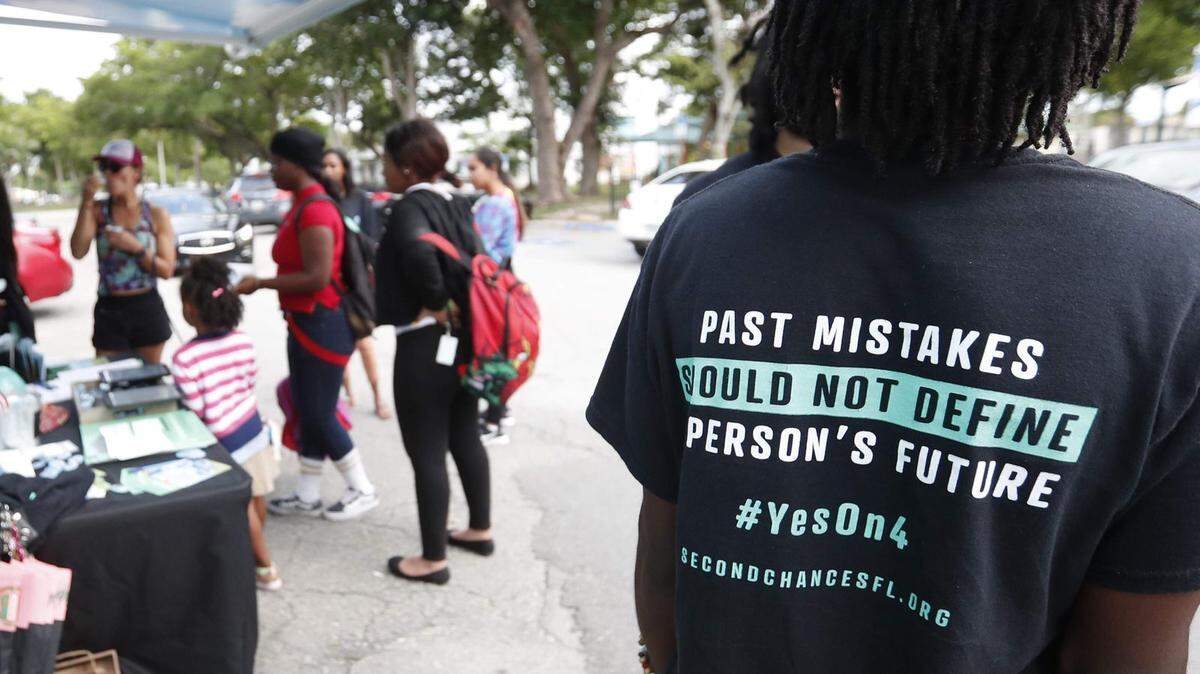
While the Florida Legislature had the right to demand that felons pay their full fines and other costs before registering to vote, some former judges argue it amounts to voter suppression.
In November 2018, voters approved the Voting Rights Restoration for Felons Initiative, an amendment to the Constitution of Florida, with 64.5% voting yes. The measure restored the voting rights of Floridians with felony convictions after they’ve completed all terms of their sentence including parole or probation. The amendment excludes those convicted of murder and an array of sexual offenses.
All in all, approximately 1.4 million potential voters.
Stanford “Stan” Blake, who retired in 2016 from the Eleventh Judicial Circuit Court’s Civil Division, said he thinks a lot of South Florida judges favored the restoration of felons’ voting rights.
Florida is an oddity because it is one of the few states that doesn’t have voter restoration, Blake said.
“I was very much for it and was delighted to see it pass,” Blake remembered.
So he was disappointed last summer when Florida’s Legislature passed Senate Bill 7066 and determined “all terms of their sentence” meant former felons had to pay all outstanding court fees, fines and restitution before their voting rights would be restored.
The Florida Supreme Court later held that the plain text of Amendment 4 requires payment of all legal financial obligations as a precondition of re-enfranchisement.
The Supreme Court made a mistake by allowing for ambiguity in the language, said Larry Schwartz, a Miami-Dade judge who retired in December 2012.
“Once they had served their sentence” is vague and can be interpreted that way, he explained. But the Legislature does have a right to interpret the language.
“I don’t think that was intended, or in the minds of the 95 percent of people that voted for it,” he said. “I believe the Legislature is carrying out voter suppression.”
Schwartz argues that the exclusion of those still sidelined by the fees might well affect the results of the Democratic primary on March 17. If fewer people are able to register, it could swing the state.
It could also affect the presidential election on Nov. 3, although there will be eight more months to resolve the matter and register voters. “My guess is the vast majority of them will vote blue, not red,” he said.
Retired Judge Jonathan D. Ohlman agrees that the Legislature was well within its power to pass the law requiring the fines be paid in full. Ohlman is a former Fifth Circuit judge appointed by then-Gov. Charlie Christ in 2008. He retired at the end of 2018, right after Amendment 4 passed.
“It’s not a matter of opinion,” he said, “if the Legislature or court says to change the law, you apply the law.”
Personally, Ohlman said he thinks the intent of the amendment “was you still have to pay the fines, but they shouldn’t hold your right to vote.”
Every felony conviction comes with mandatory fines, Ohlman said. Anyone who goes through a felony proceeding owes anywhere from $500 to $1,000 in court fines.
“It’s hard for the average American to come up with that.
“Even if a payment plan is offered, that’s still impeding your right to vote,” he said. “It’s hard for me to believe that it’s fair in every situation.”
Paying the fines is no easy feat, Blake said. Those just released from prison have additional legal fees and life expenses to pay as well.
“We hear all the time about voter suppression,” he said. “ In my opinion as a citizen, this was subtle or maybe not so subtle voter suppression.”
Paying the fines “takes longer than I would ever know,” Blake said. “There is a great expectation that people will be able to pay these fines.”
The fines still have to be paid, Blake said, but they shouldn’t get in the way of people’s right to vote.
“I’d like to have a fast track once a week or so where judges solely focus on these cases and push them through.”
Though the Court of Appeals for the Eleventh Circuit ruled last month that forcing felons to pay off their court costs before registering to vote is unconstitutional, only the 17 people named in the lawsuit against the state were granted their full rights.
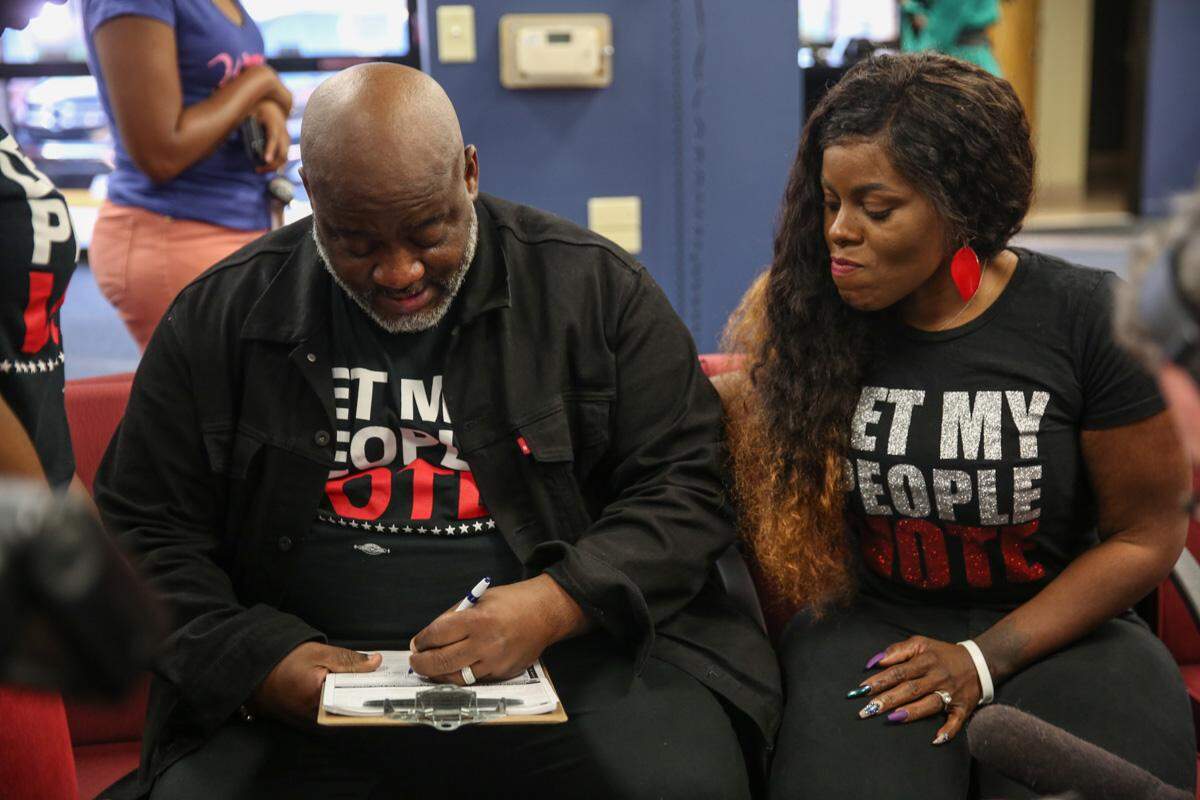
From the steps of the Florida State Capitol in Tallahassee, Desmond Meade, executive director of the Florida Restoration of Rights Coalition, gave a rousing speech to voting rights’ advocates on Feb. 19.
“Yesterday’s ruling by the 11th Circuit Court was a step in the right direction, but the reality is it granted 17 returning citizens the right to vote — not all returning citizens. There is much more work left to do.”
Until then, Meade said, the Florida Rights Restoration Coalition will continue to help people with fines and fees to seek relief from the courts, and encourage people to donate to the Fines and Fees Fund.
The movement faces another challenge as Gov. Ron DeSantis’ administration has asked an appellate court to revisit the ruling. The 33-page motion asks the full 11th U.S. Circuit Court of Appeals to hear the case, arguing that the three-judge panel applied the wrong type of analysis, known as “heightened scrutiny,” to arrive at the Feb. 19 decision.
On Monday, that three-judge panel refused to put its order on hold until then, saying the state’s lawyers “have not made a strong showing of likelihood of success on the merits” of its appeal. Monday’s ruling means the 17 will be able to vote March 17 in the state’s presidential primary.
Though Ohlman thinks the judges make their best attempt to be fair, balancing that with the number of cases is tough. “I’ve always said that judging is an easy job, but a hard job to do well.”
Part of that problem is funding, Ohlman said, arguing that the state should spend more of its budget on the judicial system. More funding might create more courts, but also more people to process restoration cases. More time to devote to the 1.4 million people eligible to have their voting rights restored.
And that public hearing is important. It’s when their entire case is reviewed. It’s their final chance to make their case, Ohlman said,
“If they lose the right to be heard, they lose faith in the system.”
This article has been updated with a court ruling that will allow 17 plaintiffs to vote in Florida’s presidential primary.
The News Service of Florida contributed to this report.
This story was originally published March 3, 2020 at 6:45 AM.