With a nod to Florida, feds say its OK for state to buy prescription drugs from Canada

Hours before a vote was expected in the U.S. House to formally impeach President Donald Trump, federal officials stood before reporters in Tallahassee to announce that they will allow states to import prescription drugs from Canada.
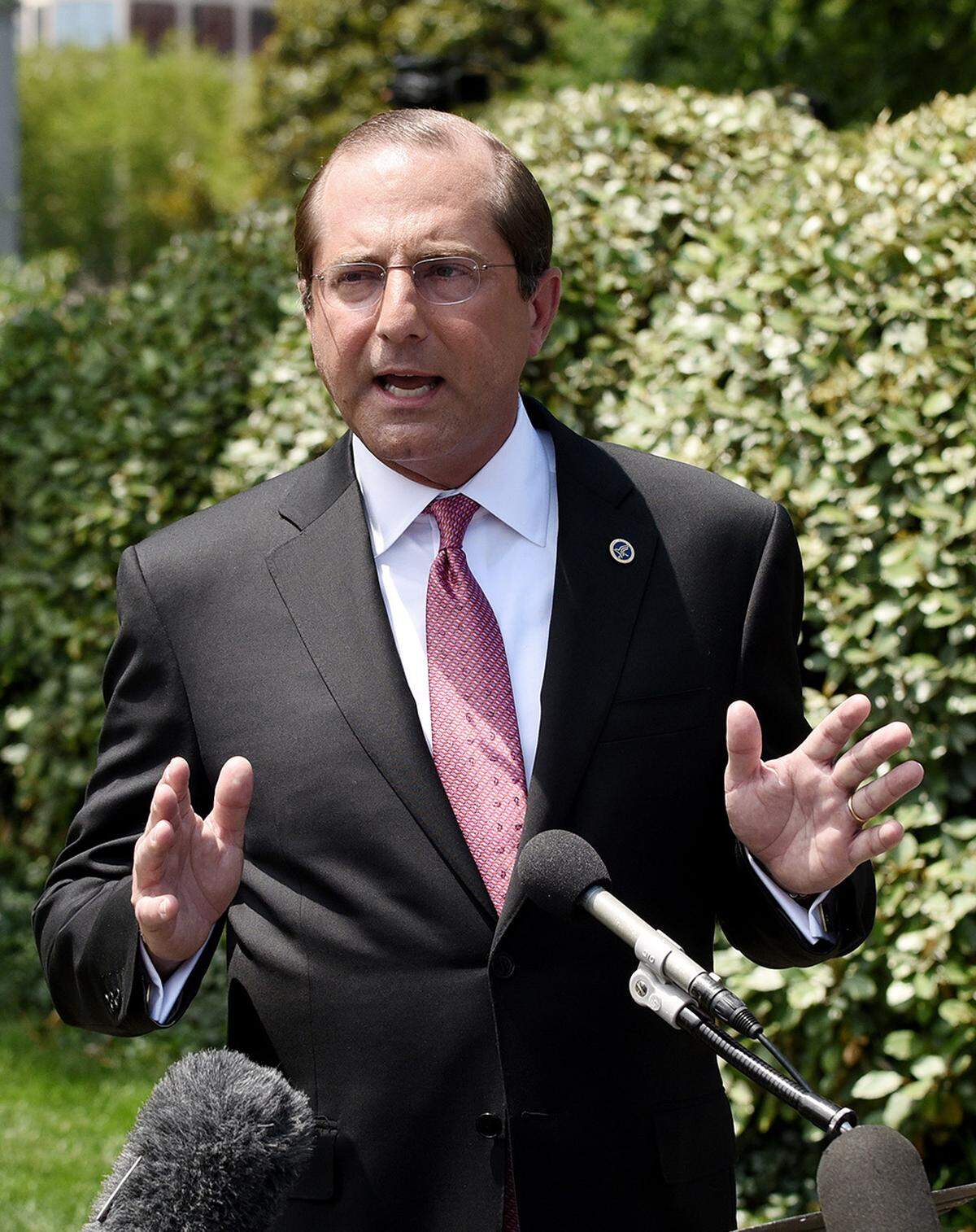
“President Trump and I, we’re just not going to be distracted by silly partisanship on the sidelines,” said U.S. Health and Human Services Secretary Alex Azar. “We are driving ahead with bringing an ... affordable, patient-centric healthcare system to the American people.”
The announcement marked a step forward for Florida’s nascent efforts to curb rising drug prices and hands Republicans a potential policy win — if Canada agrees to cooperate.
The guidelines rolled out by Azar on Wednesday include a pathway for state governments to import Canadian drugs to be used by those receiving state-funded healthcare. Those patients include Medicaid recipients and inmates in Florida’s prisons. Additionally, Azar said the federal government will also offer guidelines for American drug manufacturers to also import from Canada, eventually allowing American consumers to get cheaper drugs at hospitals and pharmacies.
Drugs that must be injected, like insulin, as well as controlled substances, such as opioid painkillers, are excluded from Florida’s importation proposal.
It has generally been illegal to import prescription drugs from Canada, but many Americans do so regardless — and federal officials largely have not enforced the ban. In Canada, drugs are cheaper, in part, because its government controls how much pharmaceutical companies can charge for medication, though the U.S. does not.
And with bipartisan acknowledgment that rising drug prices must be curbed, a number of other states, including Vermont, Colorado, and Maine, have recently eyed plans to import drugs from abroad. But any official path to importing medication had been long frozen because it lacked federal approval — despite a 2003 federal law that allowed officials to grant states permission.
Florida leads the change wave
That ice thawed significantly over the course of the year, particularly in Florida. This spring, state lawmakers passed a bill — at the behest of House Speaker José Oliva, R-Miami Lakes, and Gov. Ron DeSantis — to authorize state health officials to pursue importation and ask for federal approval.
By the end of August, state officials at the Agency for Health Care Administration had submitted a concept plan that they said could save the state about $150 million (a minuscule fraction of Florida’s $91.1 billion budget) through medications from Canada alone.
“This is only one step ... but this is a step no one has been willing to take for almost 20 years,” DeSantis said Wednesday. He said that for Florida’s prison healthcare alone, it could save the state tens of millions.
As for the impeachment vote, DeSantis, a staunch Trump ally, echoed his past comments that it’s only a distraction from issues that matter to Floridians.
“Everyone in this room knows how this is ultimately going to end, and I think that’s why it’s lost support of the public and is not something that’s really energizing folks in the middle,” he said. “We’re just going to keep charging ahead.”
The announcement’s location in Tallahassee also hints at the favored-son status that DeSantis holds with Trump — and the lobbying that DeSantis regularly said he engaged in on calls with the president to secure federal approval.
Not a done deal
Still, even with the synergy between Trump and DeSantis, this is not a done deal. This step by the federal government must still undergo a period of public comment and review, plus the state will need to build infrastructure for importation to happen, likely requiring more state funds.
That fight is likely to be bumpy: This year’s bill was bitterly opposed by pharmaceutical interests, which spent hundreds of thousands of dollars on lobbyists and ads to denigrate the proposals as ineffective and unsafe.
Additionally, Canada still has to get on board. Canadian officials have said the country doesn’t have enough prescription drugs to share with their larger southern neighbor.
“Obviously, the Canadians are going to be looking out for Canadians,” Azar said. “We hope they’ll work with us.”
This story was originally published December 18, 2019 at 4:15 PM.