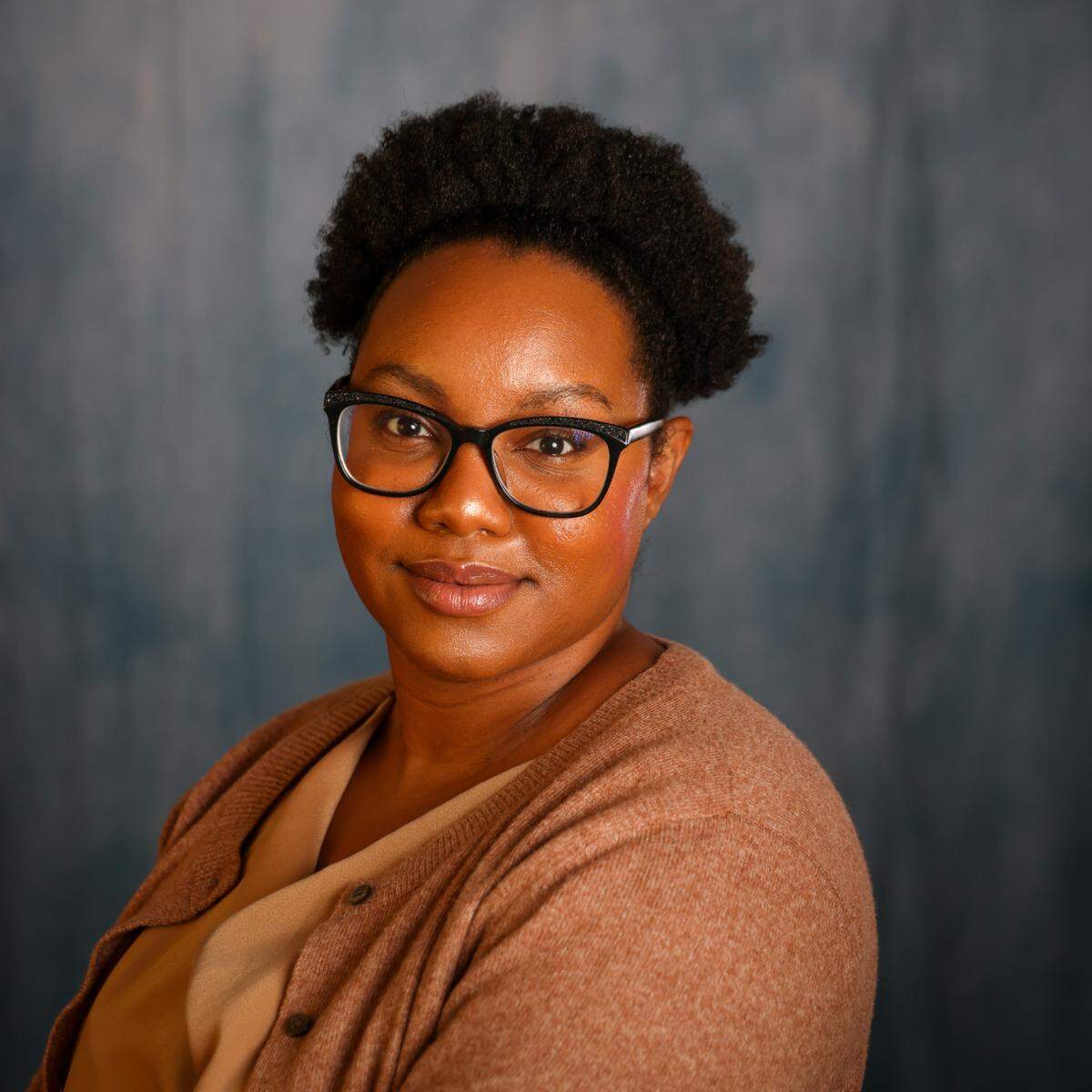
National campaign hopes to energize Black voters in South Florida ahead of primaries
Melanie Campbell recalled when her mother was instrumental in teaching Black history in Florida classrooms. But with recent changes to how Black history is taught in Florida, Campbell said it has become even more important to engage voters on issues affecting them.
It’s why she and other organizers of a gathering that started in Fort Lauderdale and ended in Opa-locka on Friday are working to energize Black voters ahead of primaries and the 2024 presidential election.
“She along with others would do Black history programs in the churches,” Campbell said of her mom who taught in Brevard County Public Schools in the 1970s.
“That’s really where it started. As a teacher, she helped organize to put Black history in the public school systems,” Campbell said.
Inside Smitty’s Wings Sistrunk — a Black-owned restaurant in Fort Lauderdale that has a back wall adorned with photos of local and national Black political figures, business owners and civil rights activists — Campbell was one of several speakers during a press conference held by the National Coalition of Black Civic Participation and The Power of the Ballot Action Fund to increase Black voter turnout in Florida.
RELATED: Teachers enraged that Florida’s new Black history standards say slaves could ‘benefit’
In the “We Won’t Be Erased: Vote in 2024” national campaign, the groups are in partnership with the Florida Coalition on Black Civic Participation among a growing list of other organizations hoping to engage Black voters ahead of primaries and the 2024 presidential election and increase turnout.
“It’s about getting to folks early,” Campbell said. “Politics is very local, but it is also for folks to understand that it’s an attack on our democracy as a country.”
Fort Lauderdale was the third stop along the group’s trek through the state. Another stop came later in the day at Florida Memorial University in Opa-locka for a panel discussion on key issues affecting voters.
Part of the group’s targeted campaign includes translating voting literature into Spanish and Haitian Creole for immigrant residents, holding roundtable discussions on college campuses, and educating voters on local elections, among other strategies.
The group’s monthlong visit to the state comes after the Florida Department of Education changed its standards for instruction about Black history, which critics said diluted Black history and were inaccurate such as middle-school standards that would require instruction to include “how slaves developed skills which, in some instances, could be applied for their personal benefit.”
“Our legislators are more concerned about the books that children are reading instead of the houses they are living in and the fact that they can’t afford to live in them or are homeless,” said Cassandra Brown, chair and co-founder of All About the Ballot, referring to recent efforts to ban books in Florida public schools.
RELATED: Book bans are growing in South Florida schools. You’ve probably read some of these books
Increasing voter turnout will be a key challenge. Monica Elliott, co-president of the League of Women Voters in Broward County, said last year, less than 50% of registered voters in Broward County came out to vote, and the county saw a 20% drop in voter turnout between 2022 and 2018, the last midterm elections.
“Part of that is people are so fed up with what’s happening at the top of the ticket, at the presidential and gubernatorial level,” she said at the press conference. “We want people to start thinking about the bottom of the ballot. It is your local people.”
Salandra Benton, executive director of the Florida Coalition on Black Civic Participation, said in Black communities, people tend to vote on the issues and not necessarily the candidate.
“Those are the things that we keep hearing on college campuses, when we knock on doors and in communities,” she said, adding many are dissuaded by candidates who don’t deliver on promises.
The groups plan to target their efforts at southern and swing states next summer with activism and voter education and focus on aggressively mobilizing voters for the general election.
“This is not a one-off. This is a movement,” Campbell said. “We’re not going to be erased as a people. We are America, our Black history is American history.”