Two North Miami councilmen could get 18 months in office past their term. Here’s why
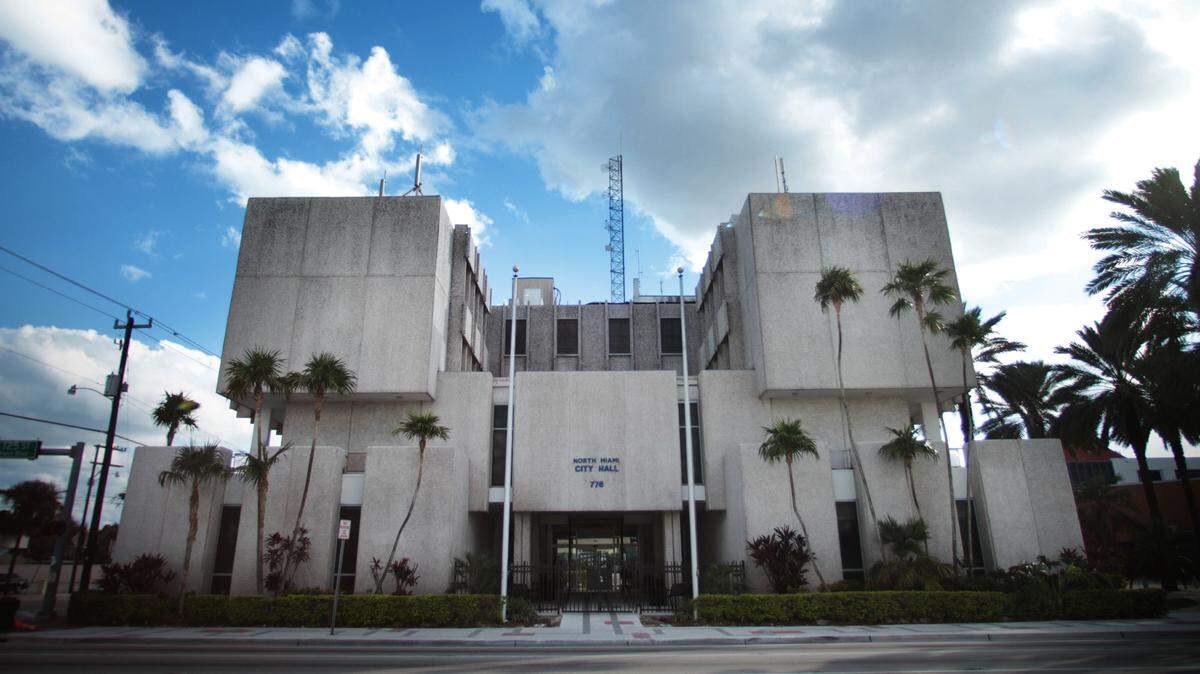
North Miami this week will consider switching its municipal elections schedule to align with that of national elections, which would give two term-limited city councilmen an additional 18 months in office.
Two ordinances to change the city charter — which were discussed and voted on during a first reading at a Nov. 7 special council meeting — would move elections in North Miami from the second Tuesday in May to the second Tuesday in November, aligning them with the national election schedule.
That would mean District 1 Councilman Scott Galvin and District 4 Councilman and Vice Mayor Alix Desulme would spend an additional 18 months in office, well after their terms were set to expire in May 2023, per the proposed legislation. The ordinances were sponsored by outgoing Mayor Philippe Bien-Aime.
“A presidential cycle will obviously increase turnout and reduce costs from the city standpoint,” Galvin told the Miami Herald. “When we do our own standalone election, it’s costing us in the neighborhood of a quarter million dollars because we have to pay for all the polling locations to be open, and the staff, and the machinery and the counters. All that’s on the back of the city.”
North Miami voters are scheduled to cast ballots on May 9, 2023, for mayor, council members for districts 1 and 4, and city clerk. Candidates for each race have already filed their intent to run and submitted campaign reports.
Bien-Aime’s term ends next Tuesday after he resigned to run for Miami-Dade County District 2 commissioner. He lost that race to Marleine Bastien. A special election to replace him is expected to be held in January. City Attorney Jeff P. H. Cazeau noted during the meeting that there was nothing stopping Bien-Aime from running in the special election.
The council voted 4-1 on the changes, which will be up for a second read that could give final approval during a second special council meeting on Friday. The lone dissenting vote last week was District 3 Councilwoman Mary Estime-Irvin, who questioned the timing and the rush in passing the measure.
Estime-Irvin said while she understood the election date change would increase voter turnout and save the city money, she believed the voters should have more say and suggested making the measure a referendum. She did not respond to emailed questions from the Miami Herald.
District 2 Councilwoman Kassandra Timothe, who voted in favor of the legislation, said she was concerned about candidates who have already made adjustments to run for office.
“I’m not in support of how it’s being done because we are 182 days away, six months away, from our upcoming elections,” Timothe said at the meeting. “We’ve had two people already file to run for mayor, we have three out of our five seats that are vacant, and everyone has been rambling about this upcoming election.”
Moving election date
Moving the election date was also questioned by residents at the Nov. 7 meeting who said they wanted elections to move to November during even-numbered years, but were concerned about extending the time for Galvin and Desulme in office. The first vote on moving the election date was held a day before the Nov. 8 general elections.
Since 2013, the city of North Miami has held municipal elections every second Tuesday in May during odd-numbered years. Mayors can hold consecutive two-year terms and council members can hold consecutive four-year terms.
The city last attempted to change its election schedule in 2015. At that time, the proposal passed on first read, but didn’t on second reading. Bien-Aime was the council member who sponsored that legislation as well.
Typically, a referendum is required to change a charter provision, but there are potential ways around that, according to former state Rep. Joe Geller, who has worked as a legal outside counsel for cities. Geller said a state statute allows for municipalities to change their election dates if it is in the interest of increasing voter turnout.
“That said, if a municipal governing body wants to move its elections from an off-time to some kind of general election, I don’t necessarily think it would have to be in November. I think it could even be an August general election,” Geller said.
In examining North Miami’s charter, election attorney and former Florida legislator Juan-Carlos Planas disagreed, saying a change in ordinance needs a vote by the public. “If they just pass this on the commission someone can sue to require a vote,” Planas said.
Planas said the statute Geller mentioned doesn’t mean the city can break the charter. He also said that another option for North Miami could be to hold its elections next November, when Hialeah, Homestead, Miami and Miami Beach each hold municipal elections.
On term limits, the city’s charter says the terms of council members end on the fourth Tuesday of May of the fourth year of their term or when their successors in office are elected and sworn into office.
“Term limits don’t really govern how long you serve. Term limits, for a number of legal bases, only apply to who can run for office,” Geller said. “So if you’ve ... reached or exceeded term limits, you can’t be a candidate. But once you’re elected, you serve out whatever your term of office is till the term expires.”
Should the legislation pass, neither Galvin nor Desulme intend to step down in May, when their terms would traditionally end. “Resigning would force the city into yet another special election costing more money,” Galvin said.
If the measure doesn’t pass, their terms will end in May.
This story was originally published November 17, 2022 at 9:38 AM.
CORRECTION: A previous version of this story incorrectly attributed a quote from Councilwoman Kassandra Timothe.