When this Florida woman was an NPA candidate for state Senate, she was moving to Sweden
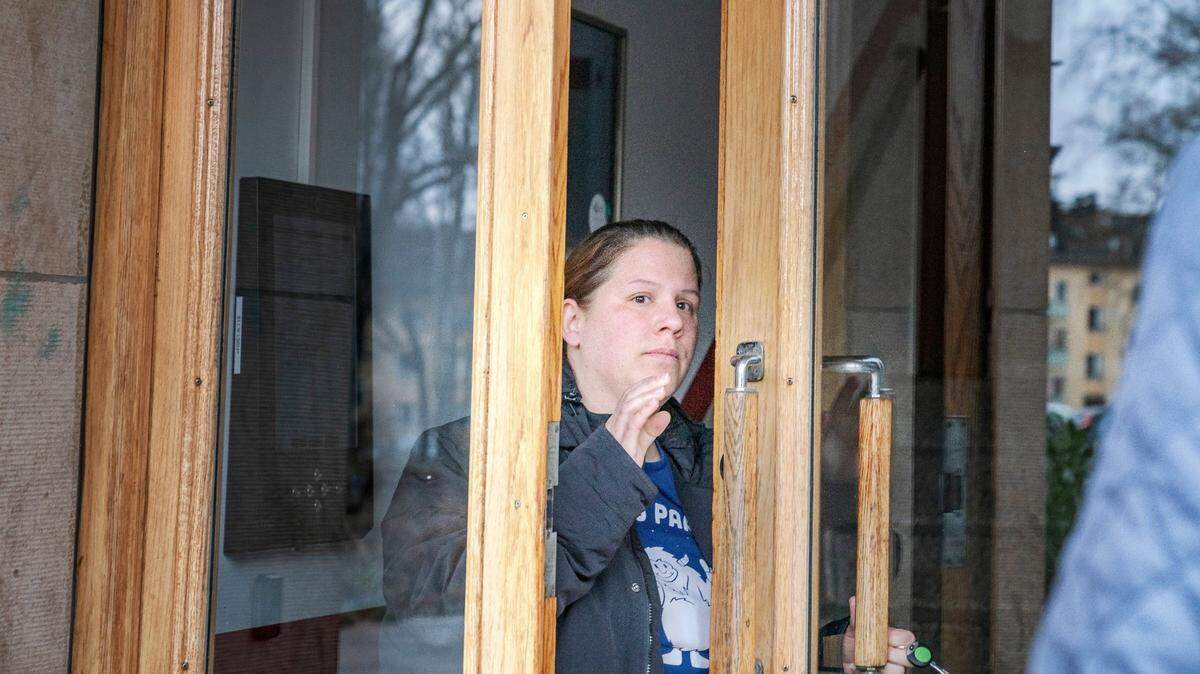
A Central Florida woman who ran as an independent for the state Senate kept a low profile and hardly campaigned. But before she even filed to run, she applied for residency in Sweden, and the day before the November 2020 election, she pressed immigration officials to accelerate her request.
The short-lived political career of Jestine Iannotti and her journey from the Sunshine State to Scandinavia is stranger than fiction, and involves advertisements entangled with dark money political groups and the resettling of a young family halfway across the world.
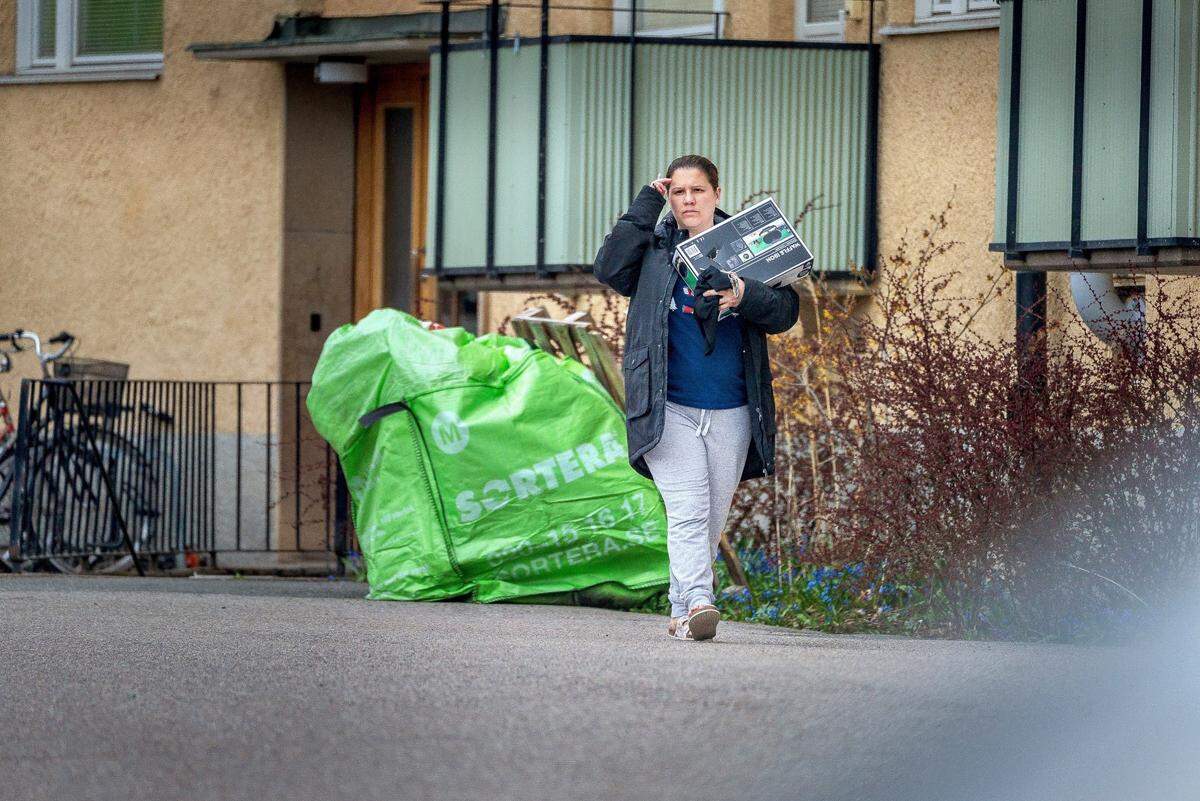
Working together, the Miami Herald, McClatchy and the Swedish daily newspaper Dagens Nyheter tracked down the one-time no-party state Senate candidate in Florida to a suburb of the Swedish capital of Stockholm, where she is living with her boyfriend and their 16-month-old twin sons.
When a reporter approached her there to ask questions, Iannotti fled into her ground-floor apartment, and later again refused to talk when spotted on her porch.
Public records obtained by Dagens Nyheter show that Iannotti, 35, whose last known address was in Winter Springs outside Orlando, had already applied to live in Sweden when she filed to run for state Senate in June 2020. She ran in District 9 against former GOP state Rep. Jason Brodeur and Democratic labor attorney Patricia Sigman. In a race decided by 7,644 votes, Iannotti received 5,787 of them.
More than a year earlier and eight months before filing her paperwork to become a candidate for public office in Florida, Iannotti applied for a Swedish residence permit in October 2019.
Her campaign filings stood out last June because she reported a negative net worth of $154,000. She received just $1,300 in donations, and at least one contribution was listed from a donor who claimed he didn’t give to the campaign at all.
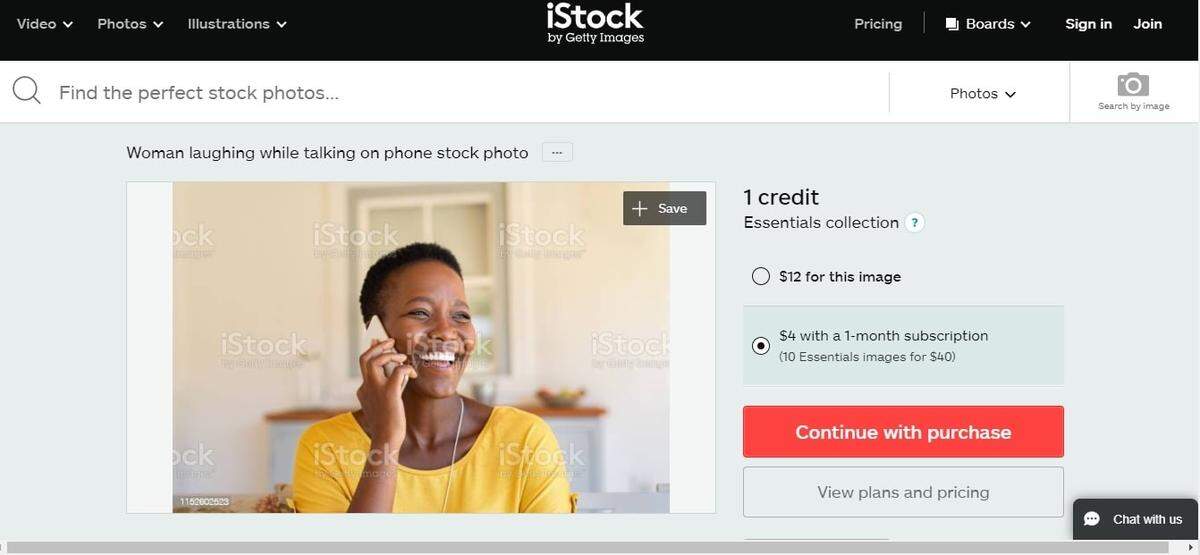
Later, independent mail advertisements paid for by a dark-money group (a non-profit entity that is not required to reveal its donors) sparked controversy because they featured a photo of a Black woman and the slogan, “Jestine’s got our back,” leaving the impression that it was the candidate, Iannotti. But Iannotti is white, and the photo is a stock image.
Breaking her silence
In a brief telephone interview with a reporter from Dagens Nyheter on Wednesday, Iannotti offered her first comments. She emphasized she had nothing to do with the controversial mailer.
“I never agreed to any of that. I never found out about it until it was in my post box and I said, ‘What the hell is this?’ ” Iannotti said.
In a subsequent call, Iannotti said she wanted to stress she, too, was offended by the mailers.
“I never approved that pamphlet. I would never put my face out there as an African American because that’s just asinine,” she said, adding, “I would never have been that clueless to use a stock photo of an African American, so whoever did this did this without my knowledge and without my consent.”
Declining to go into specifics, citing the desire for privacy, she insisted her candidacy was legitimate.
“I [entered] for myself but then funding fell through so I decided to take a step back,” she explained of her decision to run, not discussing why she had already applied for Swedish residency at the time. “Honestly, I should have taken my name off the ballot, but I had stuff going on with my children and everything to where my family came first.”
And she took issue with U.S. media stories that indirectly linked her to the scandal involving Florida Republican Rep. Matt Gaetz and former Seminole County tax collector Joel Greenberg. There is no connection, Iannotti insisted, adding that “you guys are trying to link me to people that are doing very bad things, underage prostitution and all that stuff. I have nothing to do with that. I don’t even know those men.”
The three suspicious no-party Senate candidates
Iannotti is one of three mysterious no-party candidates who filed to run in competitive state Senate elections in 2020, a scheme that has erupted in a Miami political scandal that resulted in two arrests on felony charges.
On paper, she seems a most unlikely candidate. Public records in the United States show very little formal work history since her high-school graduation in 2000 when she lived in the Orlando suburb of Altamonte Springs.
Seminole County education records show she worked in the 2009-10 school year as support staff. From the 2010-11 school year until January 2020, she was authorized to work as a substitute teacher in Seminole County but according to county officials there is no record that she ever did.
In her financial disclosure filed with her campaign documents, Iannotti claimed income from the CCLS language school in Orlando. A staff member Monday confirmed she had worked at the school for about one year as an English instructor.
Photocopied pages of her U.S. passport provided by Swedish tax authorities show since 2014 Iannotti has traveled to Korea, Japan, United Arab Emirates, the United Kingdom, France, Jordan, Latvia, Iceland, Mexico and Sweden. The exotic international travel, some of it reflected in her now-removed Facebook page, seems at odds with the debt Iannotti reported on her campaign filing.
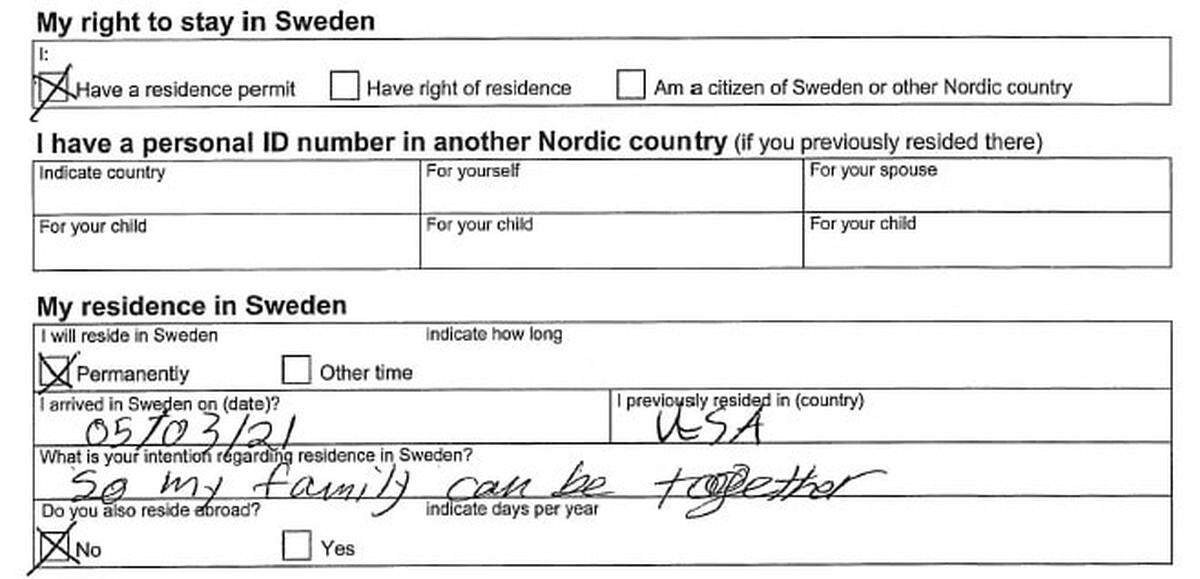
Immigration documents in Sweden indicate she gave birth to twins in Central Florida in November 2019. The father also provided birth certificates from Florida
Why Sweden?
“So my family can be together,” Iannotti wrote in her “moving to Sweden” residency form, listing Martin Lundberg, 28, as the father.
Another document shows that she used an administrative clause on Nov. 2, a day before polling, to press for expedited resolution from the Swedish migration agency. The answer back on Dec. 2 was that “your case is not ready for a decision. The Swedish Migration Agency rejects your request to have your case decided within four weeks.” She was finally approved on Feb. 11, 2021.
Life in Sweden before the U.S. election
In since-deleted Facebook posts shared with the Herald, Jestine — under the name “Julietta Iannotti” — posted often about her adventures traipsing around the world during the election cycle.
“In Sweden for the next couple of months,” she wrote on July 20. Five days later, she was cooking over an utegrill (that’s barbecue in Swedish) under a Swedish flag.
In August, she was picking blueberries. A few weeks later, she spent two weeks on a farm. Then a zoo. She posted photos of bison, moose, reindeer and bears.
Iannotti declined to answer specific questions sent by email and WhatsApp about why she entered the state Senate race and whether anyone helped her, whether she was compensated for the effort and whether she was connected with Orlando-area politicians or operatives at the state or national level.
The New York Times reported earlier this month that Gaetz and lobbyist Chris Dorworth — a lifelong friend of Brodeur — discussed the possibility of running a third candidate to sway the outcome of the election. Neither Gaetz nor Dorworth responded to multiple requests for comment.
Erin Isaac, a spokeswoman for the Florida Republican Senatorial Campaign Committee, did not comment on Iannotti’s candidacy, but wrote in a text message that “FRSCC’s strategy was to back an experienced candidate who would work hard on behalf of the people of Florida.”
She then listed the various accomplishments of Brodeur during the 2021 legislative session.
Public records show Iannotti was last signed up to vote in 2006 and was registered as an independent.
Dark-money mailers touting the NPA candidates
There are many unusual characteristics of her failed bid for office, which did not appear to involve any campaigning at all. She offered no identifiable platform, and declined to do as thousands of candidates across the nation had done and fill out a Ballotpedia survey to share her views with voters.
The only campaigning done on her behalf was misleading mail advertisements that mirrored those in Miami’s Senate Districts 37 and 39, all of which urged voters to “cut the strings” from party-backed candidates. The no-party candidates in the Miami Senate districts also did no campaigning and raised even less money than Iannotti did.
Documents reviewed by the Herald show that Alex Alvarado, a Tallahassee-based GOP strategist, ran the two political committees that sent the mail advertisements — The Truth and Our Florida.
Alvarado has told the Miami Herald that no one hired him to execute the effort.
Still, much remains unknown about the entity that paid for the political mailers. But documents show that together, both committees spent $550,000 to pay for the political mail ads in the three campaigns.
The political committees had initially reported that an entity named Proclivity was the donor. But after the November election, the committees changed the name of the donor to Grow United, Inc., according to campaign finance records.
Corporate records show both Proclivity and Grow United are tax-exempt corporations registered in Delaware that are chaired by the same person: Richard Alexander.
Investigators with the Miami-Dade state attorney’s office are probing who was behind the more than half a million untraceable dollars as part of an investigation into the no-party candidate Alex Rodriguez in Senate District 37, who faces felony charges related to the scheme. Former GOP state Sen. Frank Artiles has also been charged with paying and recruiting Rodriguez to run.
Sigman, the Democrat in Senate District 9 who lost to Brodeur, said the dark money swirling around the nearly identical mail pieces signal to her that the no-party scheme is a “statewide problem.”
She said she was surprised to hear of Iannotti’s whereabouts, but that it’s more important that voters learn “what happened in this election with the dark money and the schemes that occurred.”
“These elections are about serving the people of Florida, they are not about games,” she told the Miami Herald Monday. “The pattern is pretty clear … This isn’t just about one race or one seat. This is about the integrity of our elections process and about the accuracy of info that voters receive.”
Not a new tactic
Getting third-party or no-party candidates to run in a race is a long-used political strategy to influence elections, and it has been used by both parties.
In 2012, Republican state Rep. David Rivera helped run a shadow campaign meant to siphon votes from Democrat Joe Garcia in a hotly contested South Florida congressional race.
More recently, state Sen. Keith Perry defeated Democrat Kayser Enneking by 2,000 votes in 2018 to represent a district near Gainesville. The win was influenced by a lifelong Democrat who ran as an independent and earned 4,300 votes.
Former state Rep. Matt Caldwell, a North Fort Myers Republican who unsuccessfully campaigned to lead the Republican Party of Florida, wrote in an email to party leaders in December that “many of our victories can be attributed to 3rd party candidates dividing the vote and the effect on top of the ticket races cannot be underestimated.”
The legality of it is in the details.
In Florida, anyone can qualify for the ballot so long as they are a Florida resident, are 21 years of age or older and sign an oath that affirms the legitimacy of their address. The payments are where things get tricky.
Florida law limits contributions to candidates for legislative office at $1,000. Any person who knowingly makes or accepts two or more contributions to the contrary could face a third-degree felony charge, according to Florida election law.
Rodriguez, the no-party candidate in Miami, is facing this charge for allegedly accepting more than $40,000 from Artiles, who also faces felony charges.
There is no law that prevents a candidate from being recruited for a race.
Mattias Carlsson is based in Stockholm, and reports for the daily Dagens Nyheter
This story was originally published April 28, 2021 at 1:55 PM.