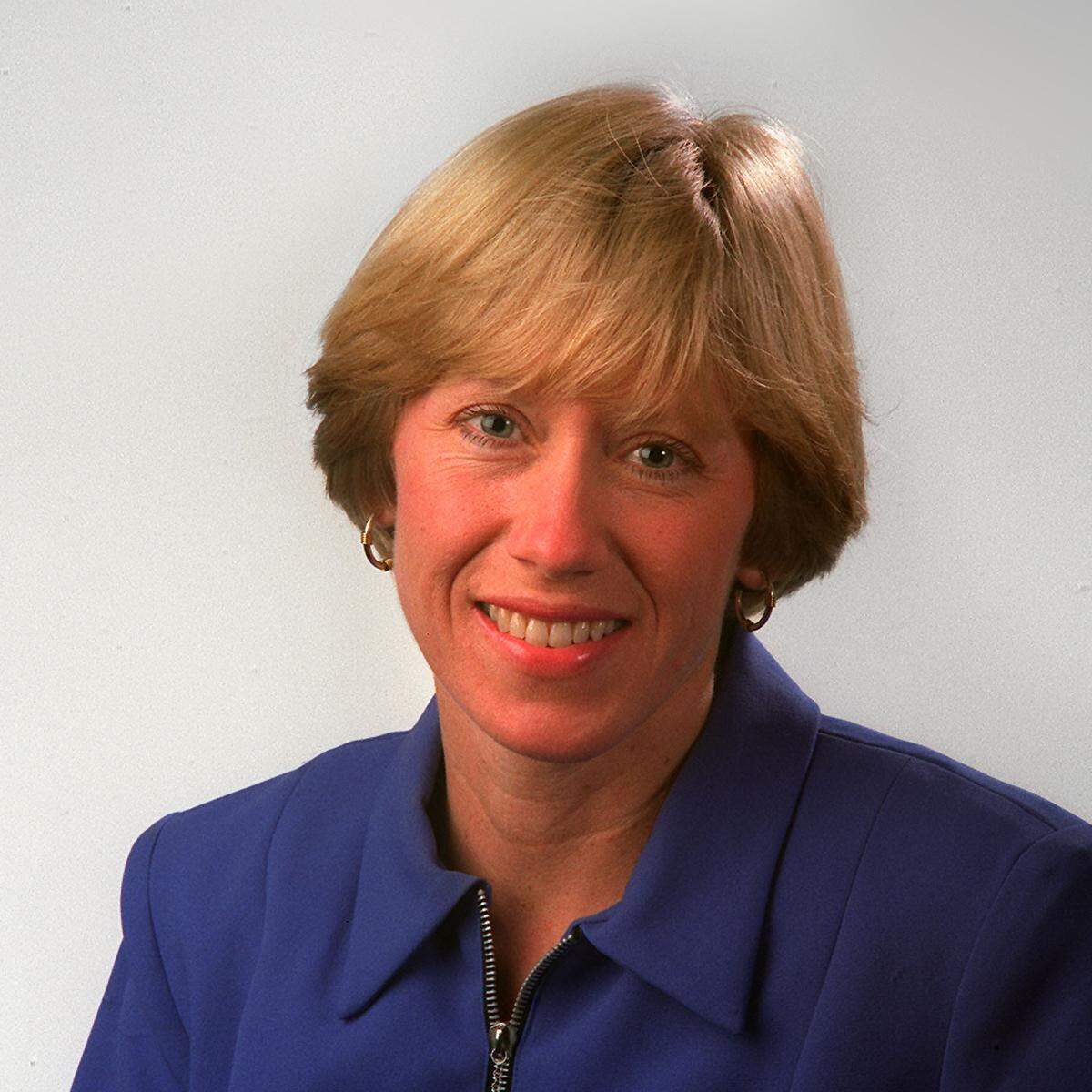
Black Lives Matter matriarch Fulton and Miami Gardens Mayor Gilbert vie for county seat
To Oliver Gilbert, it doesn’t matter that Sybrina Fulton, his opponent for the District 1 Miami-Dade County Commission seat, has risen to national prominence, taking the stage with activists in the Black Lives Matter movement and receiving campaign support from Hillary Clinton, Jay-Z, Jussie Smollett and Anthony Robbins.
“Campaigns are about conversations, not slogans,” Gilbert said. “I think people around the country are definitely paying more attention to this race because of the protests and Sybrina’s candidacy. And I think the kinds of issues we encounter in a Black city are reflected in our national self-examination of inequities in American society.
“But ultimately, all politics is local.”
Gilbert is running on his record as two-term mayor of Miami Gardens, Florida’s largest majority-Black city.
Despite her name recognition and campaign support from all corners of the country, Fulton is a political rookie who is running for office for the first time. Fulton, mother of Trayvon Martin, the unarmed teen killed by a neighborhood watch volunteer in 2012, has positioned herself as “the voice of the people.”
“I just want to make positive change,” she said. “I don’t want to be part of the system already in place. I want to break that business-as-usual mindset so people can stop moving to other cities, counties and states because they are not satisfied living here.
“I want people to trust me to fight on their behalf because they know I am one of them.”
Fulton and Gilbert are competing to replace four-term Commissioner Barbara Jordan as representative of the northwest region of the county on the 13-seat commission. Both are campaigning on the promise of using their knowledge of the inner workings of government to make government more responsive to the needs of residents.
Both see the civil unrest that has mobilized people in U.S. cities since George Floyd was killed by a Minneapolis police officer in May as part of a national reckoning on race. Uprooting discrimination — in housing, employment, education and transportation — will be part of their job as District 1 commissioner, they say.
“Four hundred years after the first Black slaves were brought to this country we still have to have this conversation?” Oliver said. “If you don’t transfer your outrage to outcomes I promise you we’ll be here again soon. If we all get mad and grab the attention of the news cycle and allow the anger to fade — we ought not let that happen again.”
He is pleased to see diverse crowds at demonstrations.
“It takes that type of consensus to forge real change,” he said. “We need to see injustice and inequality not as a Black problem but an American problem.
“If you care about what happened in Minneapolis and question why it keeps happening everywhere, you’ll vote. I hope that energy can be sustained through this election year. If we want to be taken seriously in this area of Miami we want everyone counted in the census and we want a high voter turnout.”
Fulton, a 24-year county employee, was counting on a quiet retirement until her son was shot to death by George Zimmerman. Since then she’s created the Trayvon Martin Foundation and joined other Black mothers whose sons were killed at rallies, marches and meetings across the country. She has been called one of the matriarchs of the Black Lives Matter cause. She attended Floyd’s funeral in Houston.
“I was like any other mother. I just had a regular life,” she said. “Then Trayvon’s death pushed me in a different direction. That’s why I feel so connected to the people. Even though I speak on a national level my passion is for my local community.
“I cannot say I’ve seen any significant changes here in my own community. I’m grateful that this movement for change is happening now but sad that it had to take all those lives being lost.”
Neither candidate supports sweeping calls for defunding police departments. Gilbert, a lawyer and former prosecutor in the state attorney’s office, says reshaping police forces with local personnel is the key to police reform. Fulton’s father was a Miami-Dade cop and she has faith in most officers but says the bad ones should be identified quickly, before they abuse excessive force as in the Floyd case, where Officer Derek Chauvin knelt on Floyd’s neck for 8 minutes, 46 seconds.
“There are incidents that need to be addressed more expeditiously,” she said. “What we don’t want to address is the elephant in the room: People don’t feel safe going to the ATM, gas station, grocery store. They don’t feel safe in their own community. Our first priority can’t be defunding the police but making sure people feel safe under the officers working in their community.”
Fulton said District 1, which includes Miami Gardens, Opa-locka and Carol City, “doesn’t have a problem with police officers shooting our residents. We need to address retaliation, the gangs, those types of things.”
Gilbert made an effort to recruit locally for the police department and provide mentoring to students interested in a law enforcement career. As a result, he said the Miami Gardens police department is now 50 percent Black compared to 13 percent nationwide. During his tenure 15 officers have been fired for misconduct.
“When I became mayor I said we’re not recruiting across the country but around the corner. Let’s change the culture organically,” he said. “I want the officers policing with and for the people they grew up with, the people they go to church with, the people they conduct business with.”
He said calls for reform of the criminal justice system are being heard.
“It’s a punitive system characterized by over-criminalization and over-policing. That will backfire,” he said. “In Miami Gardens, I said if someone is charged with a misdemeanor marijuana offense, why not put them in a diversion program rather than put them into the system. The system is forever. We need bail reform. You shouldn’t be sitting in jail because you’re poor. And we have to find a better way to treat and respond to mental illness.”
Gilbert credits the 39 percent reduction of crime in Miami Gardens to increased implicit bias, community policing and victim advocacy training and a $50 million investment at local parks for “innovative programs in STEM, tech, culinary arts martial arts, music production, performance, scuba diving, chess as a way to augment our police presence and give kids different pathways.
“The defund police movement has occurred as people have watched government defund social services,” he said. “A budget is a true expression of your priorities. Prevention of violence should come before suppression of violence.”
Fulton, 54, worked in five different county departments during her career, including transportation and public works and housing, where she was a hearing officer for Section 8 applicants, a counselor in the family self-sufficiency program and a relocation adviser for residents displaced by the razing of the Scott/Carver public housing project in Liberty City. That experience taught her where government is effective and where it falters. She aims to customize her still-evolving agenda to voters’ desires with the goal of keeping discontented longtime Black Miamians from moving away.
“I know what services we should expect,” she said. “The half-penny surtax for transit was approved 18 years ago. They didn’t do what they were supposed to do with all that money. I want to make sure we’re not left out of public transportation expansion plans. I want to make sure the North corridor goes all the way to the county line.”
Fulton says the county should learn from other large cities about how transit-oriented development fosters more affordable housing and less reliance on cars. She’s also contemplating creation of an independent transit authority as possibly “the only way to remove politics from the equation and, ultimately, to get things done.”
“We need to address the ridership crisis in Miami-Dade County head on by rethinking our bus system,” Fulton said in response to a Transit Alliance Miami questionnaire for candidates. “It is completely unacceptable that so many folks in the north and the south have trouble accessing efficient and reliable transportation. We must fix this issue. Beyond that, as we look into developing our micro-mobility infrastructure, we need to think about how we can make it more accessible to Black and Brown communities. Right now, we have bike lanes in some parts but absolutely no micro-mobility infrastructure at all in other areas. In some places people have to commute 20 minutes by car and even longer by foot to get to a bus stop or train station.”
Fulton considers Hard Rock Stadium and the Miami Dolphins to be major tenants of Miami Gardens. She’d like to see owner Stephen Ross invest more in the community rather than treat it as a patch of property where he hosts major events, including the proposed Formula One race that residents oppose.
“At the stadium — they do the bare minimum of what they could do,” she said. “Address traffic with better planning. A lot of people are constantly inconvenienced just getting into or out of their driveways. How about a 5-10-15 percent discount on event tickets for residents? The jobs created at the stadium are good but they are all part-time jobs, not the types of jobs where you can make a living.”
Fulton has criticized the county’s response to the coronavirus pandemic as haphazard and confusing. County leaders left residents “drifting,” she said.
“Next time a pandemic like this happens we have to be prepared, just as we prepare for hurricanes with homeowners and subcontractors,” she said. “We need a detailed plan. Right now, we have to wait until we’re out of this season. We have to be still. People are dying.
“But once this passes we need to give businesses a better opportunity to recover and survive. It’s not that they lack knowledge or ability. They’re not given opportunities.”
Fulton emphasizes “economic opportunity for all” as central to her platform. The combination of low wages and expensive housing is forcing people into poverty — or to find a better life elsewhere, she said.
“Forty percent of local families earn less than what it costs to live here,” she said. She wants to support small and minority businesses who deserve more county contracts and “attract investment to our region and position Miami-Dade as an economic leader with good-paying jobs for all — not just those at the top of the economic food chain.”
Gilbert, 47, gave up his law practice to serve as mayor for a $42,000 salary. He said his eight years in office have enabled him to pinpoint how government can operate more efficiently for the benefit of constituents.
Improving an inadequate transportation system that has not kept pace with growth and has over-emphasized road construction is a major part of his platform. He advocates immediate streamlining of the outdated bus route network and adding dedicated bus lanes; better coordination of trolleys and Metrorail; more inclusion of northwest Miami-Dade in Florida Department of Transportation planning; solutions to the first-mile, last-mile connection problem for public transit commuters and improved bike and pedestrian infrastructure.
“Transit-oriented development is critical to solving our affordable housing shortage,” said Gilbert, who supports faster implementation of the county’s SMART Plan. “Teachers and young professionals can’t afford to live here. We’ve got to aggressively tackle fundamental supply and demand, infill and density questions.”
Gilbert said he’s worked hard to develop a relationship with Ross and stadium leadership.
“I don’t look at Hard Rock Stadium as an adversary anymore,” he said. “The stadium is one of the largest corporate givers in the county. A lot of economic development has come about as a result of the stadium, such as two new hotels coming on line. But not every event is right for that venue in that location. As in any relationship, sometimes you have to say ‘No.’”
Gilbert wants to examine federal coronavirus relief funding and “see how much can be pushed to mom-and-pop businesses,” which dovetails with his plan to expand an entrepreneurship assistance program he initiated, recognizing that “small businesses change the fabric of the community by providing jobs and driving the economy of the area around them.”
“When a small business reopens and has difficulty meeting payroll, how can we absorb some of that cost? Larger ones have the reserves to carry them through,” he said. “As mayor we managed to cut impact fees so we could grow the small business community.”
Fulton has tapped into a national small-donor network to raise $477,245.86, according to recent disclosure records. And thanks to endorsements from Clinton, Al Sharpton and New Jersey’s Cory Booker, she’s also received support from various celebrities.
“A Mother of the Movement to prevent gun violence, @SybrinaFulton has already helped turn tragedy into action,” read last year’s Twitter post from Clinton about Fulton, who joined the 2016 Democratic nominee for two weeks on the presidential campaign trail. “If you can, contribute to help her win and make the change we need.”
“People want to rebuild trust in politicians,” Fulton said. “I’m the right person for that. I’m passionate about doing what is right. A lot of politicians give you rhetoric that sounds good to the ear. People will say almost anything to get elected. But I truly understand the fight of the employee and the fight of the taxpayer. I put people first.”
Gilbert has disclosed $940,038 in contributions, relying on traditional South Florida political donors that include lobbyist Ron Book, charter school company Academica, the stadium corporation tied to the Miami Dolphins and real estate, construction and law firms.
Like Fulton, Gilbert lives in Miami Gardens. Being mayor isn’t an easy job when it’s your hometown.
“I do feel extra pressure because I was born and raised here, my mom lives here, I’m living in the house I grew up in until age 10, and so I’m basically mayor of 113,000 friends and family,” he said. “When people say bad things about Miami Gardens, I can honestly say it is not a bad place and we are not bad people. So many people here do extraordinary things and have built extraordinary lives. We fixed problems. I think we changed expectations in Miami Gardens.
“As for the county, let’s stop seeing it as 13 districts with Haitians, Cubans, Blacks, whites. See it as one place. One transportation and housing ecosystem. For too long we’ve been governed by people who say they want change in Miami-Dade. Let’s actually figure it out this time.”
This story was originally published July 23, 2020 at 6:00 AM.