‘A sticker and more sanitizer’: How South Florida votes in the coronavirus pandemic
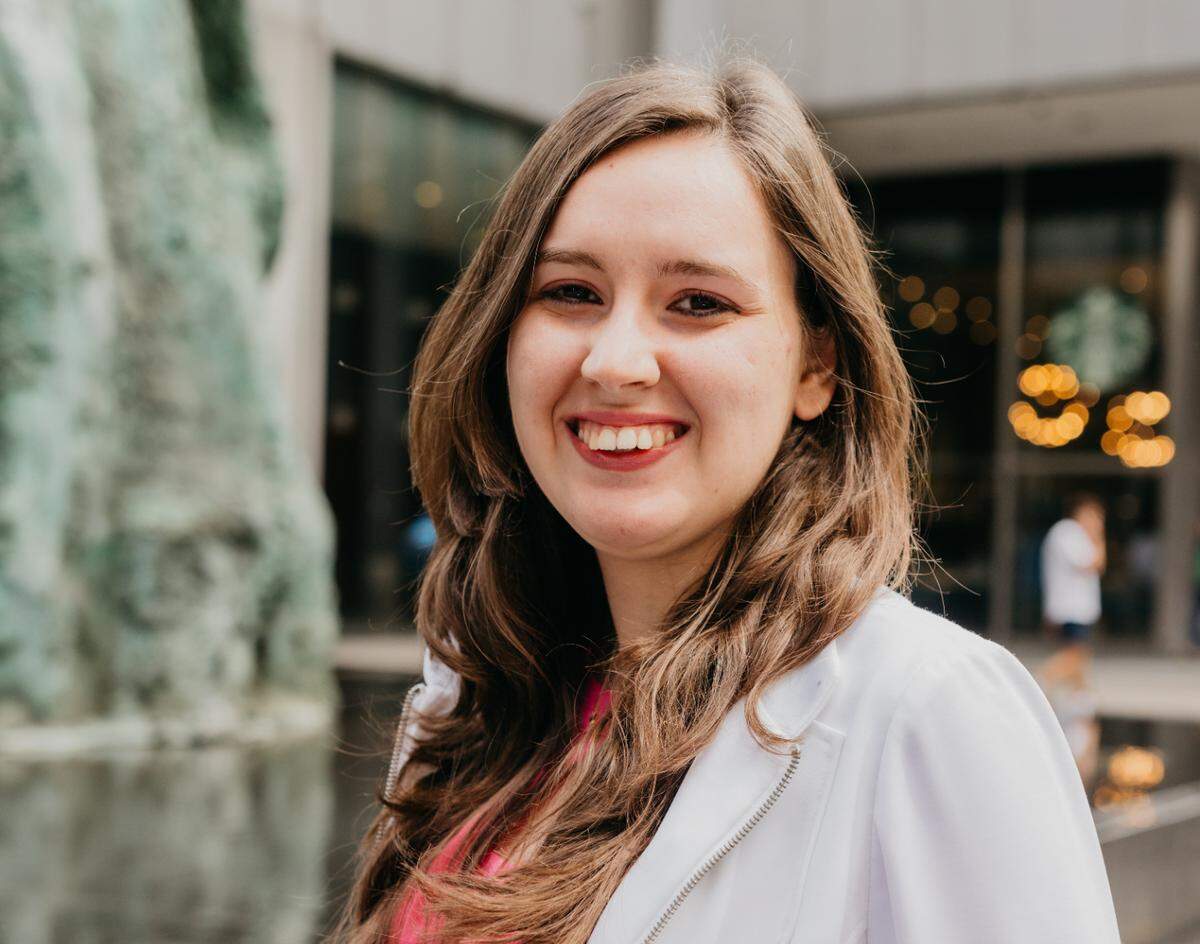
Wearing an “I Voted” sticker below her surgical mask, Rosalie Shea, 76, said coronavirus wasn’t going to stop her from voting for Joe Biden.
“I’m staying home,” she said outside her polling place Tuesday morning in a break from her self-imposed isolation during the COVID-19 pandemic. “But this election was so important to me. I put on my mask and my gloves, and I came out to vote.”
Even with strains on staffing statewide and concerns about the surface-touching required, voters continued casting ballots Tuesday in what so far has been described as a primary day unfolding without disruptions during the coronavirus crisis.
Miami-Dade said that it opened all of its nearly 580 polling places on Tuesday at 7 a.m., and that about 92 percent of the 4,800 poll workers scheduled for shifts reported for duty.
Broward cited limited “hiccups” throughout 421 locations the county said would be stocked and ready with hand sanitizer, wipes and soap. “Things have gone remarkably well,” said Elections spokesman Steve Vancore.
A precinct at a Hollywood church didn’t open until after 8 a.m. because nobody at the parish was there to open the doors, said Steve Vancore, spokesman for the county’s Elections Department. Some voters also showed up to the wrong precincts thanks to a last-minute scramble to move 12 voting places out of senior centers being closed to the public as a protection against the COVID-19 pandemic.
Miami-Dade closed off six voting places housed in senior centers as part of the county’s effort to isolate older people from coronavirus exposure. Seniors living there were still allowed to vote at the original location, or use a vote-by-mail ballot, according to a county press release. Two other polling precincts in Bay Harbor Islands were moved after a possible COVID-19 exposure at buildings there.
At Hollywood Hills Elementary, it didn’t take Patrick Van Scyoc long to vote . “It was insanely easy,” he said. The Miami-Dade teacher didn’t want to pass up the chance to vote for Bernie Sanders. “It was incredibly important,” said Van Scyoc, 34. “I wanted to make sure my vote was cast.”
Some voters complained about having to touch the folders poll workers use to obscure ballot after ballot. Others reported a disappointing approach to coronavirus by elections supervisors, be it paltry sanitizer offerings or some poll workers not wearing gloves.
Gabrielle Milanes said her West Kendall precinct at Claude Pepper Elementary wasn’t ready for hand cleaning.
“I was expecting them to have hand-sanitizing stands when you headed in,” said the 27-year-old care coordinator. “They had nothing. They were all wearing gloves. That was it.”
Shaan Patel, a Miami developer and urbanism blogger now starring on the Bravo show “Family Karma,” said he was not impressed by the sanitation standards when he visited the Gables American Legion polling station in the afternoon. He said the first poll worker to greet him had one glove on, and the man who took his ID had no gloves. “I brought my own pen,” Patel said.
With her primary day mask, Shea said coronavirus concerns wouldn’t divert her from participating in an election that she described as “more important than any voting I have ever done since I was allowed to vote. ... We need to get rid of Donald Trump.”
The pandemic brought calls to delay voting in the primary and not force people to choose between casting ballots and staying home. A coalition of racial justice organizations are suing the state in federal court to force elections officials to extend the vote-by-mail deadline for 10 days to accommodate the disruption caused by the pandemic.
“We are seeing no lines, very low voter turnout, elderly folks in different parts of the state have been told not to vote, and a lot of those folks don’t know they have an option to get an affidavit and have someone else get them a ballot,’’ said Kira Romero-Craft, attorney for LatinoJustice PRLDEF in Orlando.
Carlos Naranjo, an organizer for New Florida Majority, one of the plaintiffs in the election suit, said it was tough getting people to come out and vote. “All over the place people are feeling scared and afraid, and rightly so,” he said.
Florida law allows voters to designate someone else to pick up their vote-by-mail ballot for them on Election Day, but they must complete a signed affidavit and have the person who returns the ballot also complete an affidavit.
Not many people are aware of the cumbersome process, said Chiraag Bains, director of legal strategies at Demos, one of the groups that filed the lawsuit.
Further complicating that option, Miami-Dade County, which has had a history of problems with absentee ballots, has a more stringent set of rules than the state.
The county prohibits anyone but a family member from obtaining a ballot for someone else and in order for someone to claim they can’t come to the polls because they are sick, they need a doctor’s note to justify it.
“At the very least, there is major confusion about even the availability of the narrow and burdensome emergency voting procedure that does exist,’’ Bains said.
For all of the controversy and uncertainty, the coronavirus emergency managed to make voting a bit more convenient for a few who had to go to the polling place for other reasons. Toussaint L’Ouverture Elementary School became a one-stop shop on Tuesday.
While students came by to pick up hot breakfast and lunch, and a laptop for distance learning if they hadn’t already, some of their parents stopped by to vote in the Democratic primary election.
Temidayo Ogedengbe and her 9-year-old daughter, Laila, had their hands full with a laptop and breakfast to-go.
“We’re just taking it one day at a time,” Ogedengbe, 32, said. “It’s going to be interesting.”
Ogedengbe said voting went smoothly at the precinct. She said she voted for Sanders, “because he is going to truly bring about change.”
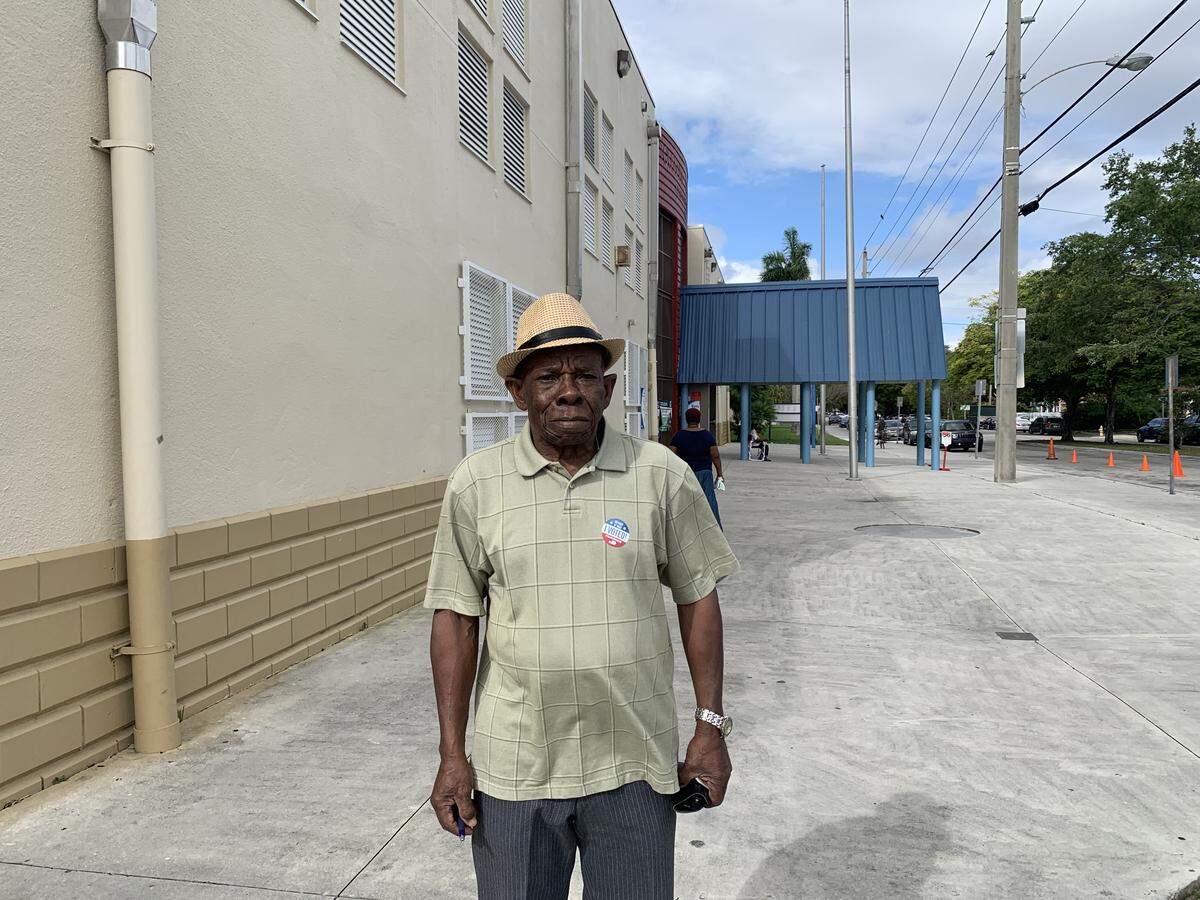
Joseph Petithomme is 85 and walked over from his home ready to vote. He’s a Biden voter.
“That’s the one I like,” he said.
For Jan Bartleson, voting for Joe Biden on primary day in Coral Gables was easy and unremarkable, except for the reminders of the frightening pandemic underway.
“It was super easy,” said Bartleson, a psychologist with the county school system. She was one of only two voters at American Legion Post No. 98 on Tuesday morning, but even that size of a crowd can be a cause for alarm as local governments try to drastically reduce personal contact and exposure.
Bartleson said she was reminded to take a few steps back from her fellow voter, then quickly cast her ballot for Biden and headed for the exit.
“They offered more sanitizer and a sticker,” she said.
Miami Herald staff writers Mary Ellen Klas, Bianca Padró Ocasio, Carli Teproff, Colleen Wright and video journalist Emily Michot contributed to this report.
This story was originally published March 17, 2020 at 11:34 AM.