
These sharks are named after politicians — and they’re racing to predict the election
Punxsutawney Phil is the psychic groundhog who predicts winter’s duration. Paul the octopus was a soccer savant who predicted World Cup match winners.
But if you want to know who is going to triumph in two of Florida’s most hotly contested midterm election races, bet on the predictive powers of four mako sharks swimming around in the Atlantic Ocean.
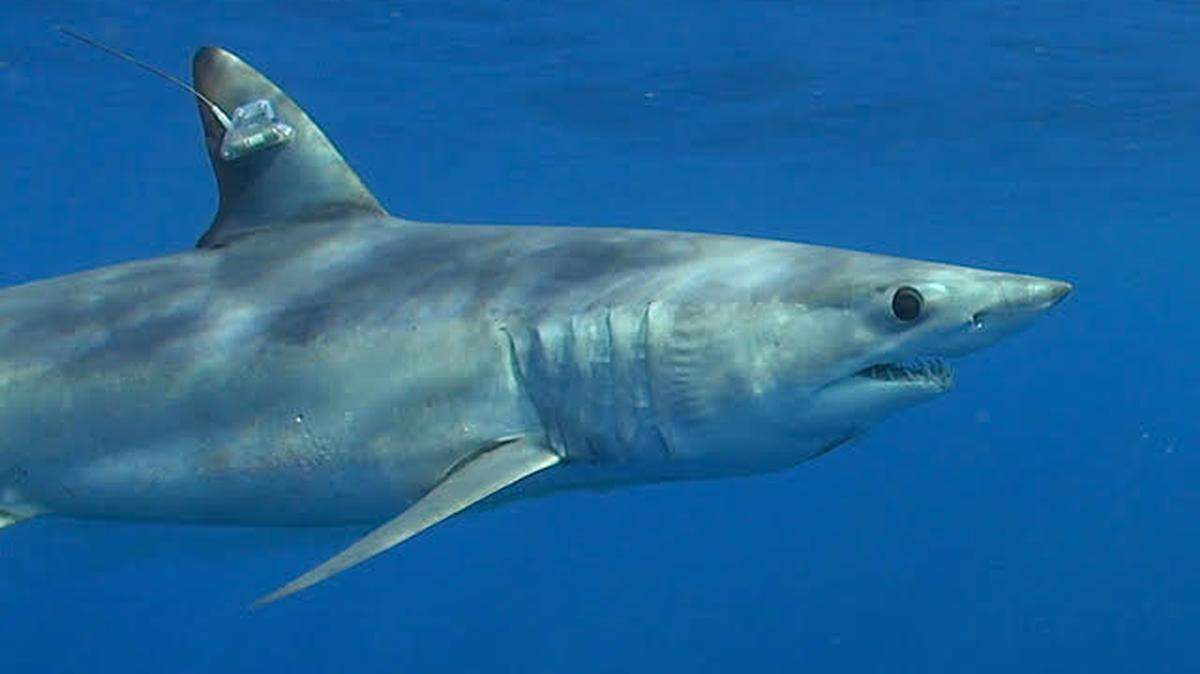
Forget the polls. Go with animal oracles Bill, Rick, Andrew and Ron, the toothy prognosticators in Nova Southeastern University’s Shark Race to the U.S. Senate and Governor’s Mansion.
Think sharks are all bite and no brain? NSU’s winner of the 2016 Shark Race to the White House correctly picked Donald Trump over Hillary Clinton to become one of the few prescient pundits who predicted the upset.
Marine scientists at NSU’s Guy Harvey Research Institute are monitoring the mileage logged by four tagged makos who have assumed the identities of U.S Senate candidates Bill Nelson and Rick Scott and state gubernatorial candidates Andrew Gillum and Ron DeSantis. The sharks that swim the most miles by Saturday win the race.
“Once again we turn to our sharks for their wisdom and expertise,” said Richard Dodge, dean of NSU’s Halmos College of Natural Sciences and Oceanography. “The sharks did a pretty good job two years ago, so let’s see how they do this year.”
He emphasized that NSU’s sharks are non-partisan.
Voters can follow the sharks in near real-time online via NSU’s very cool Shark Race website (www.ghritracking.org/flrace), which allows visitors to “animate” the sharks’ tracks to see where and how far they have traveled.
Currently, both Democrats and Republicans have reason to hope, as the Nelson shark — located east of Daytona Beach with 785 miles logged — is ahead of the Scott shark — located east of Ocean City, N.J., with 131 miles logged.
The DeSantis shark — due east of Virginia Beach, Va. — is well ahead of the Gillum shark, who seems to have concentrated his travels east of Nags Head, N.C.
But the mileage totals could change significantly when NSU’s researchers do another data dump on Friday. The sharks have been tagged with a tracking device on the dorsal fin so the mapping of their journeys depends on how often they surface long enough to register a satellite-detected ping.
“These sharks have some big fins to fill,” said NSU spokesman Joe Donzelli. “In 2016, the Clinton shark hung out in one area while the Trump shark swam way out in the middle of the ocean.”
The mako, which is NSU’s mascot, is the fastest species of shark, known as the “cheetah of the sea.”
“Some sharks we’ve tagged have tallied many miles, venturing way out into international waters, while others have hugged the coastline,” said Mahmood Shivji, director of NSU’s GHRI and a professor in NSU’s Halmos College. “Over the years we learned many things about the paths mako sharks take, but each shark has its own surprises, and that’s what lets us know there is so much more to learn about their behavior.”
The sharks do not have any special protection just because they’ve been tagged.
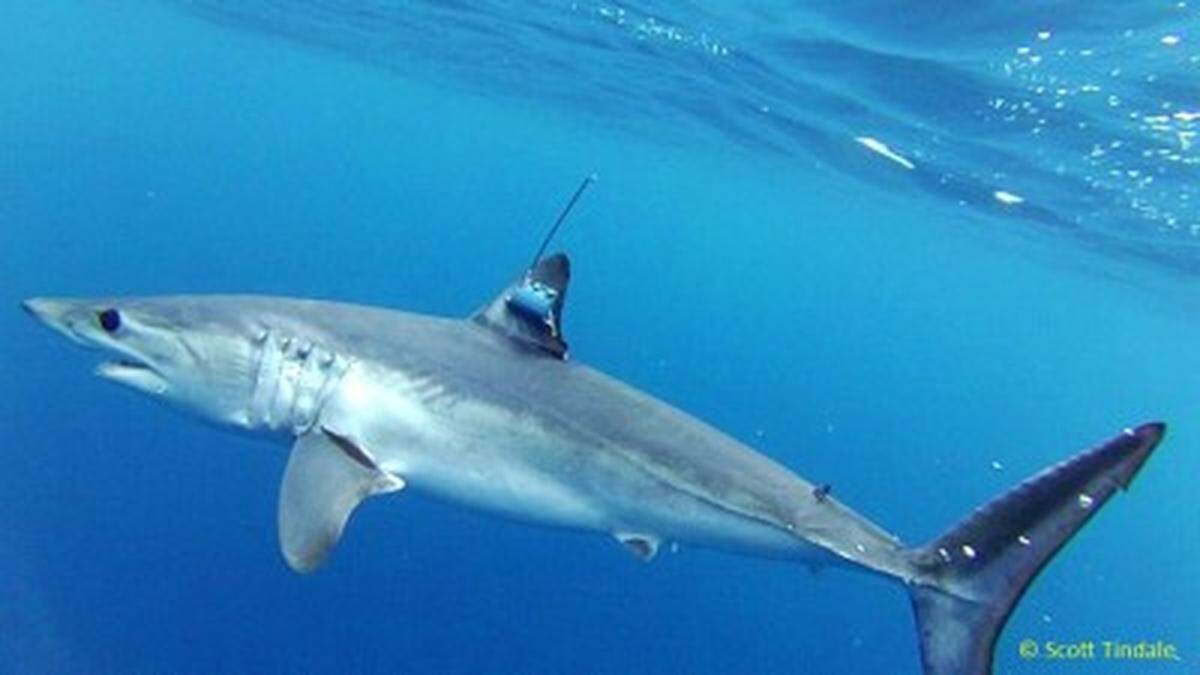
“We’ve lost upwards of 30 percent of the sharks we’ve tagged,” Shivji said. “It illustrates just what these animals face in the wild. In fact, our tracking studies have demonstrated that mako sharks in the western North Atlantic are being over-fished.”
Up to 100 million sharks per year are being killed worldwide — up to 70 million of those hunted for the fin trade, Shivji estimates.
“Sharks are predators at the top of the food chain, so if the shark population continues to be decimated, the entire ecosystem will be thrown out of whack,” Donzelli said.
The Shark Race was created to raise awareness of research at NSU’s Save Our Seas Shark Research Center, which includes the sequencing of entire genomes to better understand how sharks rapidly heal from wounds, and to see which genes underlie their potentially lower incidences of cancer.
NSU’s sharks join the ranks of Punxsutawney Phil, the Pennsylvania groundhog who checks for his shadow annually to project how much longer winter will last, and Paul, the late octopus whose prognostication record was an amazing 12-2. During the 2010 World Cup in South Africa, Paul, who lived in Germany, was given a choice of two feed boxes, each adorned with the opposing teams’ flags, and he was uncannily accurate, especially when picking Germany’s wins and Spain’s championship victory over the Netherlands.
This story was originally published November 2, 2018 at 6:00 AM.