
No FIU students are suspended over racist group chat yet. It’s roiling campus
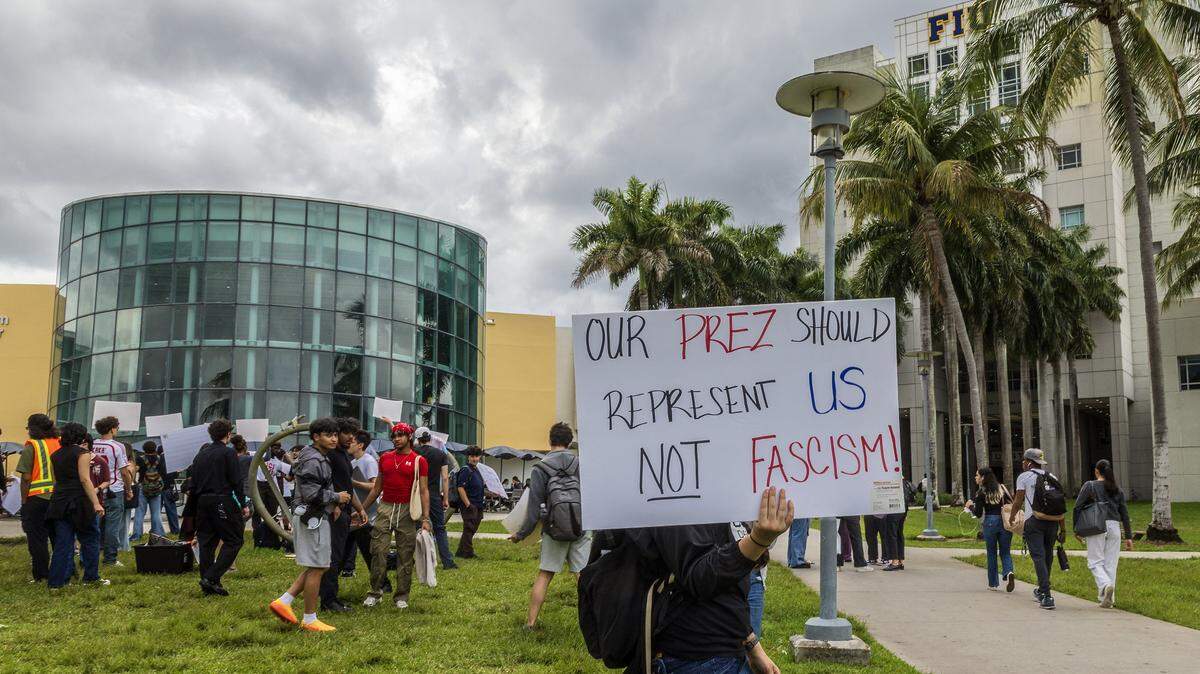
Florida International University President Jeanette Nuñez is being sued for bringing conduct charges against students in a racist group chat — and protested on campus for not doing enough.
None of the involved students have faced suspension or expulsion since the slur-filled chats came to light five weeks ago and Nuñez announced stiff punishments were on the table. The university has been investigating the chats since last fall, according to a federal First Amendment lawsuit filed by four of the students facing conduct charges.
For at least one of the students, an attorney for FIU told a federal judge a hearing was “likely to be held in mid-April” to determine the consequences for the charges, according to court records. But that hearing has not yet been scheduled, the students’ attorney told the Herald.
The drawn-out disciplinary procedure is enraging some students on campus who say racism is being treated with leniency, even as Nuñez, Florida’s former Republican lieutenant governor, says her efforts to punish the chat participants show that “this is not what FIU stands for.”
“We are in a situation where FIU is directly enabling racism, fascism, in a full form and there’s no accountability,” FIU student Carlton Daley told the Miami Herald during a protest he organized against Nuñez this week.
FIU declined to comment, but has previously defended their process as a protection of students’ First Amendment rights.
Nuñez’s handling of the fallout is earning her critics across the ideological spectrum — and it’s a likely precursor to the free-speech battles to come on Florida campuses now that a new state law taking effect in July permits immediately expelling students who promote certain outside groups.
Gov. Ron DeSantis, who pushed FIU’s Board of Trustees to install Nuñez as university president, signed a law this week giving state agencies the power to immediately oust students who’ve promoted groups the state deems as “terrorist” organizations. The law gives the state the unusual power to make these designations and punish organizations, an authority historically limited to the federal government.
DeSantis said this week he’s working to designate the Muslim civil-rights group Council on American-Islamic Relations as a terrorist organization using his new power, and he’s widely believed to have started pursuing the law to target students protesting Israeli attacks on Gaza.
Students like Daley told the Herald there’s a double standard toward free speech on campus — and that other students’ rights have already been infringed upon in crackdowns on protestors.
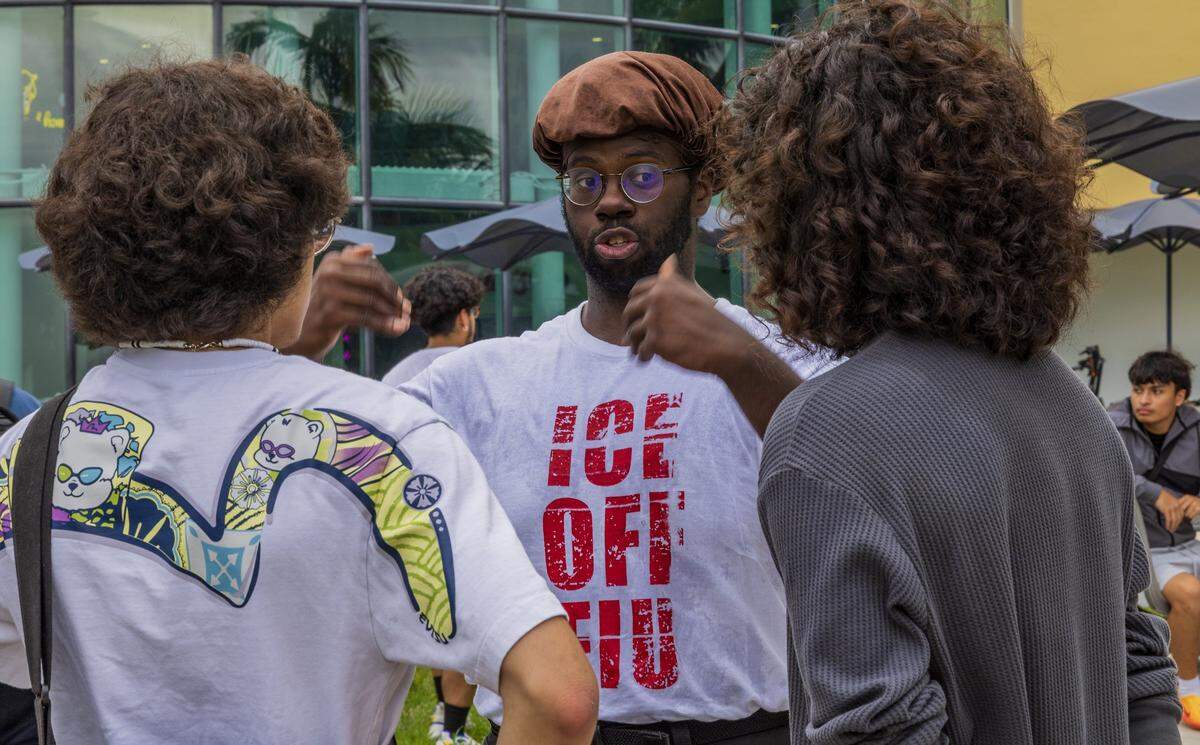
He pointed to the six students who were sent code of conduct charges this week after they declined to give their names to police officers after a March protest against the school’s partnership with Immigration and Customs Enforcement. Students stood up silently during a forum Nuñez was holding wearing shirts that read “ICE OFF FIU.”
“They’re so driven and so decided to quell organized movements, but when faced with a real threat of racist people talking [in the group chats] about potentially killing Black people — they didn’t say Black people, they said the n word — they are so haphazard about getting rid of it,” he said.
Lawsuit threats
Nuñez is facing criticism from multiple angles.
Attorney and far-right politician Anthony Sabatini is spearheading the group chat participants’ First Amendment case. He’s also representing the University of Florida’s College Republicans in a separate lawsuit after the university suspended the club after photos emerged of a member appearing to do a Heil Hitler salute.
In the FIU case, he’s arguing to Miami District Court Chief Judge Cecilia Altonaga that any action or disciplinary hearings against students over group chat messages violates their First Amendment rights.
According to Sabatini, the publicly announced disciplinary process in the wake of widespread backlash to the chats seemed to screech to a halt after four students sued the school. The university declined to comment on the ongoing litigation.
Lawsuit filings show the former Miami-Dade GOP Secretary Abel Carvajal was charged on March 11 with “assisting” in aiding, promoting, concealing or facilitating Student Code of Conduct violations from his role in creating the chat.
Former College Republicans recruitment chairman Dariel Gonzalez was issued a “no contact” directive from the Office of Civil Rights, barring him from communicating with a woman he discussed in the chat, according to the lawsuit. It was not immediately clear from the lawsuit what additional charges he faced.
Sabatini is representing two additional students who have been charged with violating the school’s student code of conduct based on separate chat logs that have not previously been reported.
Those chat logs, included the lawsuit filings, show Gonzalez saying “Nazis did it and it worked out great. Amped them up with amphetamines and sent them to rape,” in a conversation about people using drugs in the military, and wrote “Blitzkrieg was based as f–k,” referencing a Nazi military strategy. He did not respond to a request for comment.
One student, Ethan Ratchkauskas, is accused by the school of posting in a group chat about how someone would have to “swiss cheese the professor,” later clarifying that meant “putting holes in them via means of firearm.” He declined to comment through his lawyer.
Sabatini is arguing in federal court that the comments were made in a “humorous and hyperbolic context,” and that they have free speech protections to say such things. The case is ongoing; the judge has not yet ruled on the merits of his argument.
A Republican Party reckoning
Nuñez, a former state lawmaker, has been the school’s top administrator since last year. After the Herald and other media reported on the racist group chat made up primarily of conservative FIU students, Nuñez said the school “will not tolerate violence, hate, discrimination.”
The response was praised by Republican politicians, who widely denounced the content of the chats, which was filled with slurs for Black, Jewish and gay people and included graphic calls for violence against Black people.
READ MORE: ‘Nazi heaven’: Inside Miami campus Republicans’ racist group chat
Group chat participants included then-leaders in the College Republicans and Turning Point USA chapters on campus and then Miami-Dade County GOP secretary.
While no FIU students have been suspended, according to a statement from President Madeline Pumariega, Miami-Dade College “dismissed” student William Bejerano, who made the most violent comments in the chat leaked last month. He was also barred from entering FIU’s campus, according to Nuñez.
On campus this week, a wide range of students remained skeptical of Nuñez’s handling of the incident.
“We would have appreciated if her response to it was not necessarily harsher, but more transparent, and if she communicated with us more about what exactly was going to happen regarding the situation beyond just that it’s under investigation,” said Joshua Espinoza, who is president of FIU’s College Libertarians.
FIU sociology professor Zachary Levenson said the university has had a disproportionate reaction to some student-led protests depending on which political party their cause aligns with.
In the weeks after last month’s ICE protest, FIU administration circulated a survey asking students how colleges should “handle students who disrupt invited speakers,” according to Levenson and screenshots of the survey. The survey included options for punishments like requiring the student to pay a fine or suspending the student for 30 days.
“They’re having students vote on punishment like this is some kind of screwed up reality show,” Levenson said.
According to FIU, the question was part of a survey mandated by a 2021 Florida law requiring annual “intellectual freedom and viewpoint diversity” assessments, and the timing and questions were unrelated to any specific incident on FIU’s campus. The survey is created and administered to students statewide by the Florida Board of Governors, not by the university.
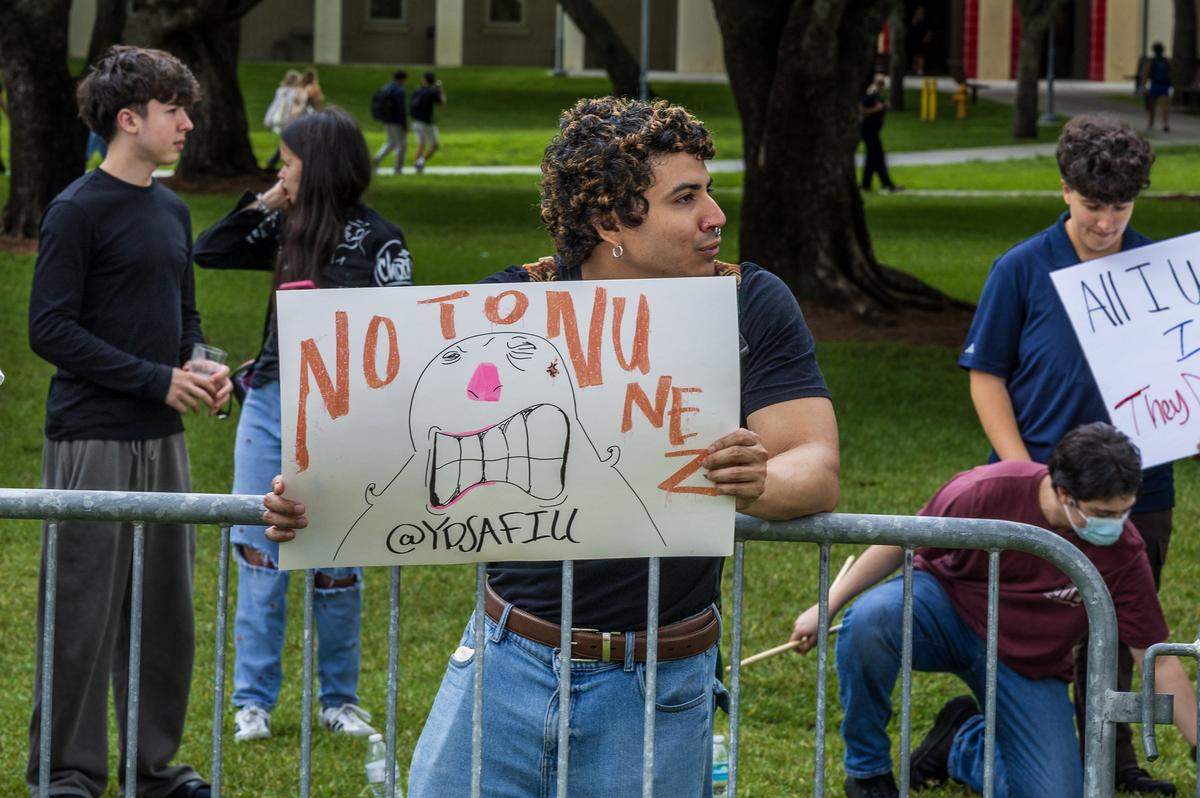
FIU student Eric Franzblau, who attended another campus protest against Nuñez this week, said some of the questions in the student survey stood out as suspicious. He believes the school is trying to manufacture a negative response toward certain student groups — especially those on the left — protesting on campus.
Freshman marine biology student Jordan Fernandez was also part of a group of about 40 students chanting “shame” at Nuñez outside of a Board of Trustees meeting this week. The protest was over a wide scope of actions by FIU, primarily focused on the school’s partnership with ICE. He wants to see the students involved in the group chats expelled.
The administration doesn’t “hear our voices, they don’t hear our fears that we have. I know many people who live in fear because of these group chat messages existing,” Fernandez said.
“They should not be allowed to walk onto a campus that harbors so many diverse people, that’s meant to be a safe haven.”
This story has been updated to reflect information from FIU that the student survey sent out last month was mandated by the state and not linked to an on-campus incident.
This story was originally published April 11, 2026 at 5:30 AM.
.jpg)