
Florida’s state-run labs found toxins in infant formula, governor says
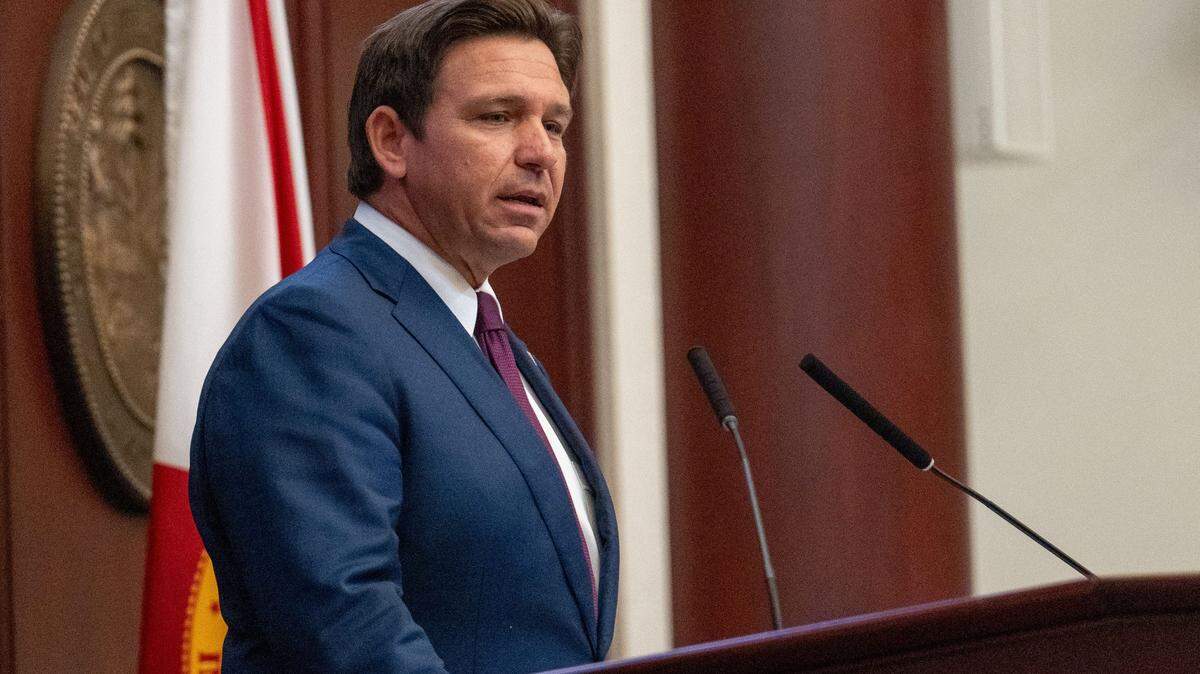
The state announced Friday that its testing has uncovered a variety of toxins at amounts it said were above federal standards in 16 infant formulas on the market.
The findings, announced during an event in Bartow led by Gov. Ron DeSantis, are the result of a testing initiative as part of the state’s “Make America Healthy Again” Commission.
The commission, led by Florida first lady Casey DeSantis and Lt. Gov. Jay Collins, was launched last year to support and amplify federal efforts by Robert F. Kennedy Jr., the U.S. secretary of health and human services, to examine the causes of chronic diseases.
State-run labs tested 24 brands of formula for pesticides and four heavy metals: mercury, cadmium, arsenic and lead. Ingesting heavy metals at high levels over time is harmful to people, especially infants, because they can accumulate in the body’s tissue and cause poisoning, along with brain damage, kidney and liver failure.
Florida found elevated levels of at least one heavy metal or pesticide in 16 brands of formula. It did not specify which pesticides were part of the tests.
The state says it detected the most toxins, arsenic, cadmium, lead and mercury in Similac Soy Isomil powder. The state found varying levels of each contaminant in the formula, including a maximum of 14.99 parts per billion of lead.
That number far exceeds what the U.S. Environmental Protection Agency said is safe for drinking water, which is no amount of lead. While it does provide guidance on what nutrients should be in baby formula, the U.S. Food and Drug Administration does not approve infant formulas.
Two other formulas had three toxins detected, according to the state: Enfamil Prosobee and Enfamil Infant NeuroPro Ready to Use.
The company that makes Similac did not respond to requests for comment Friday.
Mead Johnson Nutrition Co., the maker of Enfamil, pushed back on the state’s announcement and said it is committed to the highest levels of quality and safety.
“We are disappointed the state of Florida announced results without sharing any data or testing methodology, which may unnecessarily scare parents and caregivers. We are concerned this testing, without the proper scientific, regulatory and environmental context, can lead to oversimplified statements, not representative of the product category or industry,” the company said in a statement.
It added that “many elements referenced in today’s announcement are naturally present in the environment, drinking water, the food supply chain, and cannot be completely avoided.”
Casey DeSantis said Florida officials have informed Kennedy about the findings and are working with him on possible changes to expand the number of formula types available under the federal supplemental nutrition program for women, infants and children, known as WIC.
The federal government limits which brands and types of formula mothers can purchase under the program. DeSantis said state officials were in discussions with Kennedy to include formulas that are toxin-free based on Florida’s findings.
Florida officials have been testing other food products, too, and will make more announcements about their findings in the coming weeks, Ron DeSantis said.
“We are not going to stop at baby formula,” he said. “While infant formula is regulated under federal law … Florida can help in a meaningful way through independent ongoing testing to continue to drive accountability. ... Parents should not be expected to verify the integrity of their products.”
Florida Surgeon General Joseph Ladapo offered no details on which state officials did the testing or its costs.
He and DeSantis encouraged other states to follow Florida.
“We need more people, more states doing this. The citizens depend on government for certain specific things … and this is one of those things,” he said.
Last year, the publication Consumer Reports tested 41 infant formulas primarily for lead and arsenic. Its results differed from the state’s for some varieties tested, including Similac’s Soy Isomil, which was contaminant-free in Consumer Reports’ testing but had some heavy metals in the state’s.
This story was originally published January 9, 2026 at 3:19 PM.