Miami’s federal workers hit the bread line as shutdown nears its fourth week
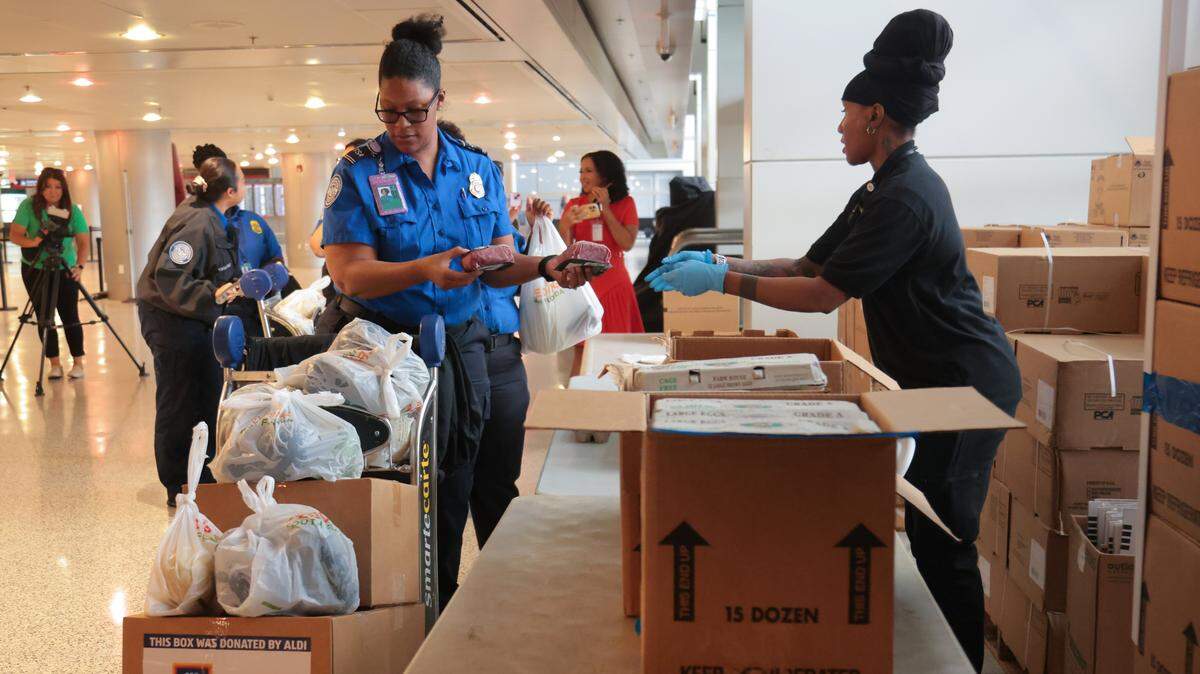
Backpacks borne and carry-ons in tow, travelers at Miami International Airport shuffled through serpentine security lines on Friday. Transportation Security Administration agents shepherded them into and out of metal detectors, sending a steady stream of passengers toward their gates.
Flowing the opposite direction was a separate trickle of blue-uniformed people. It started in the security lines and dribbled out to the departures hall, down the escalators, through the airport’s sliding doors and into a parking lot, where TSA agents pooled under the midmorning sun.
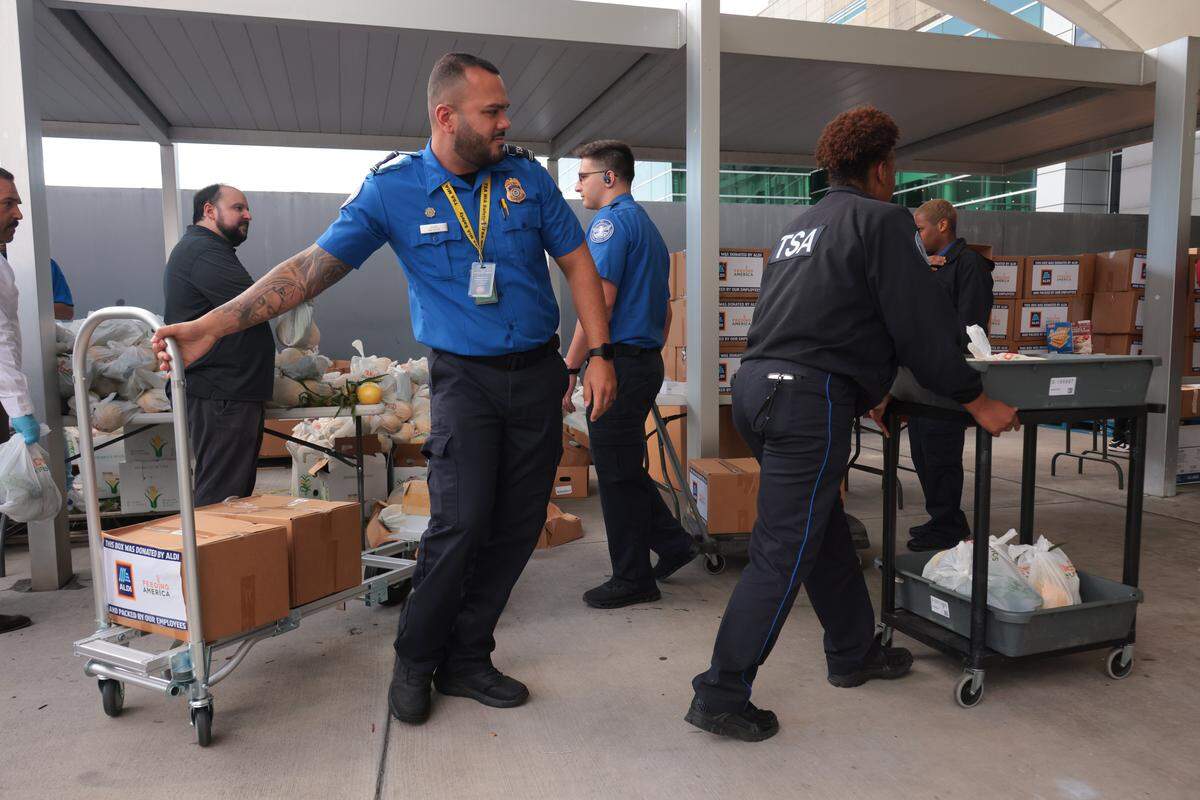
They made their way through a different queue — a bread line — availing themselves of the free food that Feeding South Florida, the region’s largest food bank, had bussed in earlier that morning.

It had been 14 days since any of them had been paid, thanks to the federal government shutdown. And like many of the 1.4 million federal employees who have now gone weeks without pay, they were feeling the pinch.
Pushing rented luggage carts, dozens of airport security officials loaded up on jugs of milk and bags of fruits and vegetables stacked atop boxes of nonperishables and next to cartons of eggs.
“It’s been a difficult few weeks,” said TSA agent Diana Perez. She’s been living off her savings, but she’s not sure how long they — or the shutdown — will last.
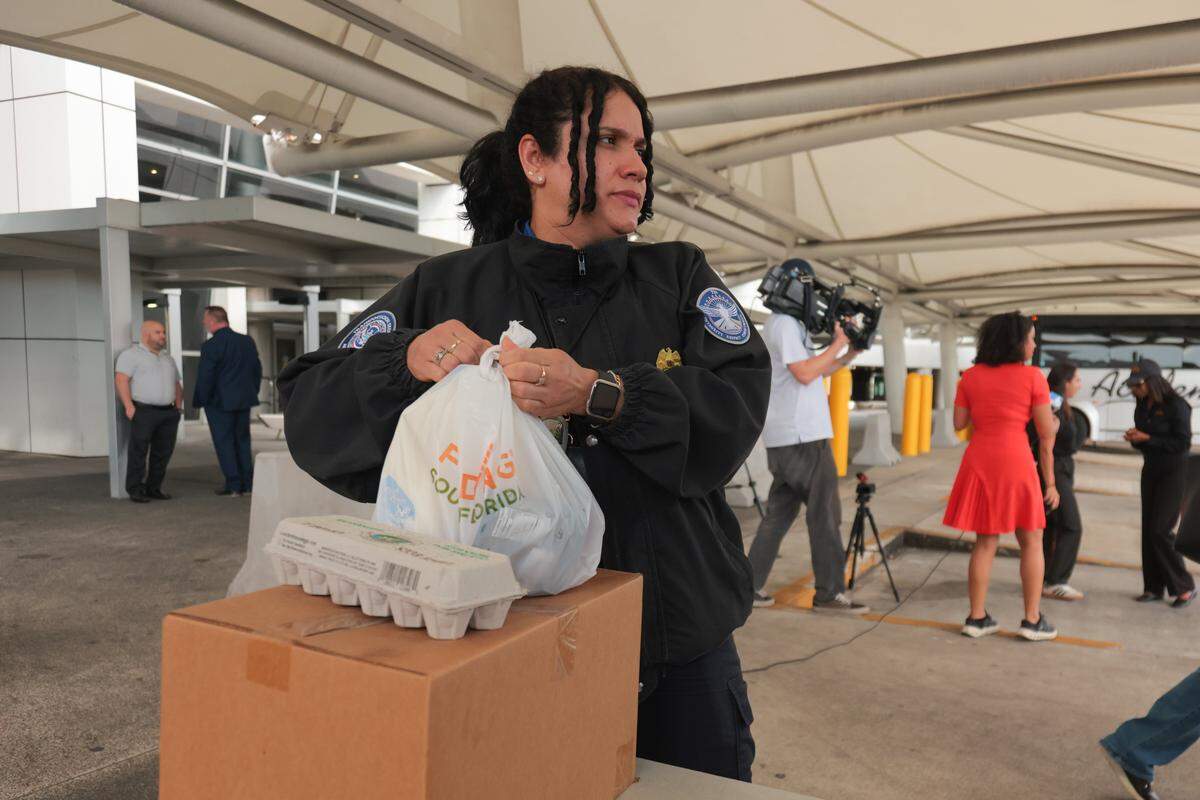
This is the first time Perez has had to weather a government shutdown. The previous one, which ended in January 2019 after a 35-day streak, was the longest ever. The current closure, now on its 24th day, is already the second longest in American history, and there are few indications that it will end anytime soon.
“I’ve never lived one of these,” said another agent, who didn’t want to give his name. “I still have a little left over from my last check,” he responded when asked how he’s getting by, before a woman wearing a Department of Homeland Security shirt grabbed his jacket and tugged him away from reporters.
The average TSA security screener makes $51,000 a year, just over half the area median income for a single person living in Miami-Dade.
The effects of the shutdown have reverberated beyond just federal employees. Feeding South Florida says it has seen an uptick in families seeking assistance in recent weeks. And if the shutdown runs to November, that uptick could become something greater.
READ MORE: New shutdown problem: Miami is the U.S. capital for seniors on food stamps
Food assistance through the Supplemental Nutrition Assistance Program, formerly known as food stamps, will be halted if federal funding is not restored by next month, warned Florida’s Department of Children and Families, the state agency responsible for administering SNAP.
Nearly 3 million Floridians — roughly 13% of the state’s population — receive SNAP benefits. Most of them are children or seniors. In Miami-Dade, almost a quarter of households rely on SNAP, according to data from the U.S. Census Bureau.
That could call for more food distribution events like Friday’s — which means more work for groups like Feeding South Florida.
Despite facing steep funding cuts proposed by the Trump administration, the organization’s CEO, Paco Vélez, told the Herald that Feeding South Florida will “respond as needed to support the community.”
This story was produced with financial support from supporters including The Green Family Foundation Trust and Ken O’Keefe, in partnership with Journalism Funding Partners. The Miami Herald maintains full editorial control of this work.