
Miami commissioner hopes to change election date — with voter approval this time
After two court rulings blocking the city’s attempt to postpone the November 2025 election to 2026 without voter approval, one Miami commissioner isn’t giving up.
Earlier this summer, Commissioner Damian Pardo sponsored an ordinance moving the city from odd- to even-year elections, postponing the November 2025 election to 2026 and giving the city’s current elected officials — even those who were termed out — an extra year in office. The goal, according to Pardo, was to increase voter turnout by aligning with the national election cycle while also cutting election costs.
The City Commission passed the ordinance in two separate 3-2 votes, rather than sending the question to voters in a ballot referendum.
But in response to a lawsuit filed by mayoral candidate Emilio González, a Miami-Dade Circuit Court judge and Florida’s Third District Court of Appeal found the city’s ordinance to be unconstitutional. Both courts ruled that the change requires voter approval, because it would change the city’s charter.
So now, Pardo is trying to do exactly that. After the appeals court handed down its ruling Thursday, he announced plans to call for a special meeting so the City Commission can vote to send the even-year elections proposal to the November 2025 ballot.
“We congratulate those who fought hard for their point of view and prevailed in the court today,” Pardo said in a statement. “We remain committed to increasing voter representation and decreasing electoral costs in the City of Miami and plan to introduce legislation to place moving the elections to even years as soon as possible.”
Last week marked the final City Commission meeting of the summer, with the next one scheduled for Sept. 11.
According to City Clerk Todd Hannon, Sept. 5 is the deadline for the commission to send referendums to the November 2025 ballot. That means Pardo has just over a month to call for a special meeting if he wants Miami voters to weigh in on his proposal in time.
Does Pardo have the votes? King and Rosado won’t say
Pardo also needs two additional commissioners — for a total of three, with himself included — to agree to the special meeting, and two commissioners to vote along with him to send the proposal for even-year elections to the November 2025 ballot.
But does he have the votes to make that happen?
Commissioners Christine King and Ralph Rosado originally voted with Pardo to pass the ordinance — now deemed unlawful — that postponed the election. Commissioners Miguel Angel Gabela and Joe Carollo voted against it.
It would stand to reason that King and Rosado would support Pardo in his latest push. But both commissioners have kept mum on their plans, declining to directly answer the Miami Herald’s questions asking if they support sending the proposal to voters this November.
Instead, King issued a statement quoting a founding father.
“Alexander Hamilton once said ‘the first duty of society is justice,’” King said Thursday. “The Court’s decision today allows us to adhere to that duty. “
“Although I voted in favor of revising our election schedule to increase voter participation based on my understanding that our proposed process was legally sound, I understand and respect the Appellate Court’s decision,” King continued. “Our nation was founded on a system of checks and balances that are provided in the Constitution. I appreciate the clarification from the Court and will support our adherence to its direction. As always, I remain committed to serving my constituents.”
If King was interested in putting her weight behind Pardo’s effort, she could. As chairwoman of the commission, King has the authority to call for a special meeting without buy-in from two other commissioners, although a quorum of three commissioners would still be necessary for the actual meeting to take place. In this scenario, Rosado could help Pardo and King get to three votes.
But like King, Rosado hasn’t stated that he will support a referendum on changing elections, only offering a statement addressing the court ruling.
“The City Commission voted to move Miami’s municipal elections to even-numbered years to boost voter participation and lower costs,” he said in a statement. “That decision was overturned today, and we respect the opinion of the Courts.”
Rosado added that the issue of even-year elections should have been “addressed years ago” in a charter review process. He went on to tout a ballot question he sponsored that seeks to create a charter review committee. The commission agreed last week to send that question to voters in November.
Rosado’s office declined further comment, and Rosado did not respond to attempts to reach him on his cell phone.
What about the mayor?
Miami Mayor Francis Suarez has been a major proponent of the election date change. He lobbied behind the scenes for the proposal, signed it into law the very same day the City Commission approved it and he sat in the front row, next to City Attorney George Wysong, during the appellate court hearing this week.
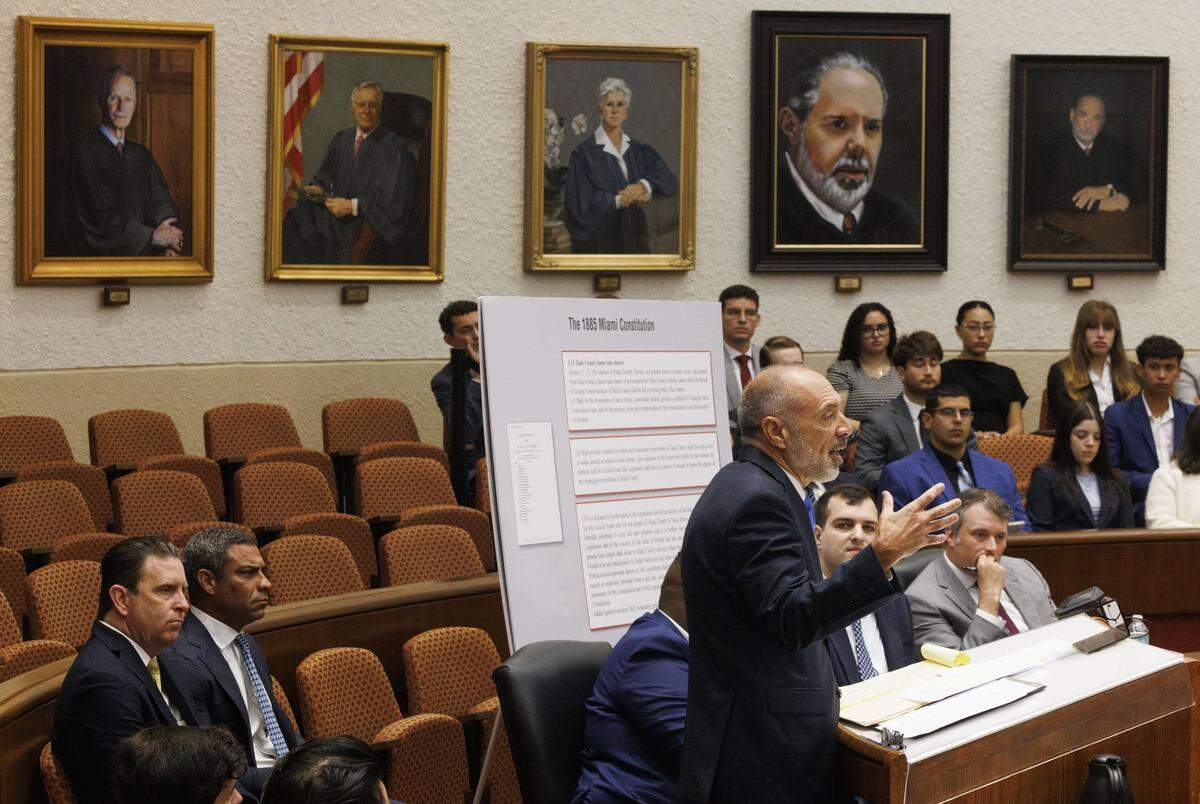
Like Pardo, Suarez has argued that moving from odd- to even-year elections will increase voter turnout while cutting election costs.
But in spite of the recent court rulings, Suarez is still holding out hope that the city could prevail through the court system.
After the appeals court handed down its ruling Thursday, Suarez said in a statement that he appreciates “the court’s swift review of this matter.”
“However, we are exploring further appellate options,” Suarez said. “We believe the court’s expedited review may have led to an oversight of binding Supreme Court precedent that is central to the outcome of this dispute.”
The Miami mayor doesn’t have a vote on the City Commission. But like King, he has the authority to call for a special meeting without needing three commissioners to sign off on it, although three commissioners would still be needed to have quorum at the meeting.
The mayor’s office told the Herald on Friday that if all appellate options are exhausted, Suarez would support a proposal to send the election date change to the November 2025 ballot, and he would consider calling for a special meeting to make that happen if needed.
Suarez is termed out of office at the end of the year.
.jpg)