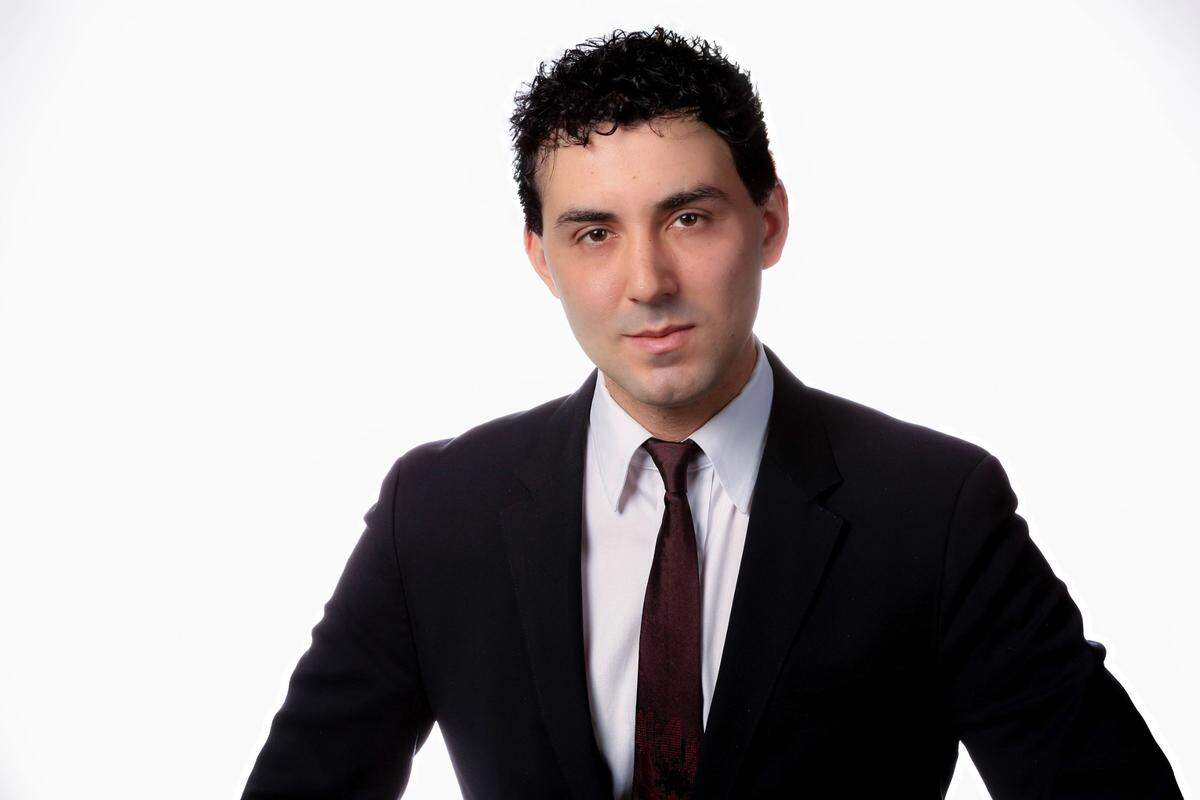
Marco Rubio, Secretary of the Americas? Hearing poses test as Trump packs diplomatic team
Before even taking the oath of office, President-elect Donald Trump has named special envoys for the Middle East, Russia and Ukraine, the United Kingdom and “special missions,” assigned to hotspots around the world.
He even tapped a special envoy, Mauricio Claver-Carone, for Latin America policy.
The flurry of unusual diplomatic appointments leaves Marco Rubio, the Republican senator from Florida and Trump’s choice for secretary of state, with limited room to lead on critical policy portfolios should he secure confirmation from his Senate colleagues to lead the State Department in the coming weeks.
Rubio’s testimony before the Senate, set to begin Wednesday morning, is expected to be among the least controversial of the hearings to come for Trump’s proposed cabinet picks. But Rubio’s performance could reveal how he plans to navigate an administration that is already brimming with other personalities intent on making their mark on the world’s most challenging conflicts.
And then there is Trump himself, who has grandiose ideas of his own, such as taking back control of the Panama Canal, levying tariffs on Mexico and Canada, purchasing Greenland, and getting countries in the region to accept U.S. deportees whose home countries have repeatedly refused to take them.
In the Senate, Rubio has carved out a leadership role on U.S. policy in the Western Hemisphere – a prominent space in Trump’s emerging foreign policy. That experience in the region could prove central to his tenure at State and is expected to feature prominently in Wednesday’s hearing.
Rubio will have an ally in Claver-Carone, a Cuban American who led Western Hemisphere policies at the National Security Council with whom he worked closely to shape U.S. policies toward Cuba and Venezuela in the first Trump administration. But a “proliferation of special envoys” is likely to complicate Rubio’s ability to lead, said Georges Fauriol, a Haiti specialist and senior associate at the Center for Strategic and International Studies in Washington.
Still, “to the degree that President-elect Trump has been lately focused on the Panama Canal, Greenland and Canada, it seems to underscore a form of extended ‘America First’ strategic vision — focused more on achieving results in the Western Hemisphere than elsewhere in the world,” Fauriol said.
RELATED: Rubio ends adjunct professor contract with FIU following secretary of state nomination
“Putting aside the tactics Trump may be using,” he said, “it can strengthen Rubio’s abilities to focus U.S. foreign policy resources on the Americas. This includes trade and investment interests.”
CHALLENGES CLOSE TO HOME
Trump’s territorial aims will be a prime topic of interest at Wednesday’s hearing, with Republican House lawmakers already introducing bills that would authorize a U.S. reclamation of the Panama Canal and rename the Gulf of Mexico, a basin in international waters, the “Gulf of America.”
READ MORE: Can Trump actually rename the Gulf of Mexico? Here’s what he can do, and what he can’t
But Rubio is also expected to face questioning on the incoming administration’s approach to an historic wave of migration throughout the hemisphere that has dominated U.S. relations with other countries.
Trump has vowed to increase deportations of migrants that have crossed the southern border illegally. But several nations that have been the top sources of migration in recent years – such as Haiti, Cuba, Venezuela and Nicaragua – either refuse to accept deportation flights, or risk being plunged further into crisis by doing so.
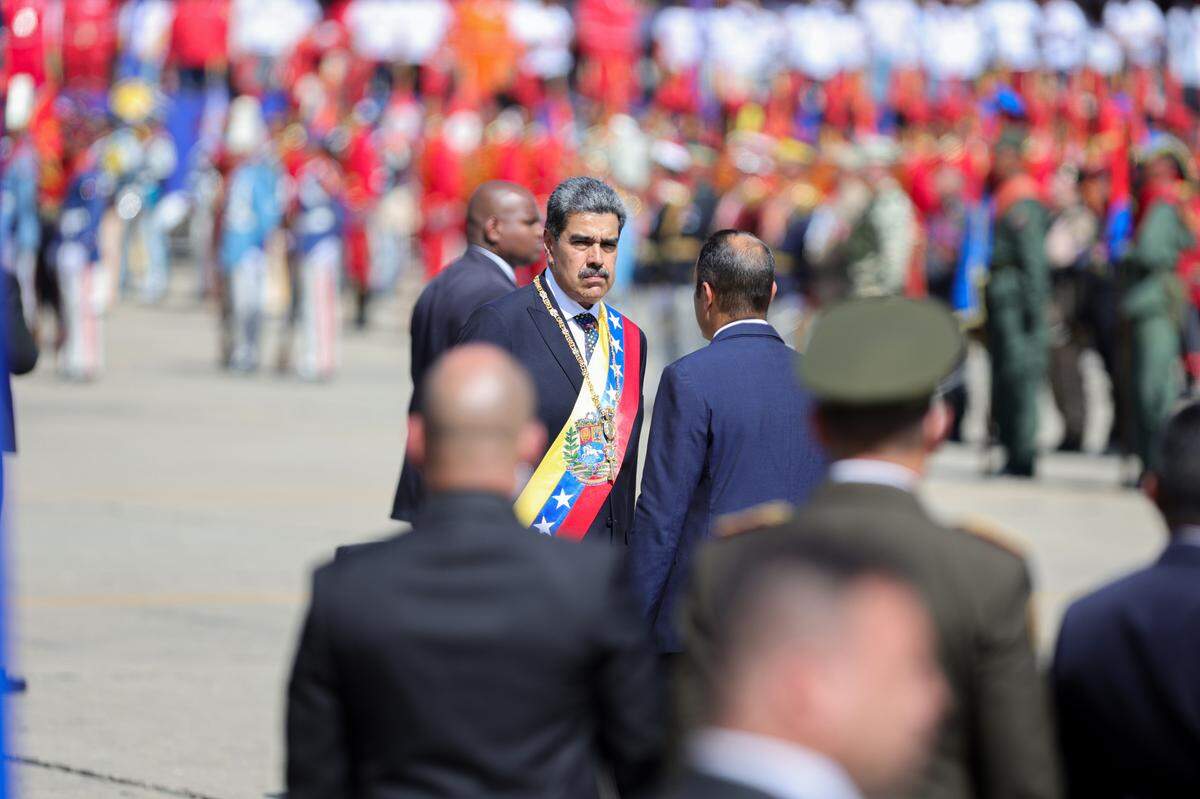
That dilemma will challenge Rubio, who has frequently criticized the Biden administration as too accommodating to Nicolás Maduro in Venezuela, and too lenient in its policies toward Cuba.
“President Joe Biden will be remembered as one of the most naive heads of state in American history,” the Florida senator wrote in an op-ed run by the Miami Herald. “From Iran to Cuba to Venezuela, he has routinely appeased our nation’s adversaries only to reward their aggression and criminality. In the case of Nicolás Maduro’s narco-dictatorship, the president’s strategy has completely and predictably backfired.”
Rubio was highly critical of the Biden administration’s attempt to engage Maduro in negotiations to seek a democratic transition in Venezuela from the start.
ANALYSIS: With Rubio’s selection as next secretary of state, Cuba leaders’ worst fears come true
The senator frequently argued that Biden was actually weakening the efforts to recover the South American country’s democracy by easing sanctions that financially strengthened the socialist dictator. Maduro was sworn in for a third presidential term on Friday despite widespread condemnation of his handling of last year’s elections, which the United States and the European Union has said was won by opposition candidate Edmundo González Urrutia.
“Maduro lied to the Biden administration,” Rubio said in December 2023. “It is time for President Biden to reverse his failed strategy and reimpose sectoral sanctions against the criminal Maduro narco-regime until there is real movement by Maduro to release U.S. citizens and hold truly free and fair elections. Concessions to the Venezuelan dictator have only emboldened him and his thugs.”
But reports have emerged that members of Trump’s team are being lobbied by U.S. businessmen with oil interests in Venezuela to have the incoming administration reach a new deal with Caracas, hoping to lift sanctions in exchange for Maduro’s commitment to help stop the massive migration of Venezuelans. Those outside interests will test Rubio’s longstanding positions advocating for maximum pressure on the Venezuelan regime.
There is less uncertainty about Rubio’s position on Cuba, since he and Claver-Carone worked closely to design the current sanctions regime against the Cuban military, a policy that will likely continue, even expand under the new White House. Whether that will be enough to achieve regime change is another matter.
ANALYSIS: Why Rubio’s selection as secretary of state spells trouble for Venezuela and Maduro
IMMINENT DECISION POINTS ON HAITI
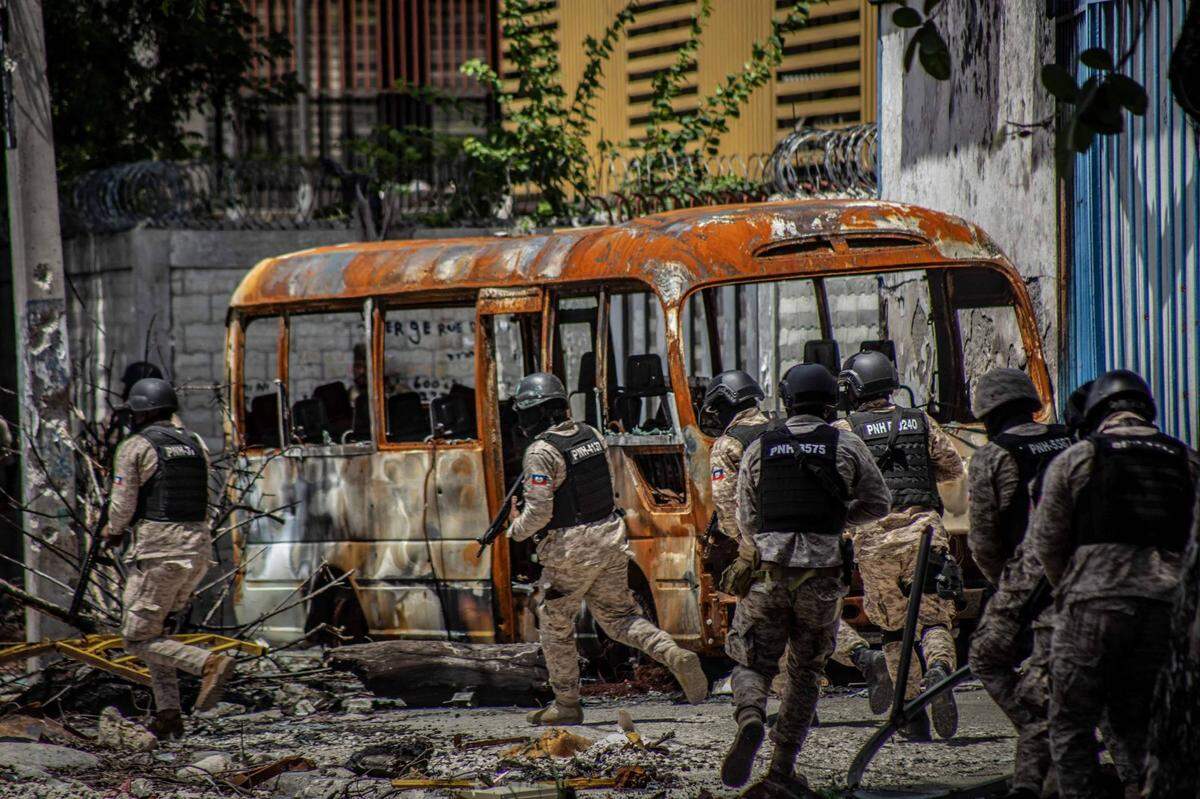
Haiti watchers are particularly interested in the Trump administration’s policy not just on immigration but also in regard to Haiti, where the unrelenting violence by armed gangs led to more than 5,600 deaths last year and is fueling a worsening humanitarian crisis.
The Biden administration has provided more than $600 million in funds and in-kind support for the Kenya-led Multinational Security Support mission over the objections of Republican lawmakers. Last year, the administration pushed for the mission to be transformed into a formal U.N. peacekeeping operation. Though the idea has received support from a number of countries in the region, China and Russia, which have veto power on the Security Council, have balked. Rubio has been an outspoken critic of China, which has sanctioned and banned him. At the same time, he’s a strong supporter of Taiwan and Haiti remains one of the few countries in the region that supports it.
Should the Trump administration decide to continue Biden’s push for a U.N. peacekeeping operation in Haiti, the volatile Caribbean country could find itself even more at the center of the geopolitical sphere than it was during the Biden years having to rely on possibly Rubio to seal any deal.
ANALYSIS: Mixed record on Haiti raises doubts about what Rubio would take on as secretary of state
Previously, Rubio said “there’s not a lot of good options in the short term” for Haiti’s gang-fueled violence.“While the situation Haiti faces is tragic, it’s a crisis of epic proportions that’s been building for a long time now, and it has no easy solutions to it,” he said.
In addition to the security challenge in Haiti, Rubio will have to decide how to address the country’s ongoing political crisis, which hasn’t had general elections since 2016. The nine-member ruling transitional council, mounted last March with the help of Washington to return the country to democratic order, has been engulfed in a corruption scandal involving three of its members who have refused to step down.
After the council in November fired the prime minister after less than six months, the Biden administration had pushed for the council to provide a roadmap on how it plans to advance on elections, security and the three counselors. However, months later the council members remain in office.
In his first term, Trump took a divide and conquer approach to Caribbean relations where he rewarded leaders who disavowed Maduro by inviting them to a private meeting at Mar-a-Lago, and ignoring those who continued to show loyalty. Haiti’s then-president, Jovenel Moïse, was among those who cut ties with the South American leader in order to continue to receive support from the United States.
Fauriole said he envisions Haiti policy under Trump and Rubio emerging from two policy environments: The administration dealing with Haiti in the context of quasi-domestic U.S. policy interests — border control and drug trafficking — but as regional initiatives.
“None of this will be easy for Rubio,” Fauriol said, “although arguably a special envoy for Haiti might actually be helpful in centralizing the competing elements of a U.S. policy, and also possibly be helpful in deflecting in some cases the attention about Haiti away from the president,” Fauriol said.
This story was originally published January 14, 2025 at 2:05 PM.